How to Find the Best Slow Digesting Protein Powder
📌 Overview and Key Takeaways
This is a Certified Nutrition Coach’s guide on how to find the best slow-digesting protein powder.
Discover how to get the most out of every gram of protein.

Slow-Digesting Protein Powder
What Is Slow-Digesting Protein?
Slow-digesting refers to how quickly food moves through your digestive system.
It also refers to how fast amino acids get absorbed by your body.
As a reminder, amino acids are the building blocks of protein.
Different types of protein are broken down and absorbed at different speeds.
Research shows that amino acids are absorbed at rates between 1.3 grams to 10 grams per hour (Int J Sport Nutr Exerc Metab, 2006).
This means 20 grams of a fast-digesting protein might take only 2 hours to digest.
The same amount of a slow-digesting protein, on the contrary, might take 15 hours or more to digest.
Why Should I Use Slow-Digesting Protein Powder?
Proteins that take longer to digest help you feel full for longer.
This can help reduce cravings and prevent overeating, which may support weight loss and management.
Research shows that protein digestion speed also affects your body’s metabolic response after eating (Proc Natl Acad Sci U S A, 1997).
Slow-digesting protein helps prevent muscle breakdown, while fast-digesting protein helps build new muscle.
In theory, you should eat slow-digesting protein to prevent muscle loss (such as overnight).
And you should eat fast-digesting protein to build muscle (such as after a workout).
Research shows the long-term benefits of slow versus fast protein are small, however (Int J Sport Nutr Exerc Metab, 2017).
Studies do show that slow-digesting proteins provide steady amino acid release and prevent protein breakdown.
But these differences do not lead to major differences in muscle mass or strength over time when you eat enough total protein.
This means worrying about protein digestion speed is not worth your time.
Focus instead on meeting your daily protein needs.
Daily Protein Intake Calculator
What Is the Best Slow-Digesting Protein Powder?
Many people suggest casein, a protein found in milk, as the best slow-digesting protein.
When casein encounters the acidic environment of the stomach, it coagulates into a thick gel that slows down how quickly digestive enzymes can access and break it down.
For this same reason, however, casein is notorious for causing painful digestive problems.
This is why I recommend gut-friendly alternatives like Egg White Protein Powder.
Egg whites do not exhibit the characteristic coagulation behavior of casein (Food Chem, 2020).
But ovalbumin, the predominant egg white protein, demonstrates remarkable resistance to pepsin (a powerful stomach enzyme) that can slow digestion (Poult Sci, 2018).
Keep in mind, however, that most protein powders contain more than one ingredient, some of which can impact digestion.
Common emulsifiers like soy lecithin, for example, can accelerate digestion considerably (Food Res Int, 2020).
For this reason, if digestion is a priority, it is recommended that you choose a protein powder made from a short list of simple ingredients.
🚫 Avoid Food Additives
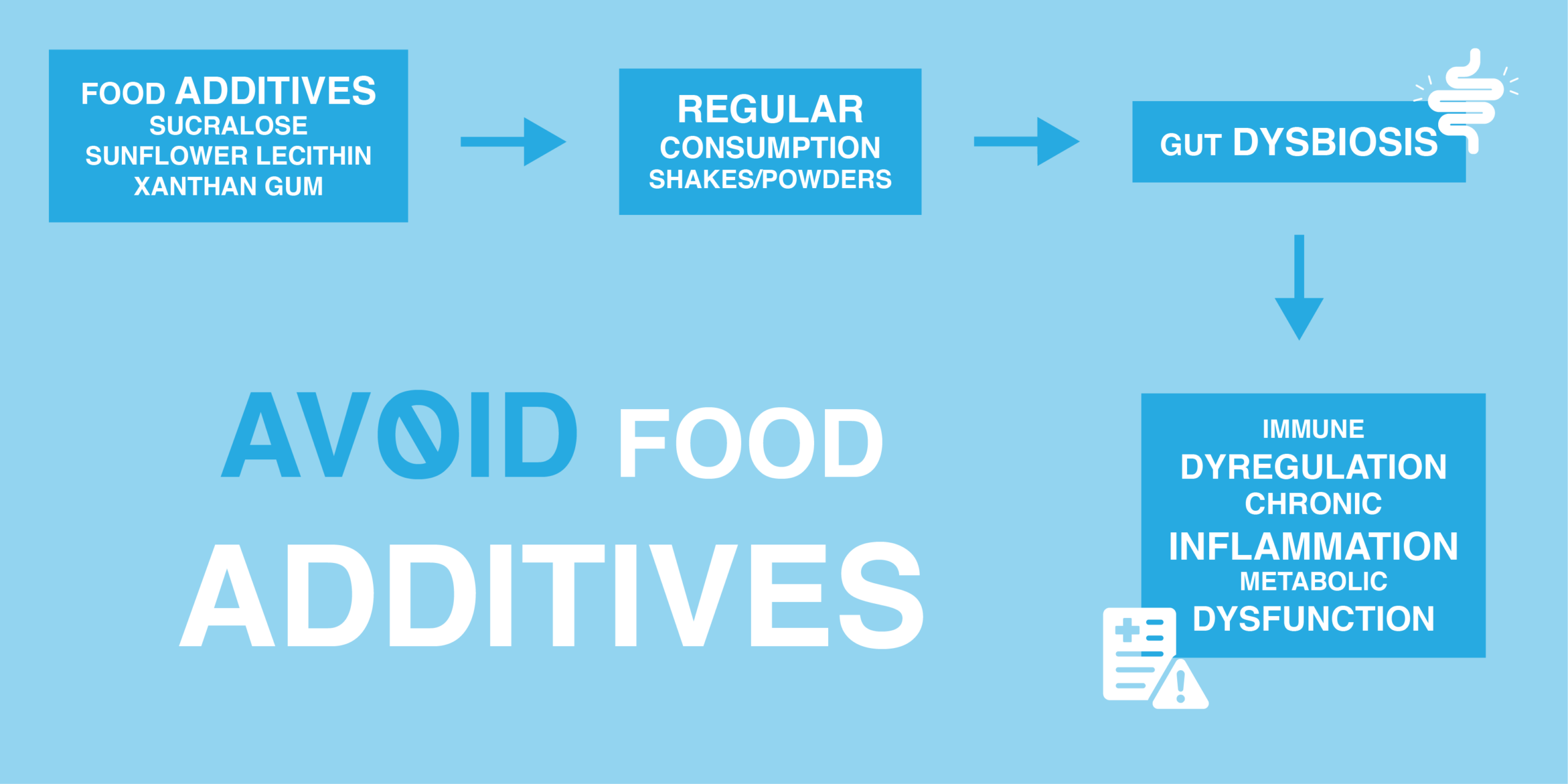
Eating certain emulsifiers, thickeners, and other ultra-processed additives can change the composition and function of your gut microbiome – the community of microorganisms living in your intestines (North Clin Istanb, 2020).
These shifts, known as gut dysbiosis, are associated with altered digestive function, including diarrhea (Front Microbiol, 2025).
The mechanisms by which dysbiosis leads to diarrhea include disruption of short-chain fatty acid (SCFA) production, which is essential for maintaining intestinal barrier integrity and regulating fluid absorption.
⚠️ Here is a list of the most common food additives in protein shakes and powders:
- acacia fiber
- acacia gum
- acesulfame potassium
- artificial flavors
- ascorbic acid
- aspartame
- calcium carbonate
- carrageenan
- cellulose gum
- dextrin
- dicalcium phosphate
- dipotassium phosphate
- erythritol
- gellan gum
- guar gum
- gum arabic
- inulin
- locust bean gum
- maltitol
- maltodextrin
- mono- and diglycerides
- ‘natural’ flavors
- rice bran extract
- rice dextrin
- rice hulls
- rosemary extract
- silica
- silicon dioxide
- sodium alginate
- soluble corn fiber
- sorbitol
- soy lecithin
- sucralose
- sunflower lecithin
- tocopherols
- tricalcium phosphate
- xanthan gum
- xylitol
- zinc oxide
As a rule of thumb, if you cannot find it in nature or make it at home, it is probably a food additive.
🚫 Avoid Protein Concentrates and Isolates
If you have a sensitive stomach, you might also want to avoid protein concentrates and isolates.
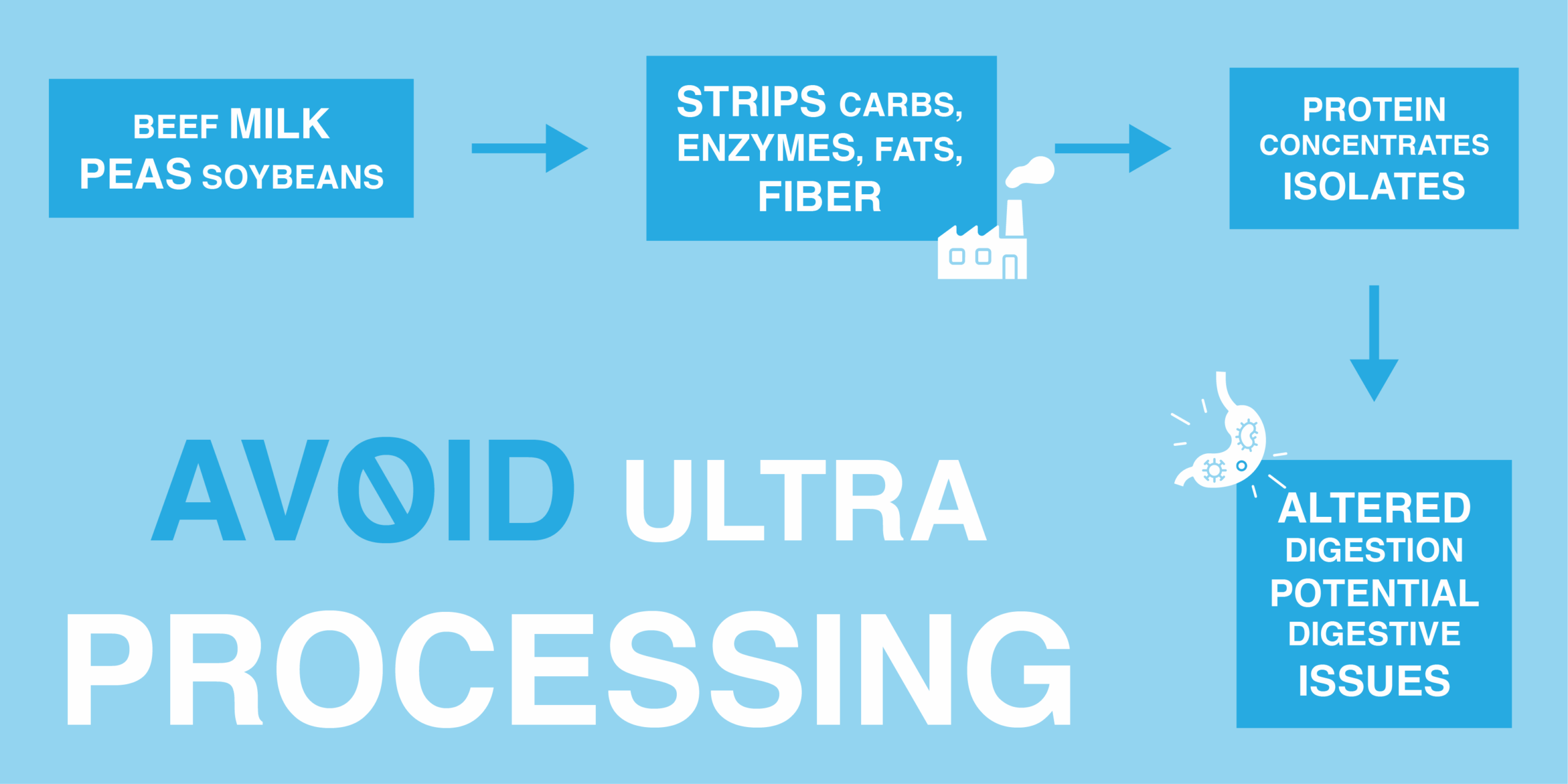
Most protein shakes and powders are made from one or both of these ultra-processed protein sources, which have been mechanically and/or chemically stripped of everything but the protein.
This includes the enzymes, fiber, and other natural digestive aids that help you break them down.
You therefore do not digest them in the same way that you do whole foods, which could affect your gut health.
For example, one study shows that regularly consuming protein concentrates and isolates might disrupt your gut microbiome (Nutrients, 2018).
Another study shows that it could cause the formation of toxic byproducts in your gut (Mol Nutr Food Res, 2024).
Although further research is needed, individuals with sensitive stomachs can play it safe by choosing protein shakes and powders made from minimally-processed protein sources like egg whites and almonds.
They are more gut-friendly.
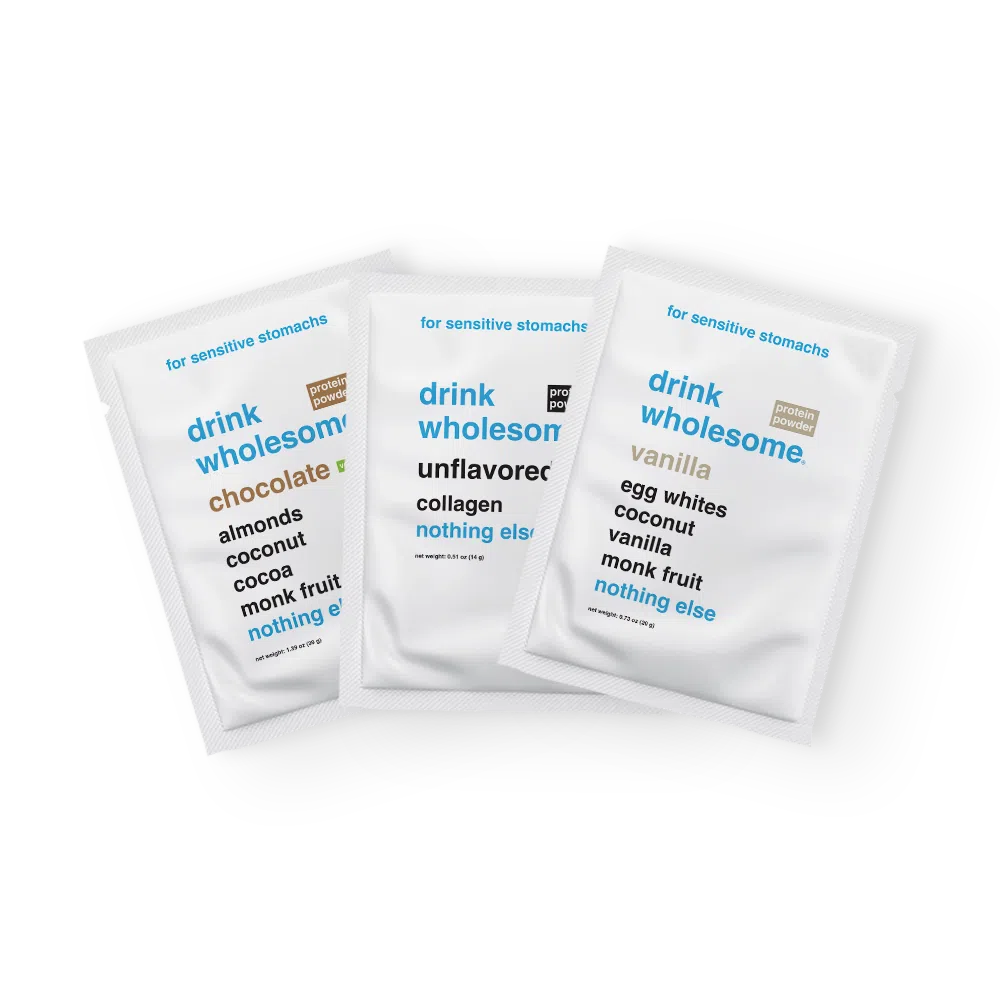
Order Samples to see for yourself.
Sources
- Food Chemistry (Food Chem). Impact of caseins and whey proteins ratio and lipid content on in vitro digestion and ex vivo absorption. 2020.
- Poultry Science (Poult Sci). Antioxidant, angiotensin-converting enzyme inhibitory activity and other functional properties of egg white proteins and their derived peptides – A review. 2018.
- Food Research International (Food Res Int). Factors impacting lipid digestion and nutraceutical bioaccessibility assessed by standardized gastrointestinal model (INFOGEST): Emulsifier type. 2020.
- International Journal of Sport Nutrition and Exercise Metabolism (Int J Sport Nutr Exerc Metab). A review of issues of dietary protein intake in humans. 2006.
- Proceedings of the National Academy of Sciences of the United States of America (Proc Natl Acad Sci U S A). Slow and fast dietary proteins differently modulate postprandial protein accretion. 1997.
- International Journal of Sport Nutrition and Exercise Metabolism (Int J Sport Nutr Exerc Metab). Effects of Postexercise Protein Intake on Muscle Mass and Strength During Resistance Training: Is There an Optimal Ratio Between Fast and Slow Proteins?. 2017.
- Northern Clinics of Istanbul (North Clin Istanb). Food additives and microbiota. 2020.
- Frontiers in Microbiology (Front Microbiol). The role of gut microbiota in diarrhea and its alleviation through microbiota-targeted interventions.
2025. - Nutrients (Nutrients). Effect of a Protein Supplement on the Gut Microbiota of Endurance Athletes: A Randomized, Controlled, Double-Blind Pilot Study. 2018.
- Molecular Nutrition & Food Research (Mol Nutr Food Res). In Vitro Fermentation of Animal and Plant Protein Isolates by the Human Gut Microbiota Under High and Low Carbohydrate Conditions. 2024.
Editorial Guidelines
This article was written by a Certified Nutrition Coach and reviewed by a Registered Dietitian. We rely on peer-reviewed research and trusted medical sources, and regularly update our content to ensure accuracy and clarity.
Frequently asked questions
Who Is Drink Wholesome for?
Drink Wholesome is a protein powder for people who struggle to eat enough protein but can’t stomach other protein powders because of food sensitivities or digestive conditions like IBS, GERD, SIBO, Crohn’s and colitis, and gastroparesis. It’s made without the artificial and ultra-processed ingredients that can contribute to digestive symptoms like acid reflux, bloating, gas, or stomach pain, so it’s gentle on even the most sensitive stomachs. If it upsets your stomach, it’s free.
Why Is Drink Wholesome Good for Sensitive Stomachs?
Drink Wholesome is the best gut-friendly protein powder for sensitive stomachs because it’s additive, dairy, and gluten-free. It’s also made from minimally-processed protein sources like egg whites and almonds. Other protein powders are made from ultra-processed protein concentrates and isolates, which look nothing like real food.
What’s the Difference Between Protein Powder and Meal Replacement Powder?
Drink Wholesome makes Protein Powders and Meal Replacement Powders. Protein powder is high in protein and low in everything else, whereas meal replacement powder contains fats, carbs, fiber, and protein because it’s intended to replace the nutritional value of a balanced meal.
What’s the Difference Between Almond, Collagen, and Egg White Protein?
Drink Wholesome makes three types of Protein Powder: Collagen Protein Powder, Egg White Protein Powder, and Vegan Almond Protein Powder. As long as you are eating a balanced diet – getting protein from a variety of sources – any type of protein can help you meet your total daily protein needs. Take the Product Quiz or order Samples to see which type of stomach-friendly protein powder is right for you.
Ask Nutrition Coach
If you’re wondering which Drink Wholesome product is best for you, ask our Certified Nutrition Coach. For personalized medical advice, consult your healthcare provider.
Author(s)
Protein Powder Samples
Starting at $9.99
BUY NOW