How to Find the Best Paleo Protein Powder
📌 Overview and Key Takeaways
This is a Dietitian’s guide on how to find the the best Paleo protein powder.
Discover how to safely supplement your protein intake on the Paleo diet.
Paleo Protein Powder
What Is the Paleo Diet?
The Paleo diet is all about eating like our ancestors ate 10,000 years ago – during the Paleolithic era (Cureus, 2023).
In a nutshell, it stresses eating whole foods over processed ones.
Paleo-friendly foods include meat, fish, eggs, seeds, nuts, fruits and vegetables.
Note that if you insist on avoiding processed foods altogether, then protein powder is not an option.
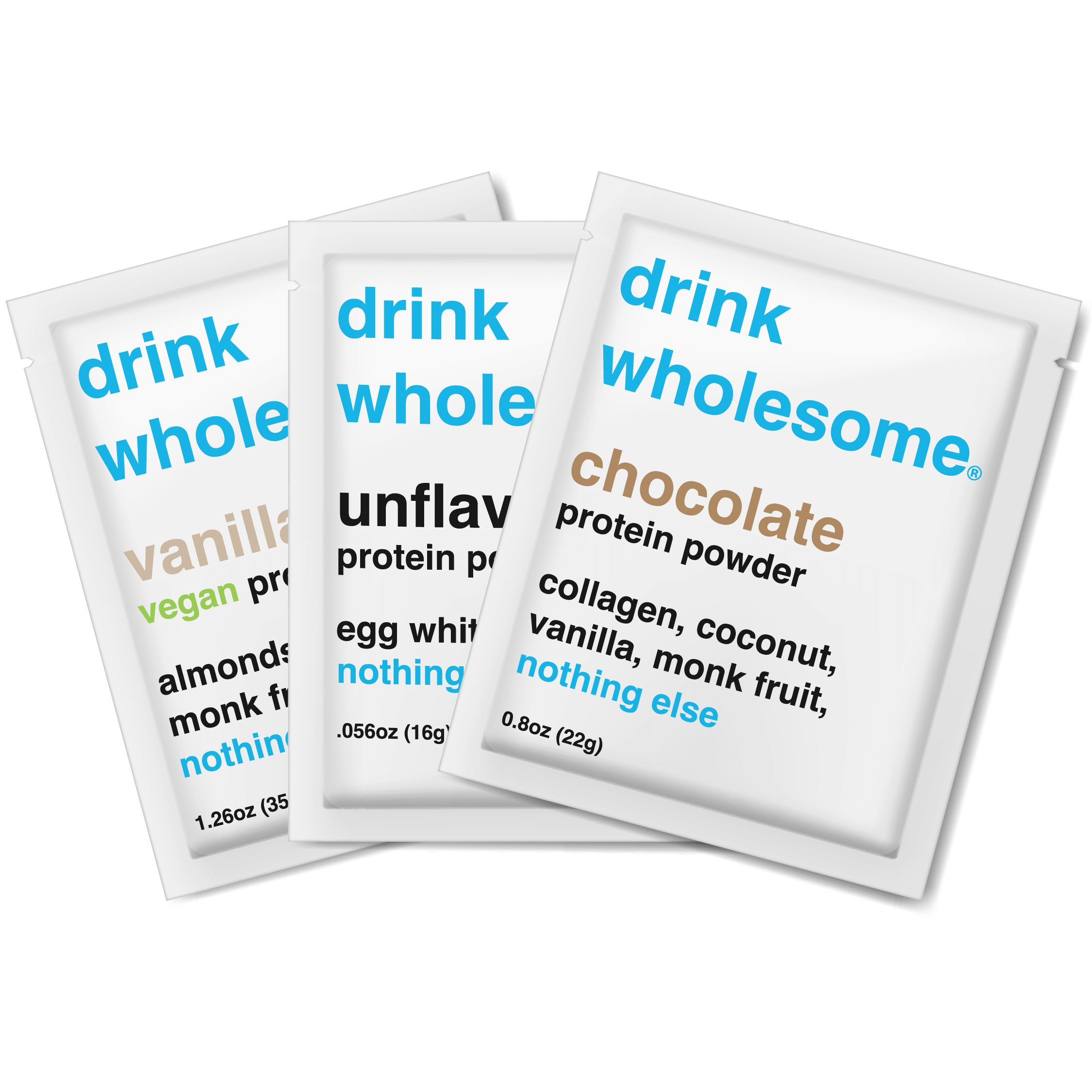
But if you are willing to compromise somewhat on what constitutes “processed food,” then there are a few Paleo protein powder options, including protein powders made from collagen, egg whites, hemp, nuts, and seeds.
What Are the Benefits of the Paleo Diet?
Given all of its restrictions, you might be wondering why someone would ever follow the Paleo diet.
It turns out that the Paleo diet can help alleviate symptoms associated with chronic illnesses, digestive issues, and autoimmune conditions.
Athletes and health enthusiasts also adopt the Paleo diet for its focus on whole, nutrient-dense foods, which can support performance and recovery.
Other benefits of the Paleo diet include:
- Enhanced weight management: By prioritizing low-carb, high-protein foods, the Paleo diet can support weight management by increasing satiety. Protein is the most satiating nutrient, meaning it keeps you feeling full for longer than fats and carbs.
- Improved digestive health: By eliminating processed grains and refined sugars, the Paleo diet can improve gut health. Some individuals may even experience relief from digestive symptoms such as bloating, gas, and indigestion.
- Balanced blood sugar and improved energy levels: The Paleo diet, because it naturally limits carbohydrate intake and prioritizes foods rich in protein and fiber, can minimize fluctuations in blood sugar. This can lead to fewer energy crashes and more sustainable energy throughout the day.
- Better skin health: The elimination of processed foods and refined sugars from your diet can promote clearer, healthier skin by reducing inflammation and oxidative stress, two common culprits behind skin issues like acne and eczema.
For personalized nutrition advice, it is recommended that you consult a registered dietitian.
Product Quiz
What Is the Importance of Protein on the Paleo Diet?
Eating protein-rich foods is foundational to the Paleo diet.
It is also essential for overall health and well being.
Dietary protein provides your body with the essential building blocks for tissue repair and recovery.
It is also essential for hormone production and regulation, helping you manage everything from stress to metabolism.
Protein even plays an important role in supporting immunity and brain health.
So, if you struggle to meet your protein needs, for whatever reason, adding a Paleo-friendly protein powder to your diet could be a great idea.
Daily Protein Intake Calculator
Is Protein Powder Paleo?
Finding a protein powder for the Paleo diet is hard because 99.99% of protein powders are not Paleo.
For starters, most protein powders are made with either whey, soy, or pea protein, none of which are Paleo.
Whey protein comes from milk, and soy and pea protein come from legumes.
Milk and legumes are not allowed on the Paleo diet.
The real reason why most protein powders are not technically Paleo, however, has nothing to do with the type of protein.
Save for a handful exceptions, most protein powders are not Paleo because they are made with protein concentrates or isolates.
🚫 Avoid Protein Concentrates and Isolates
Protein sources like these are ultra-processed and stripped of everything but the protein.
They were absolutely not on the menu during the Paleolithic era and cannot be part of a Paleo diet.
🚫 Avoid Food Additives
Another reason why most protein powders are not compatible with the Paleo diet is they contain added ingredients like emulsifiers, thickeners, and flavors.
Additives like these, which include natural flavors and natural sweeteners like stevia, are not Paleo.
⚠️ Here is a list of the most common food additives in protein supplements:
- acacia fiber
- acacia gum
- acesulfame potassium
- artificial flavors
- ascorbic acid
- aspartame
- calcium carbonate
- carrageenan
- cellulose gum
- dextrin
- dicalcium phosphate
- dipotassium phosphate
- erythritol
- gellan gum
- guar gum
- gum arabic
- inulin
- locust bean gum
- maltitol
- maltodextrin
- mono- and diglycerides
- ‘natural’ flavors
- rice bran extract
- rice dextrin
- rice hulls
- rosemary extract
- silica
- silicon dioxide
- sodium alginate
- soluble corn fiber
- sorbitol
- soy lecithin
- sucralose
- sunflower lecithin
- tocopherols
- tricalcium phosphate
- xanthan gum
- xylitol
- zinc oxide
As a rule of thumb, if you cannot find it in nature or make it at home, it is probably a food additive.
How Do I Safely Follow a Paleo Diet?
If you are currently following a Paleo diet or interested in starting one, you want to make sure you are doing it safely.
Here is what a registered dietitian recommends doing:
- Go slow! Transitioning to a Paleo diet is a significant change that should not be rushed. Instead of diving in headfirst, take it slow. Removing food groups gradually can make the transition feel more manageable and sustainable.
- Monitor for nutrient deficiencies. As you make the switch, be vigilant about monitoring for nutrient deficiencies. Since the Paleo diet involves cutting out several food groups, you may need to supplement certain nutrients to ensure you are meeting your body’s needs.
- Make sure you are eating enough. One common pitfall to avoid is under-eating. Drastic dietary changes can disrupt your eating patterns and make it harder to make food choices or plan for meals. Be sure to eat enough to fuel your body properly and avoid any negative impacts on your metabolism.
- Check in with your relationship with food. The restrictive nature of the Paleo diet can inherently lead to feelings of deprivation or guilt. Remember to approach food with mindfulness and self-compassion, and seek support if needed to maintain a healthy relationship with eating.
- Get creative! Experiment with different recipes to keep the Paleo diet fun and interesting. This is hugely important for achieving long-term success.
- Allow for personalization and flexibility. Recognize that there is no one-size-fits-all approach to the Paleo diet. Make your dietary choices based on your personal needs and dietary preferences. Allow for flexibility in your eating habits and do not feel confined by strict dietary rules. You can still reap the benefits of a Paleo diet without feeling like you have to adhere to a rigid set of guidelines.
By implementing these recommendations into your Paleo journey, you can be sure to optimize your nutrition and support your health goals, all while maintaining a safe and healthy relationship with food.
Sources
- Cureus (Cureus). The Paleolithic Diet. 2023.
Editorial Guidelines
This article was written by a Registered Dietitian and reviewed by a Physician Assistant. We rely on peer-reviewed research and trusted medical sources, and regularly update our content to ensure accuracy and clarity.
Frequently asked questions
Who is Drink Wholesome for?
Drink Wholesome makes minimally-processed protein powder for sensitive stomachs. Because it’s made from a short list of simple ingredients, it’s also a great option for anyone who wants to avoid artificial and ultra-processed ingredients – including kids, seniors, and moms.
Why is Drink Wholesome easy to digest?
No Dairy
Drink Wholesome is made without whey and casein, which contain lactose, a sugar most people can’t fully digest. Dairy-based proteins, especially casein, also form a gel-like substance in your stomach, which can upset sensitive stomachs.
No Additives
Drink Wholesome is made without ultra-processed food additives. Regularly eating artificial sweeteners, emulsifiers, thickeners, and other additives can cause digestive issues and even long-term gut health problems.
Whole Food Protein
Drink Wholesome is made from whole food protein sources like almonds and egg whites. Unlike ultra-processed protein concentrates and isolates, which have been stripped of fiber, enzymes, and other natural digestive aids, whole foods are easy to break down and absorb.
Collagen vs egg white vs almond protein powder?
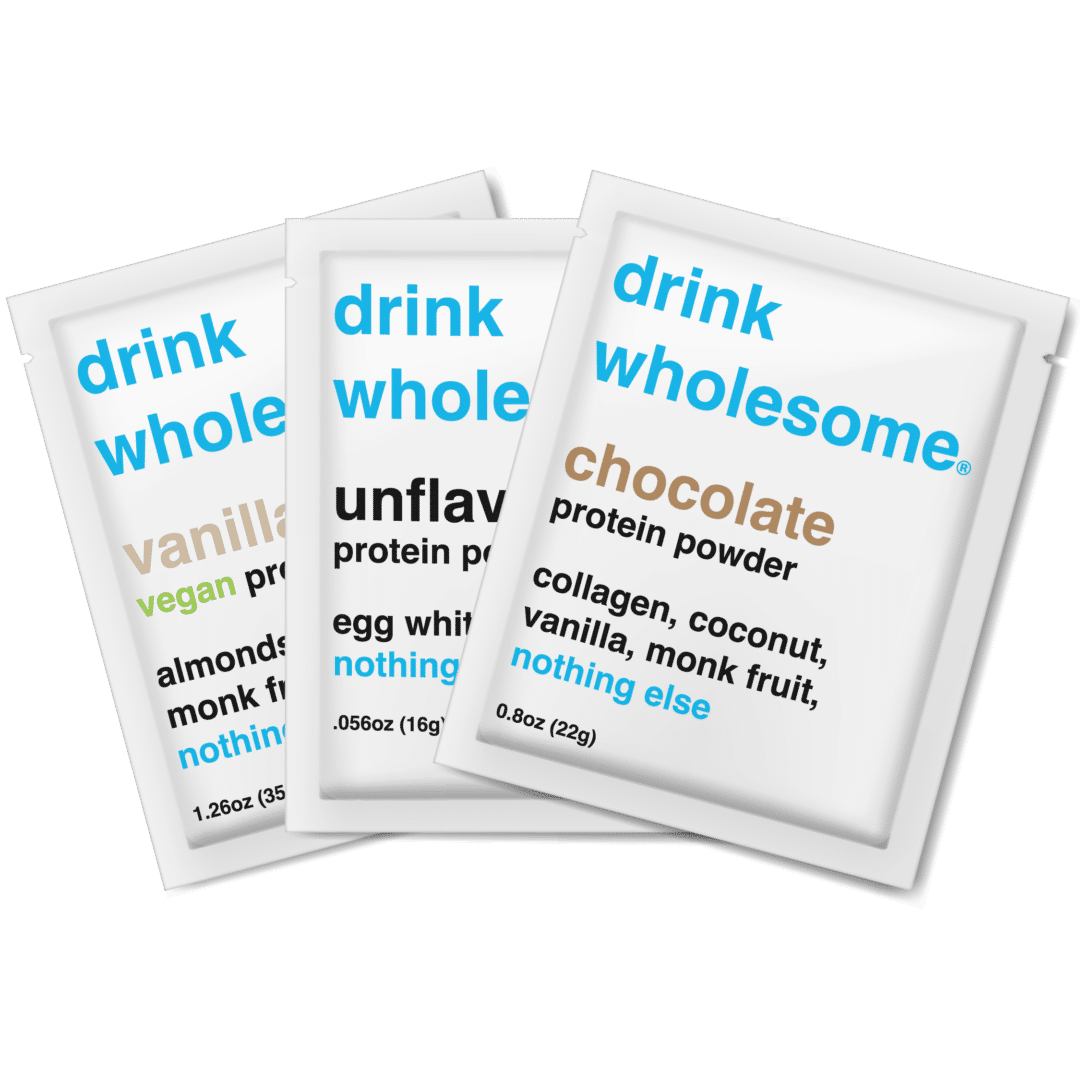
We make three types of minimally-processed Protein Powder for sensitive stomachs: Collagen Protein Powder, Egg White Protein Powder, and Vegan Almond Protein Powder. As long as you eat a balanced diet (get protein from a variety of sources), any type of protein powder can help you meet your protein needs. So just pick the type that best suits your personal preferences.
Ask our dietitian.
If you’re wondering which of our products is best for you, ask our Registered Dietitian. She’ll reply via email within 24 hours.
High Protein Blueberry Pancakes
PREP TIME
5 min
COOK TIME
5 min
SERVES
2
Ingredients
- ¼ cup Drink Wholesome
- ⅓ cup flour
- 2 egg whites
- ¼ cup plant milk
- 1 tbsp nut butter
- 2 tbsp maple syrup
- 1 cup blueberries
Instructions
In a blender, combine the egg whites, milk, ¼ cup blueberries, and almond butter. Pour the mixture into a small mixing bowl and add the protein powder and flour. Whisk until smooth. Pour ⅓ cup batter onto a heated and greased (or non-stick) pan to form pancakes. Cook each side for 2-3 minutes. This recipe makes 4-5 pancakes. Then, in a small saucepan, heat ¾ cup blueberries and the maple syrup over medium heat, stirring occasionally, for about 8 minutes. Plate the pancakes and spoon blueberry jam on top.

Protein Powder Samples
Starting at: $9.99
BUY NOWProtein Calculator
Product Quiz