What is the best protein powder for lactose intolerance?
Are you looking for the best protein powder for lactose intolerance? Discover how to safely supplement your protein intake with lactose intolerance.

Protein powder for lactose intolerance
What is lactose intolerance?
Lactose is a sugar in milk and dairy products such as yogurt, ice cream, and whey protein. It is created when two other sugars, glucose and galactose, combine.
To digest lactose, you need an enzyme called lactase. Lactose intolerance happens when your body does not produce enough of this enzyme.
About two-thirds of the world’s population suffers from some degree of lactose intolerance.
It is so common because humans no longer “need” to digest milk after breastfeeding, so they begin to produce less lactase.
If you are lactose intolerant, you may feel bloated and experience diarrhea and other side effects after consuming dairy products.
What does lactose-free mean?
If a food is lactose-free, it has no lactose in it. Being lactose-free does not guarantee that a food is dairy-free, however.
A food can be lactose-free and still have dairy in it.
On the flip side, a dairy-free product is always lactose-free. This distinction is important to understand, especially if you have a dairy allergy.
“As a dietitian specializing in gut health, I frequently work with lactose-intolerant clients struggling to meet their protein needs. While lactose-free protein powders can be helpful for some, I find that dairy-free protein powders work best. – Brittany Adelman, RDN
Is protein powder lactose-free?
Cow’s milk-based proteins like whey and casein, which are byproducts of cheese and yogurt production, contain lactose. If you are lactose intolerant, avoid protein powders made from whey and casein.
If you have severe lactose intolerance, you should avoid goat’s milk-based protein too. Goat’s milk is easier to digest and contains less lactose than cow’s milk, but it can still upset your stomach.
It is important to note that dairy-based food additives like sodium caseinate contain small amounts of lactose, which may be problematic if you are extremely sensitive to lactose.
To be safe, people with severe lactose intolerance should use a protein powder that is dairy-free.
Why should I lactose-free protein powder?
Lactose-free protein sources tend to be easier to digest than casein, whey, and other dairy-based protein sources, even for people without lactose intolerance. There are several different theories as to why this is so, but most of them point to the amount of processing that goes into making dairy-based protein supplements.
Straight from the cow, whey is 75% lactose.
In order to strip-away all of that sugar, manufacturers rely on a lot of mechanical and chemical processing, turning your whey protein powder into something that looks nothing like real food.
Generally speaking, the less something looks like real food, the harder it is to digest. This makes sense intuitively, because your body was designed to break down and absorb nutrients from foods that can be found in nature. Whey protein, although derived from milk, cannot be found in nature.
What is the best protein powder for lactose intolerant people?
There are several types of lactose-free protein powder. Some of the most common include beef protein powder, egg white protein powder, and plant-based protein powders made from dietary protein sources like hemp, nuts, and peas.
Some people will have you believe that plant-based protein sources are inferior to animal-based protein sources like eggs and beef because they have a lower protein digestibility corrected amino acid score (PDCAAS), which takes into account a dietary protein’s amino acid composition and digestibility.
Amino acid composition: Amino acids are the building blocks of protein. There are 20 of them in the human body, 9 of which are essential, meaning we must get them from food. A dietary protein source with all 9 essential amino acids is considered a complete protein. The PDCAAS considers how much of each essential amino acid is in a dietary protein, and compares those values to the reference pattern established by the Food and Agriculture Organization of the United Nations, which represents the ideal amino acid profile for human nutrition.
Protein digestibility: The PDCAAS also accounts for the digestibility of a dietary protein, as not all dietary proteins are digested and absorbed by the body in the same way. Dietary proteins that are more easily digested and absorbed have a higher PDCAAS.
Egg white protein, for example, has a PDCAAS of 100, which is the highest score possible. Not only does it contain high amounts of all the essential amino acids, but it is also easily digested and absorbed by the body.
Although plant-based proteins tend to score much lower, this does not mean that they are not a good source of protein. The PDCAAS is an imperfect method of assessment biased towards a protein’s “completeness” and ignores its nutritional value as part of an overall diet.
This is why research shows that supplementing your dietary protein intake with plant-based proteins is just as effective as supplementing with whey, egg whites, or another other animal-based protein.
As long as you are eating a balanced diet and getting your dietary protein from a variety sources, you will meet 100% of your essential amino acid requirements.
This is not to say that all protein powders for lactose intolerance are created equal, however. Many protein powders for lactose intolerant people are made with ingredients that can cause painful side effects and long term gut health problems.
Among these ingredients are food additives and protein concentrates and isolates.
Avoid food additives
Regularly eating emulsifiers, thickeners, sugar substitutes, and other additives can not only upset your stomach, but also alter the composition of your gut microbiome – the collection of microorganisms living in your gut.
This can lead to gut dysbiosis, or an imbalance in gut bacteria, which has been linked to a number of chronic digestive issues.
Here is a list of the most common food additives in protein supplements:
- acacia fiber
- acacia gum
- acesulfame potassium
- artificial flavors
- ascorbic acid
- aspartame
- calcium carbonate
- carrageenan
- cellulose gum
- dextrin
- dicalcium phosphate
- dipotassium phosphate
- erythritol
- gellan gum
- guar gum
- gum arabic
- inulin
- locust bean gum
- maltitol
- maltodextrin
- mono- and diglycerides
- ‘natural’ flavors
- rice bran extract
- rice dextrin
- rice hulls
- rosemary extract
- silica
- silicon dioxide
- sodium alginate
- soluble corn fiber
- sorbitol
- soy lecithin
- sucralose
- sunflower lecithin
- tocopherols
- tricalcium phosphate
- xanthan gum
- xylitol
- zinc oxide
Avoid protein concentrates and isolates
Most protein supplements are made from protein concentrates and isolates, which have been mechanically and/or chemically stripped of everything but the protein, including the enzymes, fiber, and other natural digestive aids that help you break them down.
Your digestive system therefore does not digest them in the same way that it does whole foods, which can affect everything from satiety to gut health.
In fact, research shows that regularly eating protein concentrates and isolates might disrupt your gut microbiome.
Basically, if you could not find an ingredient in nature or make it at home, it should not be in your protein powder.

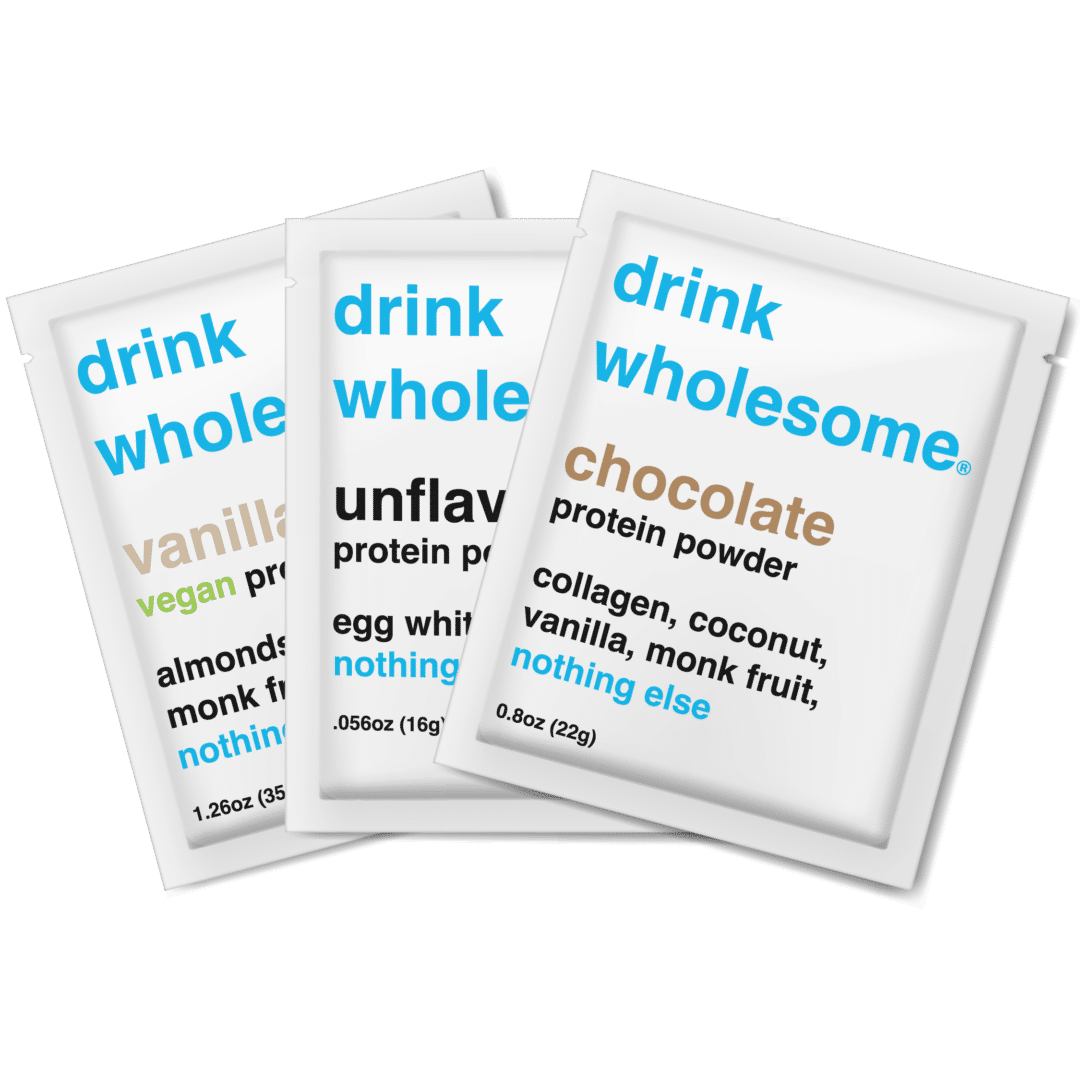
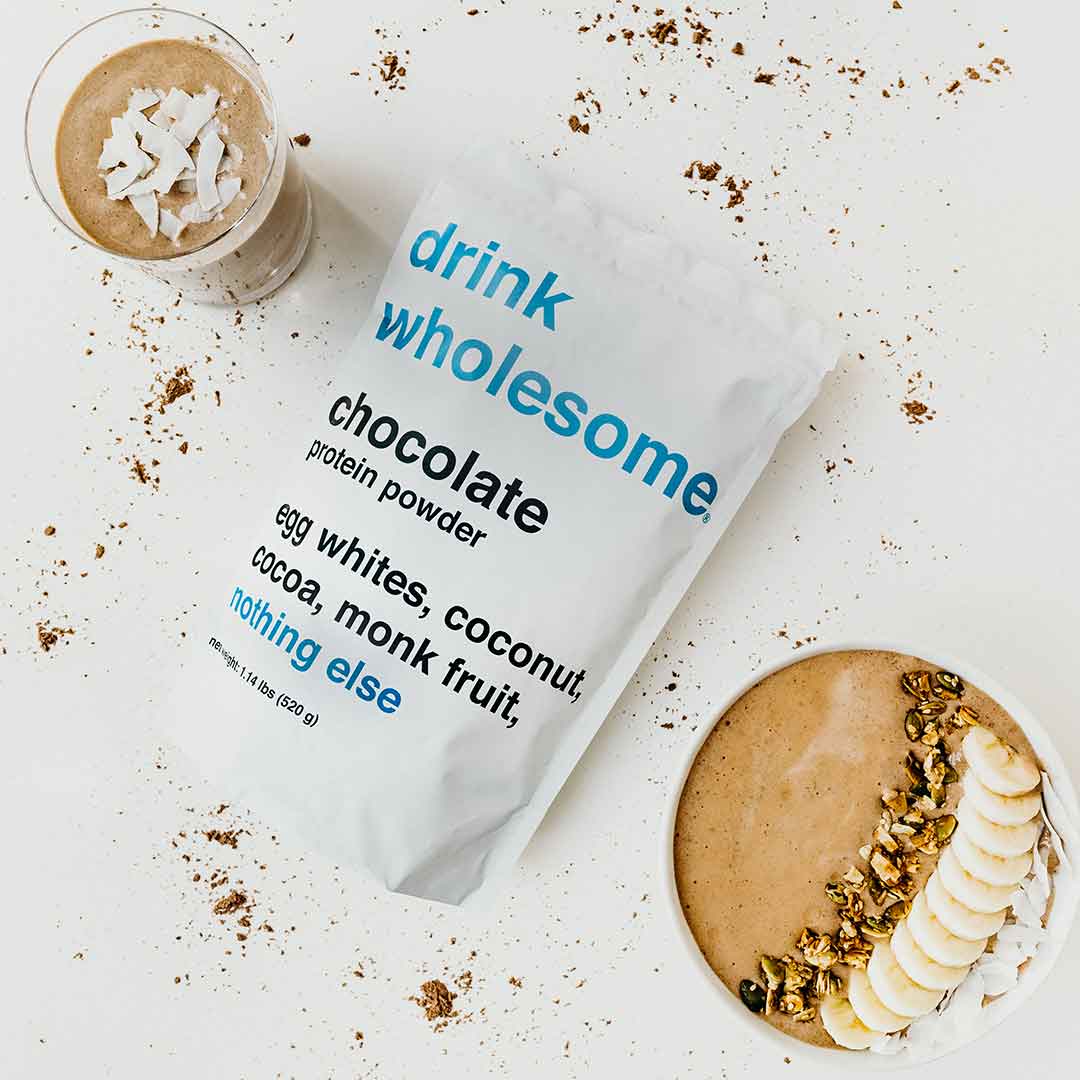
Drink Wholesome is the best protein powder for lactose intolerance.
Finding a lactose-free protein powder free from food additives and protein concentrates and isolates is hard.
In fact, 99% of protein supplements contain one or more of these problematic ingredients, which is why we created Drink wholesome.
We make the best protein powder for lactose intolerant people because we use a short list of simple ingredients.
Our Ingredients

egg whites

coconut

vanilla

monk fruit
NOT Our Ingredients
acacia gum
acesulfame potassium
artificial flavors
carrageenan
erythritol
guar gum
inulin
maltodextrin
'natural' flavors
silica
soy lecithin
sucralose
xanthan gum
xylitol
Note that instead of using protein concentrates or isolates, we use dairy-free, whole food protein sources like egg whites and almonds, which are easier to digest and absorb.
It follows that our customers experience fewer digestive issues with our protein powder than with any other type of protein supplement. Order samples to see for yourself.

Can lactose-free protein powder improve your gut health?
Lactose-free protein powder can contribute to improved gut health, especially for individuals with lactose intolerance. For starters, if you are unable to fully digest lactose, using lactose-free protein powder can reduce bloating, gas, and other digestive issues.
Moreover, although lactose intolerance is not directly caused by an inflammatory response, inflammation can occur when symptoms are present.
By removing lactose from their diet, lactose-intolerant individuals can reduce gut inflammation.
In short, if you are sensitive to lactose, choosing a lactose-free protein powder can be a step towards improving your gut health.
Can lactose-free protein powder support your fitness goals ?
It is a common misconception that whey protein powder is the key to building muscle. As long as you are eating a balanced diet and getting your dietary protein from a variety of sources, any type of protein powder can help you achieve your fitness goals.
Whey is the main reason why protein powder sends people running to the bathroom, and is often a source of discomfort and distraction above all else.
Moreover, for many people, using whey protein to build muscle or improve performance is counter productive.
By choosing a lactose-free protein powder, you can reduce or avoid digestive discomfort during and after exercise, allowing you to focus on your fitness.
How should I use protein powder if I am lactose intolerant?
First of all, you can add lactose-free protein powder to protein shakes, smoothies, oatmeal, baked goods, and other recipes. Just be sure to avoid using lactose-containing ingredients such as milk, cream, butter, cheese, and yogurt.
Here are a few more tips from a registered dietitian:
- Check the nutrition panel look for a short list of simple ingredients.
- Be mindful of serving sizes and try not to consume more than the recommended amount.
- Spread your protein intake throughout the day to allow for better digestion and absorption.
- Experiment with protein powder recipes to keep meeting your protein needs fun and delicious.
- Stay hydrated to support digestion.
- Rotating between different types of protein powders for optimal gut health.
- Monitor your symptoms regularly, and adjust your protein powder consumption as needed
As always, consult with a healthcare professional for personalized guidance on incorporating lactose-free protein powder into your diet.
Reviews
Jermany
43 minutes ago
Verified Purchase I recently discovered Drink Wholesome's protein powders and love that they're carefully formulated for sensitive stomachs. The idea of a product being dietitian-approved and easy to digest is such a game-changer! digestive issues
Gabriella
3 weeks ago
Verified Purchase As someone who has struggled with chronic conditions for 10+ years, getting in nutrient-dense foods is big part of how I care for my body. Finding options that are tasty and convenient is difficult. And I am always trying to eat enough in order to maintain my weight. Providers consistently recommend smoothies/shakes. I have tried so many over the years and each time the GI symptoms are intense or the flavor is awful! Since finding Drink Wholesome, I have finally been able to incorporate higher protein smoothies and shakes without the digestive upset. As a result, I have been able to maintain my weight more easily and even gain some beneficial weight. digestive issues
Gayle
2 months ago
Verified Purchase Drink Wholesome is really the best handful of ingredients protein powder that didnt give me any stomach issues at all. Anyone who has had bloat, etc should try this protein powder. I’ve been making smoothies since April 2025 and no problems at all. bloating
Frequently asked questions
Who is Drink Wholesome for?
Drink Wholesome is the best protein powder for sensitive stomachs. Because it’s made from a short list of simple ingredients, it’s also a great option for anyone who wants to avoid artificial and ultra-processed ingredients – including kids, seniors, and moms.
Why is Drink Wholesome easy to digest?
No Dairy
Drink Wholesome is made without whey and casein, which contain lactose, a sugar most people can’t fully digest. Dairy-based proteins, especially casein, also form a gel-like substance in your stomach, which can upset sensitive stomachs.
No Additives
Drink Wholesome is made without food additives. Regularly eating artificial sweeteners, emulsifiers, thickeners, and other additives can cause digestive issues and even long-term gut health problems.
Whole Food Protein
Drink Wholesome is made from whole food protein sources like almonds and egg whites. Unlike ultra-processed protein concentrates and isolates, which have been stripped of fiber, enzymes, and other natural digestive aids, whole foods are easy to break down and absorb.
Collagen vs egg white vs almond protein powder?
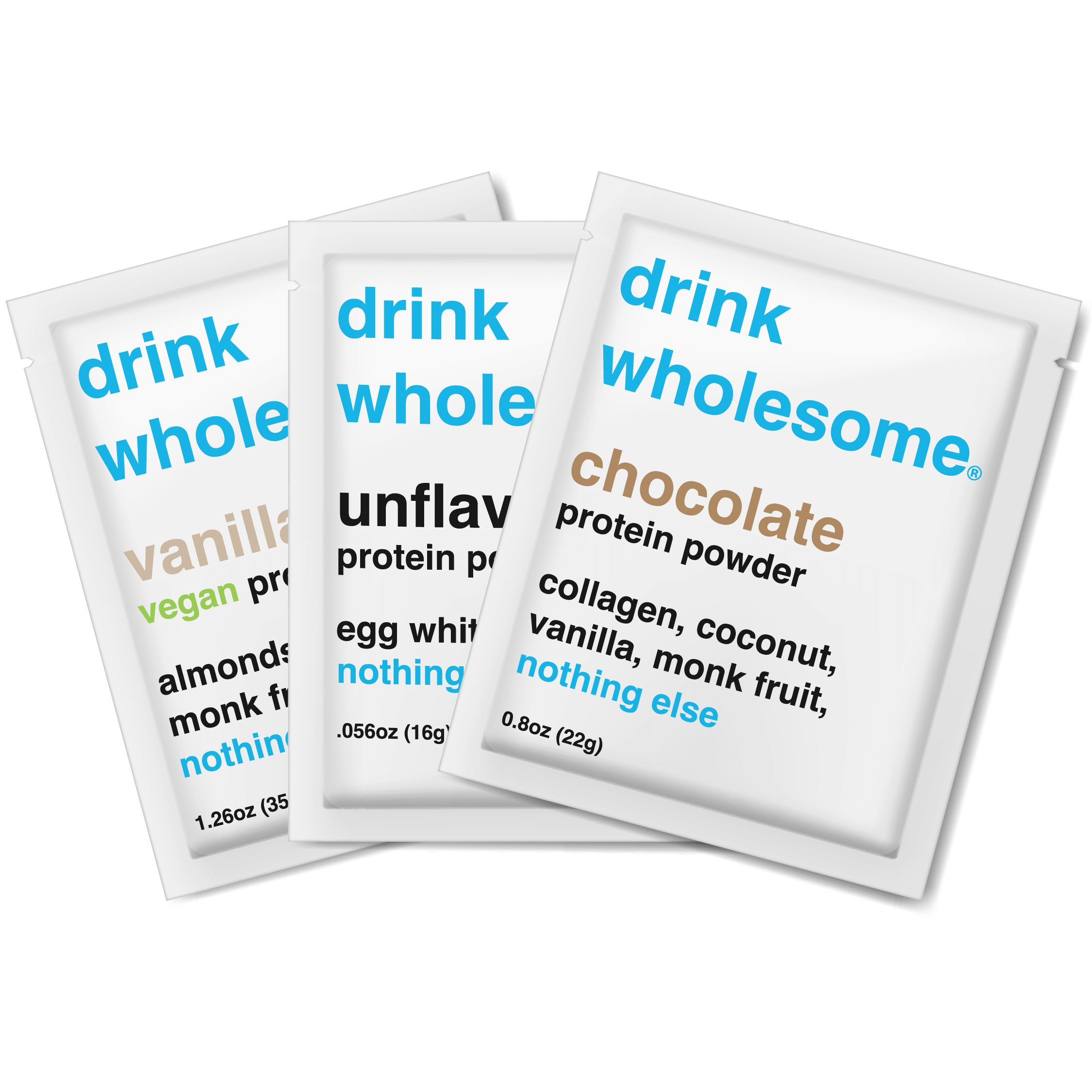
We make three types of Protein Powder for sensitive stomachs: Collagen Protein Powder, Egg White Protein Powder, and Vegan Almond Protein Powder. As long as you eat a balanced diet (get protein from a variety of sources), any type of protein powder can help you meet your protein needs. So just pick the type that best suits your personal preferences.
Ask our dietitian.
If you’re wondering which of our products is best for you, ask our registered dietitian. He’ll reply via email within 24 hours.
High Protein Blueberry Pancakes
PREP TIME
5 min
COOK TIME
5 min
SERVES
2
Ingredients
- ¼ cup Drink Wholesome
- ⅓ cup flour
- 2 egg whites
- ¼ cup plant milk
- 1 tbsp nut butter
- 2 tbsp maple syrup
- 1 cup blueberries
Instructions
In a blender, combine the egg whites, milk, ¼ cup blueberries, and almond butter. Pour the mixture into a small mixing bowl and add the protein powder and flour. Whisk until smooth. Pour ⅓ cup batter onto a heated and greased (or non-stick) pan to form pancakes. Cook each side for 2-3 minutes. This recipe makes 4-5 pancakes. Then, in a small saucepan, heat ¾ cup blueberries and the maple syrup over medium heat, stirring occasionally, for about 8 minutes. Plate the pancakes and spoon blueberry jam on top.