
How to Find the Best Protein Powder Without Fake Sugar

📌 Overview and Key Takeaways

This is a Dietitian’s guide on how to find the best protein powder without fake sugar.

Discover how to supplement your protein intake with only real ingredients.

drink wholesome founder
Last Updated
Jan 30, 2026
Author and Medical Reviewer

Written by Jack, CNC

Jack is a National Academy of Sports Medicine Certified Nutrition Coach.

Protein Powder Without Fake Sugar

What Is Fake Sugar?

“Fake sugar” is a colloquial term used to refer to sugar substitutes used to sweeten foods and beverages without the added calories and carbohydrates found in natural sugars.

Most fake sugars are many times sweeter than sugar, so only a small amount is needed to achieve the same level of sweetness.

The two most common types of fake sugars are artificial sweeteners and sugar alcohols.

Artificial sweeteners are synthesized in laboratories – there is nothing real about them.

The most common artificial sweeteners are sucralose and acesulfame potassium.

Sugar alcohols, on the other hand, are neither sugar nor alcohol in the traditional sense.

And although some of them are naturally occurring, commercial sugar alcohols were also made in a lab.

The most common sugar alcohols are erythritol and xylitol.

Many people also consider stevia and monk fruit to be fake sugars, which is debatable.

Both are natural sweeteners made from plants, but they contain virtually no sugar.

I would not put them in the same category as artificial sweeteners and sugar alcohols, as they are far better for you, but they are not technically sugars either.

Are Fake Sugars Bad for You?

Fake sugars like artificial sweeteners and sugar alcohols, despite their alluring benefits, are not healthy.

For starters, studies have found little to no relationship between changes in body weight and the use of low-calorie sweeteners.

On average, people who replace sugar with fake sugars lose less than two pounds (Int J Obes, 2012).

Studies have found that people who use certain fake sugars might actually gain weight because they indulge themselves after having “saved calories” with their diet soda, sugar-free ice cream, etc (CMAJ, 2017; Cell Metab, 2016).

The real concern with fake sugars, however, is how they affect your gut microbiome.

Regularly consuming sucralose, for example, can alter the composition and function of your gut microbiome (Adv Nutr, 2019).

Over time, this can lead to gut dysbiosis, which has been shown to contribute to the development and progression of a number of chronic conditions, including metabolic, cardiovascular, gastrointestinal, neurological, and immune-related diseases (Nutr Rev, 2025).

In short, fake sugars, particularly artificial sweeteners, are not healthy.

I would even argue that you might be better off just eating sugar.

That said, eating lots of Added Sugars is not good for you either.

The Food & Drug Administration (FDA) recommends that no more than 10 percent of your daily calorie intake come from Added Sugars because eating too many Added Sugars can increase your risk for heart disease and diabetes.

Why Monk Fruit?

Monk fruit, also known as luo han guo, is a melon-like fruit native to Southeast Asia.

Monk fruit sweetener is made by removing the seeds and skin, crushing the fruit, and collecting the juice, which is dried into a powder.

It is over 200 times sweeter than sugar, but sugar-free thanks to compounds called mogrosides.

Not only is monk fruit among the most natural sweeteners on the planet, but it is also one of the most delicious.

In fact, monk fruit is the only non-nutritive sweetener that actually tastes like sugar.

Order Samples to see for yourself.

Other natural sugar substitutes, particularly stevia, activate bitter taste receptors (Genes Nutr, 2014).

Why Not Stevia?

Stevia may not be as natural as you think.

Did you know that it is extracted from the stevia rebaudiana plant using chemicals like ethanol and methyl alcohol?

This, some argue, makes stevia no more natural than the fake sweeteners that it seeks to replace.

In fact, a recent class action lawsuit filed in California reached a $6.1 million settlement because it was ruled that the company in question falsely labeled and advertised its stevia sweeteners as “natural.”

Sources

  1. International Journal of Obesity (Int J Obes). Weighing the evidence of common beliefs in obesity research. 2012.
  2. Canadian Medical Association Journal (CMAJ). Artificial sweeteners and weight gain. 2017.
  3. Cell Metabolism (Cell Metab). Sucralose Promotes Food Intake through NPY and a Neuronal Fasting Response. 2016.
  4. Advances in Nutrition (Adv Nutr). Effects of Sweeteners on the Gut Microbiota: A Review of Experimental Studies and Clinical Trials. 2019.
  5. Nutrition Reviews (Nutr Rev). The Role of Gut Microbiota in Chronic Noncommunicable Diseases: An Overview of the Last Decade. 2025.
  6. Genes & Nutrition (Genes Nutr). Genetic signature of differential sensitivity to stevioside in the Italian population. 2014.

Editorial Guidelines


This article was written by a Registered Dietitian and reviewed by a Physician Assistant. We rely on peer-reviewed research and trusted medical sources, and regularly update our content to ensure accuracy and clarity.

Frequently asked questions

Who is Drink Wholesome for?

Drink Wholesome makes minimally-processed protein powder for sensitive stomachs. Because our protein powder is additive, dairy, and gluten-free and made from a short list of simple ingredients, it’s a great option for people with lactose intolerance, IBS, GERD, and SIBO.

Why is Drink Wholesome easy to digest?

No Dairy 

Drink Wholesome is made without whey and casein, which often contain lactose, a sugar most people can’t fully digest. Some caseins also release a bioactive peptide during digestion that has been linked to digestive issues in some individuals.

No Additives

Drink Wholesome is made without food additives. Regularly eating certain emulsifiers, thickeners, and other ultra-processed additives can contribute to gut dysbiosis, which has been linked to chronic digestive issues.

Whole Food Protein

Other protein powders are made from ultra-processed protein concentrates and isolates, which have been mechanically and/or chemically stripped of non-protein components that promote digestion. Drink Wholesome, on the other hand, is made from whole food protein sources, which might be more gut-friendly.

Collagen vs egg white vs almond protein powder?

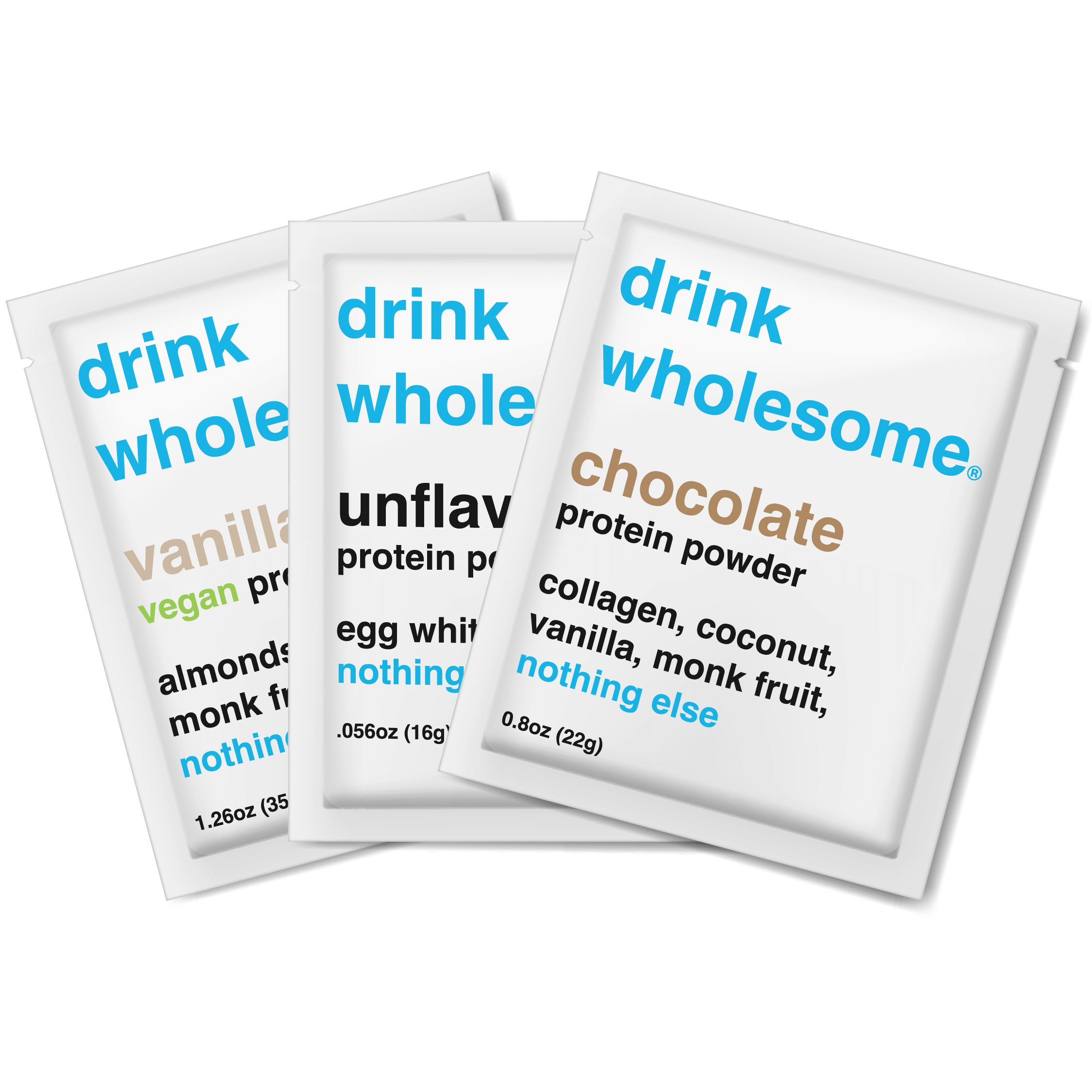
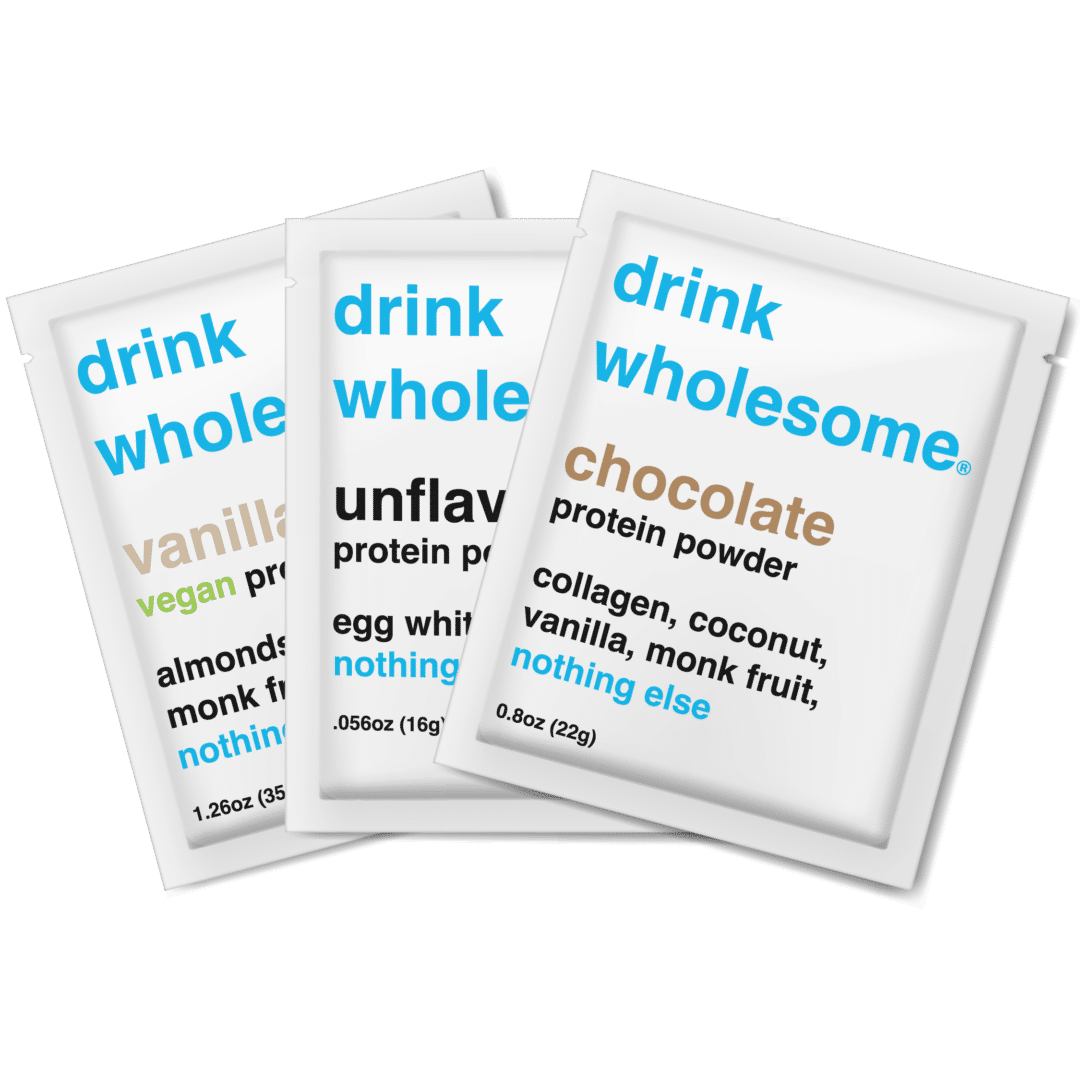
We make three types of minimally-processed Protein Powder for sensitive stomachs: Collagen Protein Powder, Egg White Protein Powder, and Vegan Almond Protein Powder. As long as you eat a balanced diet, any type of protein powder can help you meet your protein needs. So just pick the type that best suits your personal preferences.

Ask our dietitian.

If you’re wondering which of our products is best for you, ask our Registered Dietitian. They’ll reply via email within 24 hours.

Ask Our Dietitian
Name
Name
First
Last

High Protein Blueberry Pancakes

PREP TIME

5 min

COOK TIME

5 min

SERVES

2

Ingredients
  • ¼ cup Drink Wholesome
  • ⅓ cup flour
  • 2 egg whites
  • ¼ cup plant milk
  • 1 tbsp nut butter
  • 2 tbsp maple syrup
  • 1 cup blueberries
Instructions

In a blender, combine the egg whites, milk, ¼ cup blueberries, and almond butter. Pour the mixture into a small mixing bowl and add the protein powder and flour. Whisk until smooth. Pour ⅓ cup batter onto a heated and greased (or non-stick) pan to form pancakes. Cook each side for 2-3 minutes. This recipe makes 4-5 pancakes. Then, in a small saucepan, heat ¾ cup blueberries and the maple syrup over medium heat, stirring occasionally, for about 8 minutes. Plate the pancakes and spoon blueberry jam on top.