How to Find the Best Protein Powder Without Artificial Flavors

📌 Overview and Key Takeaways

This is a Dietitian’s guide on how to find the best protein powder without artificial flavors.

Discover how to supplement your protein intake without flavorings.

drink wholesome founder
Last Updated
Jan 29, 2026
Author and Medical Reviewer

Written by Jack, CNC

Jack is a National Academy of Sports Medicine Certified Nutrition Coach.

Medically reviewed by Brittany, MS, RD and Jenn, PA-C

Brittany is a Registered Dietitian with a MS in Nutrition.

Jenn is a Physician Assistant with a BA in Nutritional Sciences.

Protein Powder Without Artificial Flavors

What Are Artificial Flavors?

Artificial flavors are synthesized (man-made) compounds designed to mimic the taste of flavors found in nature.

They are often derived from petroleum or other inedible sources.

Artificial flavors are added to a wide range of consumer products, including supplements, for several reasons, including:

  • Consistency: They provide a consistent taste profile, ensuring that every batch tastes the same.
  • Shelf stability: They do not change over time like natural flavors, which can extend shelf life.
  • Cost-effectiveness: They are often cheaper to produce and use compared to natural flavors and ingredients, making them an economical option.

Note that while they are considered safe for human consumption by most regulatory bodies, artificial flavors are often perceived by consumers as unhealthy.

Are Artificial Flavors Bad for You?

Despite their functional benefits, artificial flavors are:

  • Ultra-processed: They look nothing like real food.
  • Additive-laden: They often contain solvents, stabilizers, and carriers.
  • Lacking in nutrition: They have little to no nutritional value.

Regularly eating artificial flavors might also pose health risks.

Some artificial food additives have been shown to alter the function and of composition of your gut microbiome (FASEB J, 2025).

And over time, this could lead to gut dysbiosis, which contributes to wide range of chronic diseases, including obesity and type 1 diabetes (J Exp Med, 2019).

Product Quiz

Product Quiz

Find the best product for you.

press Enter
What is your main goal?
Are you on a vegan diet?
Are you on a low sodium diet?
Do you prefer flavored or unflavored?
How would you typically use our products?
What's your sex (assigned at birth)?
What's your age?
Do you have sensitive stomach?
Have you ever been diagnosed with a digestive disease?
Select your condition(s).
Use Shift+Tab to go back

What Is the Best Protein Powder Without Artificial Flavors?

To know if a protein powder contains artificial flavors, read the ingredient list on the Supplement or Nutrition Facts panel.

And while you are there, check to see if there are any other food additives listed.

avoid food additives

🚫 Avoid Food Additives

In addition to artificial flavors, most protein powders contain emulsifiers, thickeners, and artificial sweeteners.

None of these ultra-processed ingredients look anything like real food, and all of them are probably bad for your digestive health.

⚠️ Here is a list of the most common food additives in protein supplements:

  • acacia fiber
  • acacia gum
  • acesulfame potassium
  • artificial flavors
  • ascorbic acid
  • aspartame
  • calcium carbonate
  • carrageenan
  • cellulose gum
  • dextrin
  • dicalcium phosphate
  • dipotassium phosphate
  • erythritol
  • gellan gum
  • guar gum
  • gum arabic
  • inulin
  • locust bean gum
  • maltitol
  • maltodextrin
  • mono- and diglycerides
  • ‘natural’ flavors
  • rice bran extract
  • rice dextrin
  • rice hulls
  • rosemary extract
  • silica
  • silicon dioxide
  • sodium alginate
  • soluble corn fiber
  • sorbitol
  • soy lecithin
  • sucralose
  • sunflower lecithin
  • tocopherols
  • tricalcium phosphate
  • xanthan gum
  • xylitol
  • zinc oxide

As a rule of thumb, if you could not find an ingredient in nature or make it at home, it is a food additive.

It is important to note that whereas food manufacturers are required to disclose their ingredients, flavor manufacturers are not.

They can add synthetic solvents, preservatives, and carriers to a flavor that qualifies as “natural” under current regulations (FDA regulations 21 CFR §101.22).

The term “natural flavor” could therefore be a catch-all term for everything that a manufacturer would rather not spell out on the ingredient list.

In my opinion, this makes natural flavors as bad, if not worse, than artificial flavors.

At least artificial flavors are explicitly artificial.

avoid ultra processing

🚫 Avoid Protein Concentrates and Isolates

You might also want to avoid ultra-processed protein concentrates and isolates.

Most protein supplements are made from one or both of these ultra-processed protein sources, which have been mechanically and/or chemically stripped of everything but the protein.

This includes the enzymes, fiber, and other natural digestive aids that help your gut break them down.

You therefore do not digest them in the same way that you do whole foods, which could affect your gut health.

Studies show that regularly eating protein concentrates and isolates might disrupt your gut microbiome and cause the formation of toxic byproducts in your gut (Nutrients, 2018; Mol Nutr Food Res, 2024).

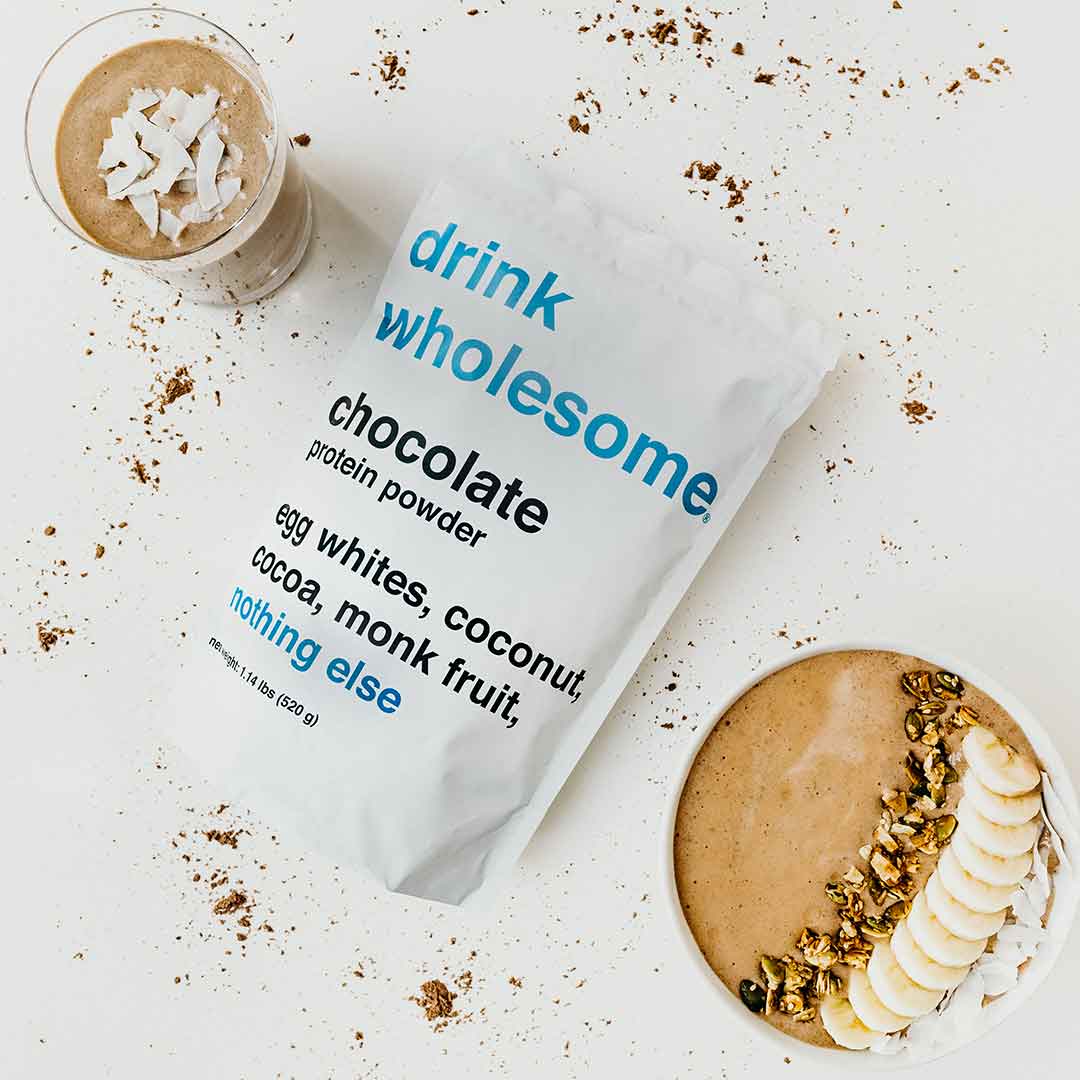
You should thus look for protein supplements made from whole food protein sources like egg whites and almonds, which are easier to digest and absorb.

Order Samples to see for yourself.

Sources

  1. FASEB journal : official publication of the Federation of American Societies for Experimental Biology (FASEB J). Food Additives: Emerging Detrimental Roles on Gut Health. 2025.
  2. The Journal of Experimental Medicine (J Exp Med). The gut microbiome: Relationships with disease and opportunities for therapy. 2019.
  3. Nutrients (Nutrients). Effect of a Protein Supplement on the Gut Microbiota of Endurance Athletes: A Randomized, Controlled, Double-Blind Pilot Study. 2018.
  4. Molecular Nutrition & Food Research (Mol Nutr Food Res). In Vitro Fermentation of Animal and Plant Protein Isolates by the Human Gut Microbiota Under High and Low Carbohydrate Conditions. 2024.

Editorial Guidelines


This article was written by a Registered Dietitian and reviewed by a Physician Assistant. We rely on peer-reviewed research and trusted medical sources, and regularly update our content to ensure accuracy and clarity.

Frequently asked questions

Who is Drink Wholesome for?

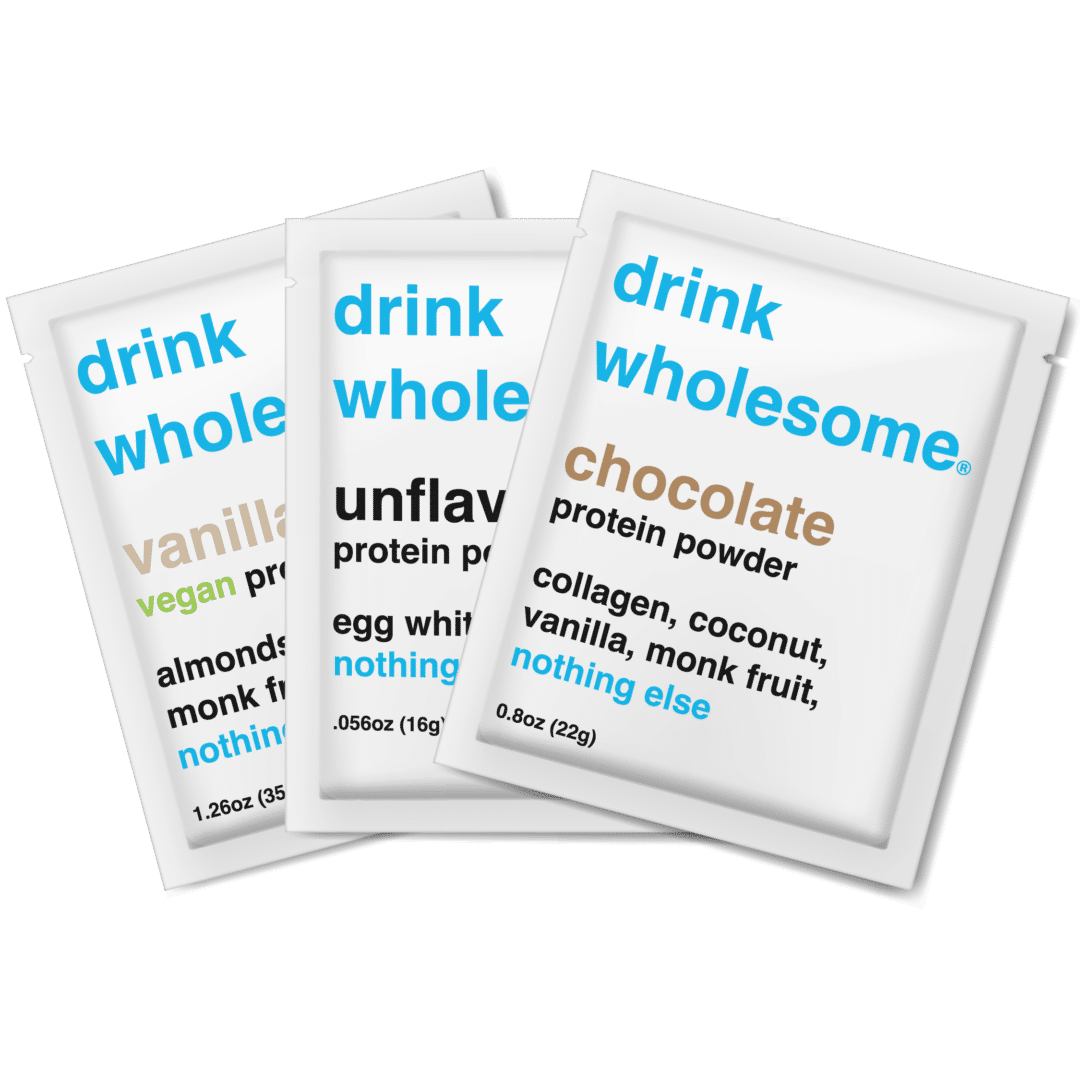
Drink Wholesome makes minimally-processed protein powder for sensitive stomachs. Because it’s made from a short list of simple ingredients, it’s also a great option for anyone who wants to avoid artificial and ultra-processed ingredients – including kids, seniors, and moms.

Why is Drink Wholesome easy to digest?

No Dairy 

Drink Wholesome is made without whey and casein, which contain lactose, a sugar most people can’t fully digest. Dairy-based proteins, especially casein, also form a gel-like substance in your stomach, which can upset sensitive stomachs.

No Additives

Drink Wholesome is made without ultra-processed food additives. Regularly eating artificial sweeteners, emulsifiers, thickeners, and other additives can cause digestive issues and even long-term gut health problems.

Whole Food Protein

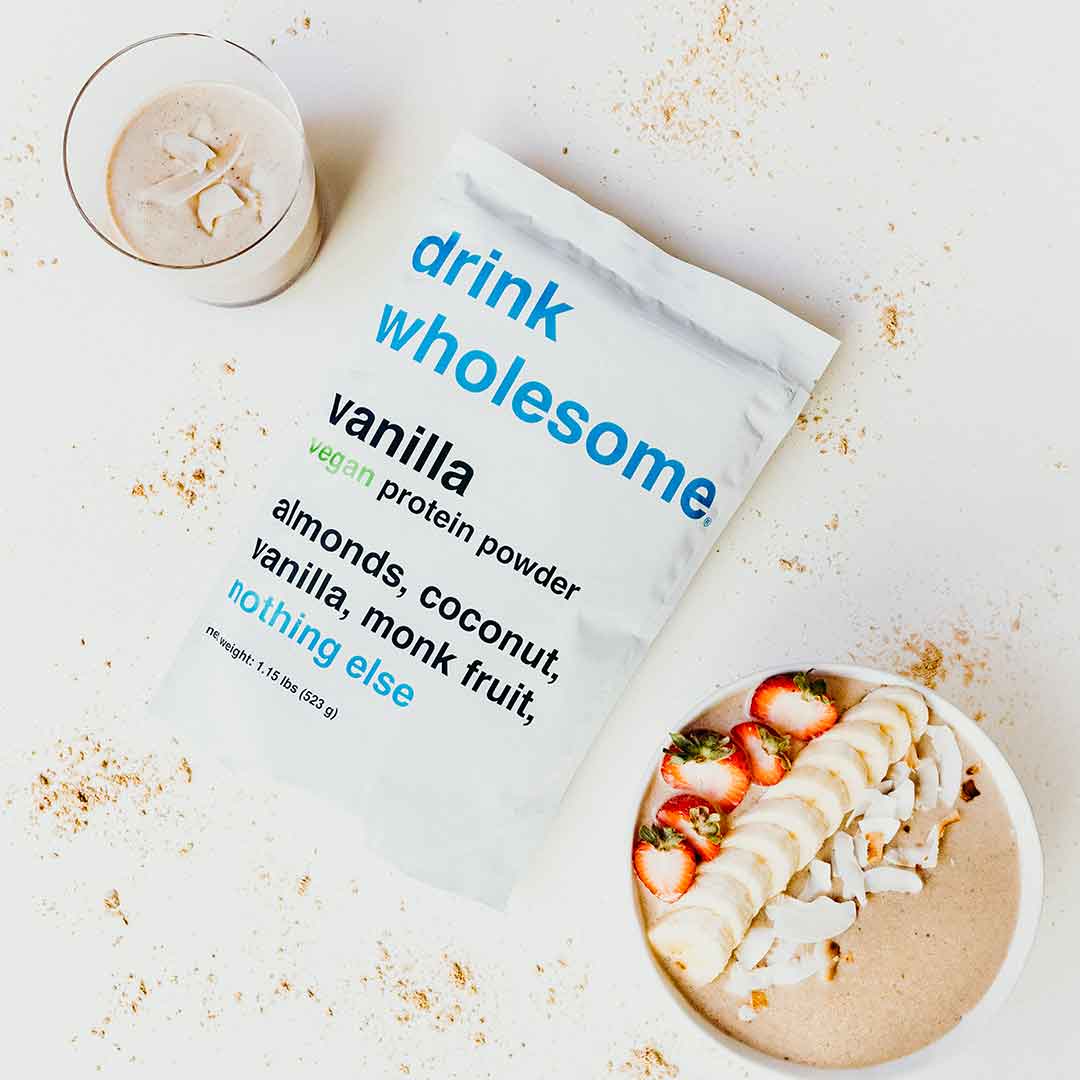
Drink Wholesome is made from whole food protein sources like almonds and egg whites. Unlike ultra-processed protein concentrates and isolates, which have been stripped of fiber, enzymes, and other natural digestive aids, whole foods are easy to break down and absorb.

Collagen vs egg white vs almond protein powder?

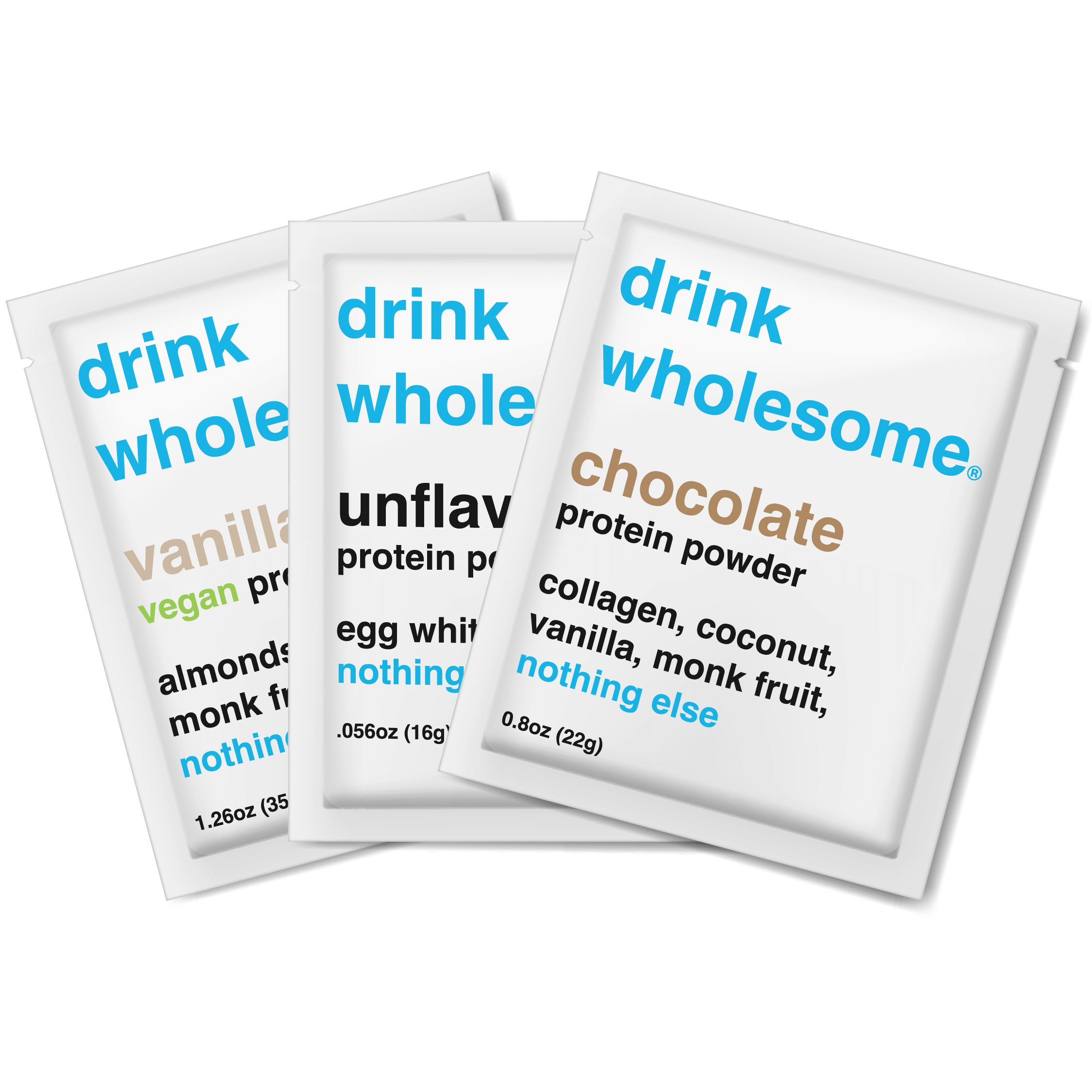
We make three types of minimally-processed Protein Powder for sensitive stomachs: Collagen Protein Powder, Egg White Protein Powder, and Vegan Almond Protein Powder. As long as you eat a balanced diet (get protein from a variety of sources), any type of protein powder can help you meet your protein needs. So just pick the type that best suits your personal preferences.

Ask our dietitian.

If you’re wondering which of our products is best for you, ask our Registered Dietitian. She’ll reply via email within 24 hours.

Ask Our Dietitian
Name
Name
First
Last

High Protein Blueberry Pancakes

PREP TIME

5 min

COOK TIME

5 min

SERVES

2

Ingredients
  • ¼ cup Drink Wholesome
  • ⅓ cup flour
  • 2 egg whites
  • ¼ cup plant milk
  • 1 tbsp nut butter
  • 2 tbsp maple syrup
  • 1 cup blueberries
Instructions

In a blender, combine the egg whites, milk, ¼ cup blueberries, and almond butter. Pour the mixture into a small mixing bowl and add the protein powder and flour. Whisk until smooth. Pour ⅓ cup batter onto a heated and greased (or non-stick) pan to form pancakes. Cook each side for 2-3 minutes. This recipe makes 4-5 pancakes. Then, in a small saucepan, heat ¾ cup blueberries and the maple syrup over medium heat, stirring occasionally, for about 8 minutes. Plate the pancakes and spoon blueberry jam on top.