What is the best protein powder for elderly weight gain?
What is the best protein powder for elderly weight gain? Learn how to find a protein powder that can help you or someone you care for safely gain weight.
Written by Jack Schrupp & endorsed by Baylee Reller, RDN
How elderly can use protein powder to gain weight
Is protein powder good for elderly people?
Elderly people need to eat lots of protein to prevent muscle loss that comes with aging. Aging bodies also process protein less efficiently, so seniors need more of it than they did when they were young, even if they are healthy.
Adopting a high protein diet is especially important for elderly folks recovering from illness. Did you know that patients with a critical illness can lose more than 15% of muscle mass in one week? Muscle loss can, in turn, affect strength and bone health, limiting agility, balance, and the ability to perform simple tasks.
Roughly one-third of elderly people do not eat enough protein due to reduced appetite, dental issues, taste or swallowing problems, or limited finances. When combined with a sedentary lifestyle, this increases the risk of muscle loss, compromised mobility, and slower recovery from illness. Basically, elderly people who consume more protein have better outcomes.
Experts in the field of aging recommend a protein intake between 1.2 and 2 grams per kilogram of bodyweight per day for elderly adults. Elderly adults who are severely ill or malnourished may even need more. For reference, the recommended protein intake for a healthy adult is 0.8 grams per kilogram of bodyweight per day. This means that an elderly person could easily need to eat twice as much protein as his or her younger self. As you might imagine, consuming this much protein can be challenging, even for those without dietary restrictions. This is where protein powder can help.
Why does protein powder help with weight gain?
Putting on weight comes down to eating more calories than you burn. It takes an extra 3,500 calories to gain a pound, and to gain weight at a safe rate (0.5 pound per week), you need to eat an extra 250 calories every day.
If you are looking not only to gain weight, but also to build or maintain muscle, then you have to eat protein. Muscle growth can occur only if muscle protein synthesis exceeds muscle protein breakdown, a balance that is regulated, in part, by dietary protein intake.
Adding a protein powder to your diet is an easy way to increase both your calorie and protein intake, thereby helping you gain weight and build muscle. That said, not all protein powder are created equal.
What is the best protein powder elderly weight gain?
As long as you eat a balanced diet, any type of protein powder (egg white, pea, whey, etc.) can help you meet your protein needs. What matters when it comes to choosing a protein powder is thus not the protein source. but the other ingredients.
Unfortunately, most protein powders contain a bunch of additives like emulsifiers, thickeners, flavors, and sugar substitutes. These ingredients can cause gastrointestinal (GI) side effects and long-term gut health problems.
GI side effects are not only painful, but also make it hard to eat enough to gain weight. If you have to run to the bathroom every time you drink a protein shake, you are not going to be bulking up.
As bad as bloating, diarrhea, and stomach pain sound, the long-term effects of regularly eating food additives are far worse. Regularly eating food additives can alter the makeup of your gut microbiome – the collection of microorganisms living in your gut.
Your gut microbiome helps you digest and absorb food, so messing with it can cause the food to eat to pass right through you. Studies have shown that gut dysbiosis (an altered gut microbiome) is a leading cause of inflammation in the body and is linked to the development and progression of several chronic diseases. This is certainly not something anyone, let alone elderly people, want to deal with.
The best protein shakes for the elderly are with a short list of simple ingredients. Essentially, the more your protein shake resembles real food, the better it is for your gut and overall health. It is worth noting that as you age, there is a natural decrease in the variety of microorganisms in your gut, and the composition of your gut microbiome can shift, potentially leading to gut dysbiosis. This is yet another reason to avoid protein powders loaded with food additives.
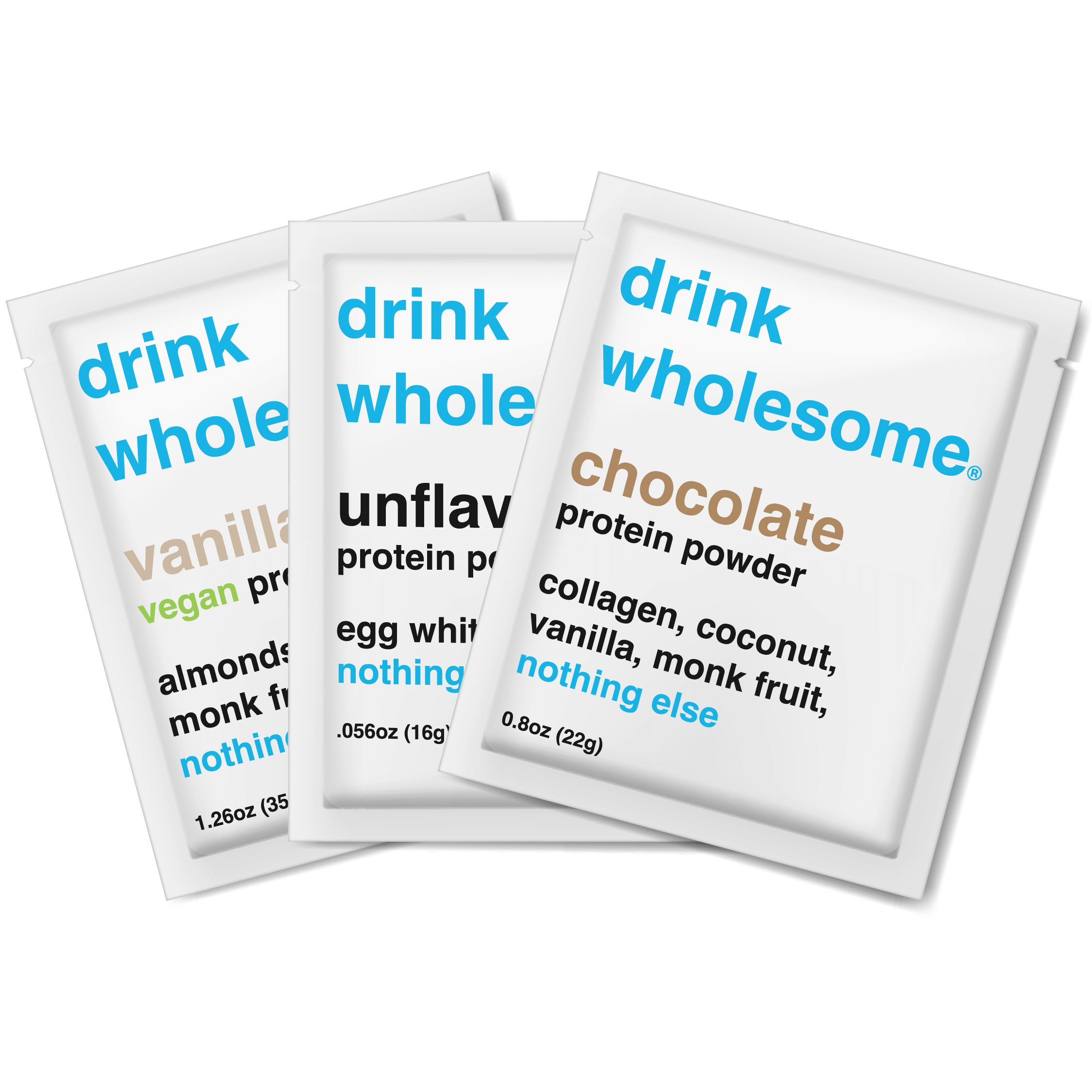
drink wholesome is the best protein powder for elderly weight gain
One of the reasons why we make the best protein powder for elderly weight gain is that we do not use food additives like gums, lecithin, flavors, and artificial sweeteners. Here is a list of the most common food additives in protein powder:
acacia fiber, acacia gum, acesulfame potassium, artificial flavors, ascorbic acid, aspartame, calcium carbonate, carrageenan, cellulose gum, dextrin, dicalcium phosphate, dipotassium phosphate, erythritol, gellan gum, guar gum, gum arabic, inulin, locust bean gum, maltodextrin, mono- and diglycerides, ‘natural’ flavors, rice bran extract, rice dextrin, rice hulls, rosemary extract, silica, silicon dioxide, sodium alginate, sodium bicarbonate, soluble corn fiber, soy lecithin, sucralose, sunflower lecithin, tocopherols, tricalcium phosphate, xanthan gum, xylitol, zinc oxide
Additives like these are hard to digest and feed your gut bacteria, which release gas as they eat. Too much intestinal gas can, in turn, cause bloating, flatulence, and stomach pain. Partially digested food additives also cause your colon to absorb excess water, which can trigger diarrhea.
the alternative:
Protein Matrix Comprised of (Whey Protein Concentrate, Whey Protein Isolate, Calcium Caseinate, Micellar Casein, Milk Protein Isolate, Egg Albumen, Glutamine Peptides), Polydextrose, Sunflower Creamer (Sunflower Oil, Corn Syrup Solids, Sodium Caseinate, Mono- and Diglycerides, Dipotassium Phosphate, Tricalcium Phosphate, Soy Lecithin, Tocopherols), Natural and Artificial Flavor, MCT Powder (Medium Chain Triglycerides, Nonfat Dry Milk, Disodium Phosphate, Silicon Dioxide), Lecithin, Cellulose Gum, Salt, Yellow 5, Sucralose, Acesulfame Potassium, Papain, Bromelain
Another reason why we make the best protein powder for elderly to gain weight is that we do not use dairy-based proteins. Whey and casein, which are byproducts of cheese and yogurt production, cause digestive issues because they contain lactose – a sugar many elderly people cannot digest.
A final reason why we make the best protein powder for weight gain in elderly is that we do not use protein concentrates or isolates. Nearly all other protein powders are made from one or both of these protein sources.
Protein concentrates and isolates have been stripped of the enzymes, fiber, and other natural digestive aids that help you break them down. This not only makes them hard to digest, but may also affect the balance of your gut microbiome. Once again, this is not something you want to deal with.
Instead of protein concentrates or isolates, we use egg whites and almonds. These minimally-processed protein sources are a gut-friendly alternative to protein concentrates and isolates.
Unlike protein isolates and concentrates, egg whites and almonds contain enzymes that help you break them down. Almonds are also rich in prebiotic fiber, so they improve the composition of your gut microbiome.
Egg whites, on the other hand, are low FODMAP (easy to break down), alkaline (balance the pH levels in your gut) and probiotic (promote the growth of healthy gut bacteria). Our customers experience fewer digestive issues with our egg white protein powder than with any other type of protein supplement.
In summary, our protein powders, because they are additive and dairy-free and made with whole food protein sources, are the best way to boost your protein intake as an elderly person. Order samples to see for yourself.
★★★★★
easy to digest
“As someone struggling with IBS and weight loss, I’ve been desperately trying to find something to help me keep on weight. Every other vegan protein powder I tried literally make me run to the bathroom. I was about to give up when I found Drink Wholesome. It has been a total life saver. I’m so happy to have found something I can eat, and for for the first time in 3 weeks I actually gained a bit of weight back. :0” – Abby
Read more reviews or take the quiz.
This content is not intended to be a substitute for professional medical advice, diagnosis, or treatment. drink wholesome is not intended to diagnose, treat, cure or prevent any disease.