
What is the best meal replacement protein powder?
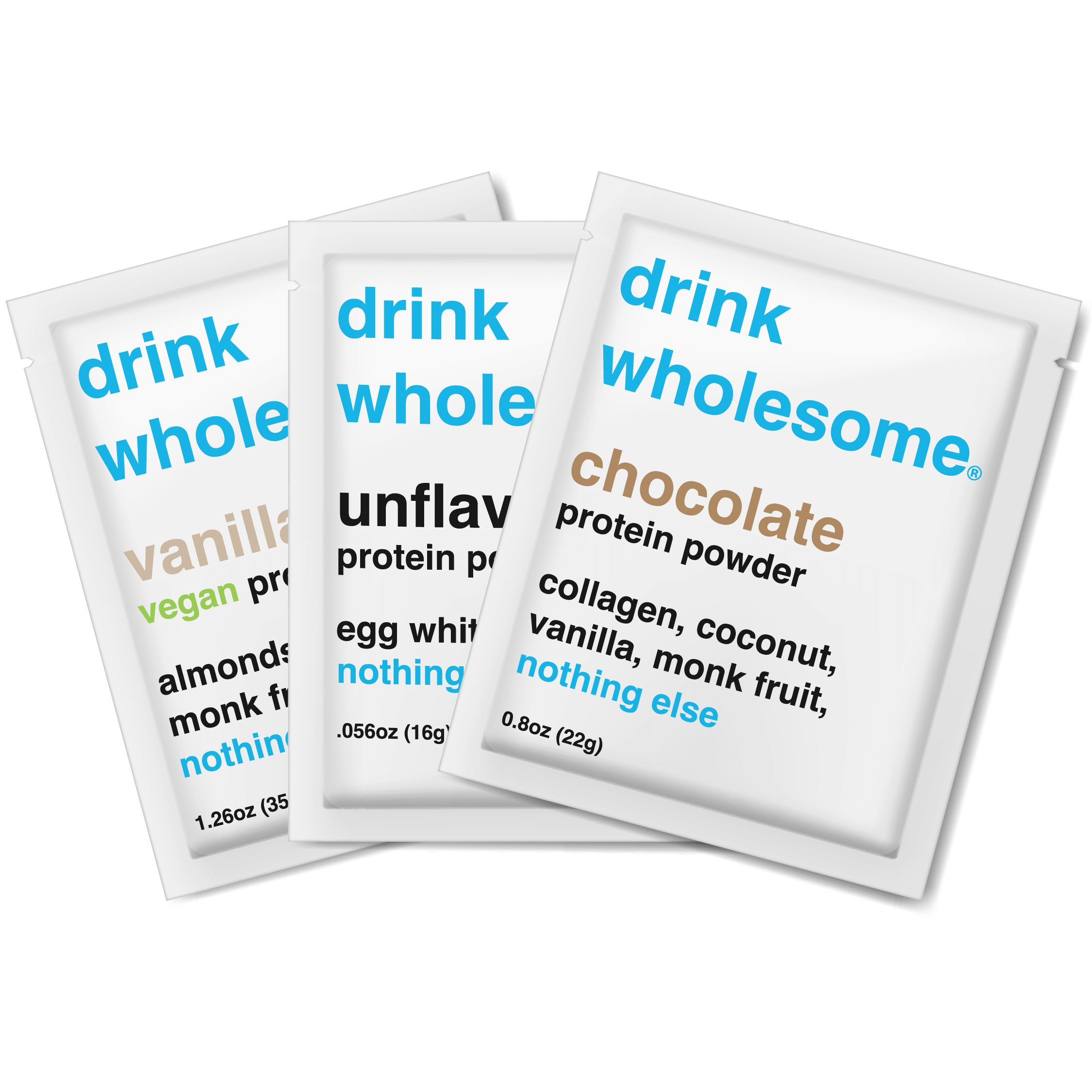
drink wholesome makes the best meal replacement protein powder with a short list of simple ingredients. Now, you can eat a quick, high protein (30 grams protein) meal without extra processing and added junk. Order samples to see if our high protein meal replacement is right for you.
Written by Jack Schrupp & endorsed by Baylee Reller, RDN
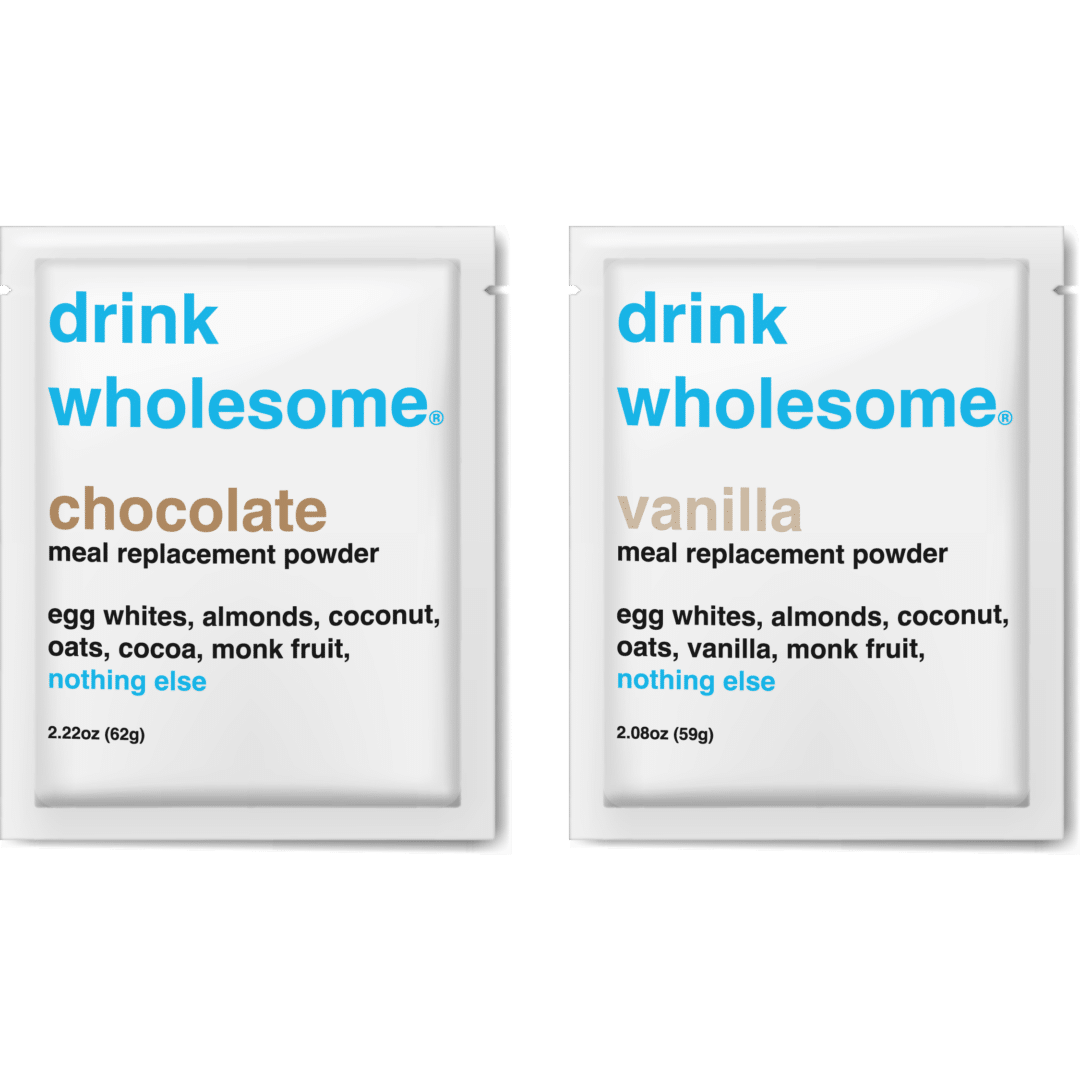
Meal Replacement Powder Sample Packs
$14.99
How to pick a high protein meal
What is a high protein meal replacement?
A meal replacement is intended to replace the nutritional value of a meal. It should contain a balance of healthy fats, complex carbohydrates, and complete protein.
According to the U.S. Food and Drug administration, a food must contain 20 percent or more of the recommended daily intake to be considered “high” protein. The Dietary Guidelines for Americans recommend that between 10 and 35% of an adult’s daily calories should come from protein, so, based on a 2,000 calorie diet, an adult should consume between 200 and 700 protein calories every day. For the average adult, this amounts to about 50 grams of protein.
It follows that to be considered high protein, a meal replacement must contain at least 10 grams of protein per serving.
How much protein can the body use from a single meal?
Based on the current evidence, you should aim to consume at most 0.18 grams of protein per pound of bodyweight per meal. This comes out to just over 27 grams of protein for a 150-pound person. Anything above this amount is thought to be oxidized for energy or converted to form urea and other organic acids. Note that this recommendation is for individuals looking to build muscle, and may not apply to everyone.
For most people, eating more protein than you can digest and absorb is not dangerous, just wasteful. Individuals with impaired kidney function, however, should be mindful of their protein intake. For them, eating too much protein can cause or accelerate kidney damage.
Why should you eat more protein?
Studies have demonstrated that high protein diets can help you build and maintain muscle mass, manage your weight, improve blood sugar control, and increase intestinal calcium absorption, which may result in long-term improvements in bone health.
Part of the magic of protein is that it increases satiety, preventing cravings and overeating, and increases thermogenesis, or your metabolic rate and energy expenditure. Combined, these two benefits make protein almost a magic bullet for weight loss. In fact, several clinical trials have found that consuming more protein not only reduces body weight, but also enhances body composition by decreasing fat and preserving muscle.
Depending on your goals, you may simply want to add a high protein meal replacement shake to your diet, or replace a meal or part of a meal with a meal replacement shake. The outcomes can be different, so consult a registered dietitian to figure out which approach is best for you.
What type of protein is best?
As long as you are eating a balanced diet, the type of protein in your high protein meal replacement does not matter. Some people say that you should prioritize animal protein sources over plant protein sources, but there are benefits to both. Animal protein sources do have some nutritional advantages over plant protein sources when it comes to amino acids and bioavailability, but these advantages are not significant if you get your protein from a variety of sources.
My advice is to pick the protein source that makes you feel best. We use egg whites as the primary source of protein in our meal replacement protein powders because our customers report that they are easy to digest and cause fewer side effects than any other type of protein.

What is the best meal replacement protein powder?
To understand what makes some meal replacement protein shakes better than others, all you have to do is compare ingredient lists. Many, if not most, meal replacements are made with ingredients that offer no nutritional value or health advantages and may cause serious complications. For example, here are the ingredients in Soylent, one of the best-selling high protein meal replacements in the United States:
FILTERED WATER, SOY PROTEIN ISOLATE, MALTODEXTRIN, HIGH OLEIC SUNFLOWER OIL, ALLULOSE, CANOLA OIL, CELLULOSE, VITAMIN AND MINERAL PREMIX, NATURAL FLAVORS, SOLUBLE CORN FIBER, SOY LECITHIN, SALT, GELLAN GUM, SUCRALOSE. VITAMIN AND MINERAL PREMIX: MAGNESIUM PHOSPHATE (Magnesium), POTASSIUM CHLORIDE (Potassium), TRICALCIUM PHOSPHATE (Calcium), DIPOTASSIUM PHOSPHATE (Potassium), ASCORBIC ACID (Vitamin C), CHOLINE CHLORIDE (Choline), DL-ALPHA-TOCOPHERYL ACETATE (Vitamin E), NIACINAMIDE (Niacin), FERROUS BISGLYCINATE (Iron), ZINC OXIDE (Zinc), MANGANESE SULFATE (Manganese), D-CALCIUM PANTOTHENATE (Pantothenic Acid), COPPER GLUCONATE (Copper), THIAMINE HYDROCHLORIDE (Thiamine), PYRIDOXINE HYDROCHLORIDE (Vitamin B6), RIBOFLAVIN, VITAMIN A PALMITATE (Vitamin A), POTASSIUM IODIDE (Iodine), FOLIC ACID, CHROMIUM CHLORIDE (Chromium), VITAMIN K1, SODIUM SELENITE (Selenium), SODIUM MOLYBDATE (Molybdenum), BIOTIN, ERGOCALCIFEROL (Vitamin D2), CYANOCOBALAMIN (Vitamin B12)
As you can clearly see, Soylent contains a cocktail of food additives, including emulsifiers, thickeners, flavors, and sugar substitutes. Ingredients like these, in addition causing painful side effects like bloating and diarrhea, can alter the composition of your gut microbiome – the community of microorganisms living in your digestive tract. An altered gut microbiome is a leading driver of inflammation and linked to the onset and progression of many chronic diseases.
In contrast, here are in the ingredients in drink wholesome:
egg whites, almonds, oats, coconut, cocoa, monk fruit
Compared to what goes into Soylent, this is a short list of simple ingredients. Both high protein meal replacement shakes contain fats, carbs, and 20 or more grams of protein per serving, but they are clearly taking different nutritional approaches. Soylent looks like a science experiment, whereas drink wholesome looks like real food.
It is worth mentioning that unlike ready-to-drink shakes like Soylent, our meal replacement protein powders have to be mixed with liquid. This may seem relatively inconvenient, but it is a small price to pay for safe, quality nutrition.

drink wholesome makes the best meal replacement protein powder
drink wholesome is additive-free
One of the reasons why we make the best meal replacement protein powder is that we, unlike other companies, do not use food additives. Additives can cause painful gastrointestinal (GI) side effects, even when consumed in small quantities.
Firstly, additives resist digestion and spend extra time in your gut, feeding your hungry gut bacteria. Gut bacteria release gas as they eat, so more time to eat means more gas, which can cause bloating, flatulence, and stomach pain. It can also slow down the passage of food, leading to constipation.
Second, digestion-resistant additives can draw water into your colon. This can trigger osmotic diarrhea.
Here is a list of the most common food additives in meal replacement protein powders:
acacia fiber, acacia gum, acesulfame potassium, artificial flavors, ascorbic acid, aspartame, calcium carbonate, carrageenan, cellulose gum, dextrin, dicalcium phosphate, dipotassium phosphate, erythritol, gellan gum, guar gum, gum arabic, inulin, locust bean gum, maltodextrin, mono- and diglycerides, ‘natural’ flavors, rice bran extract, rice dextrin, rice hulls, rosemary extract, silica, silicon dioxide, sodium alginate, sodium bicarbonate, soluble corn fiber, soy lecithin, sucralose, sunflower lecithin, tocopherols, tricalcium phosphate, xanthan gum, xylitol, zinc oxide
In the long-term, regularly eating food additives can also disturb regulatory pathways in your intestines, causing inflammatory bowel disease (IBD). Basically, food additives are not something you want to be putting in your body, at least not every day.
drink wholesome is dairy-free
Another reason why we make the best meal replacement protein shakes is that we do not use dairy-based proteins like whey and casein. Whey and casein, which are byproducts of cheese and yogurt making, are known to cause digestive distress because they contain lactose – a sugar most adults cannot fully digest.

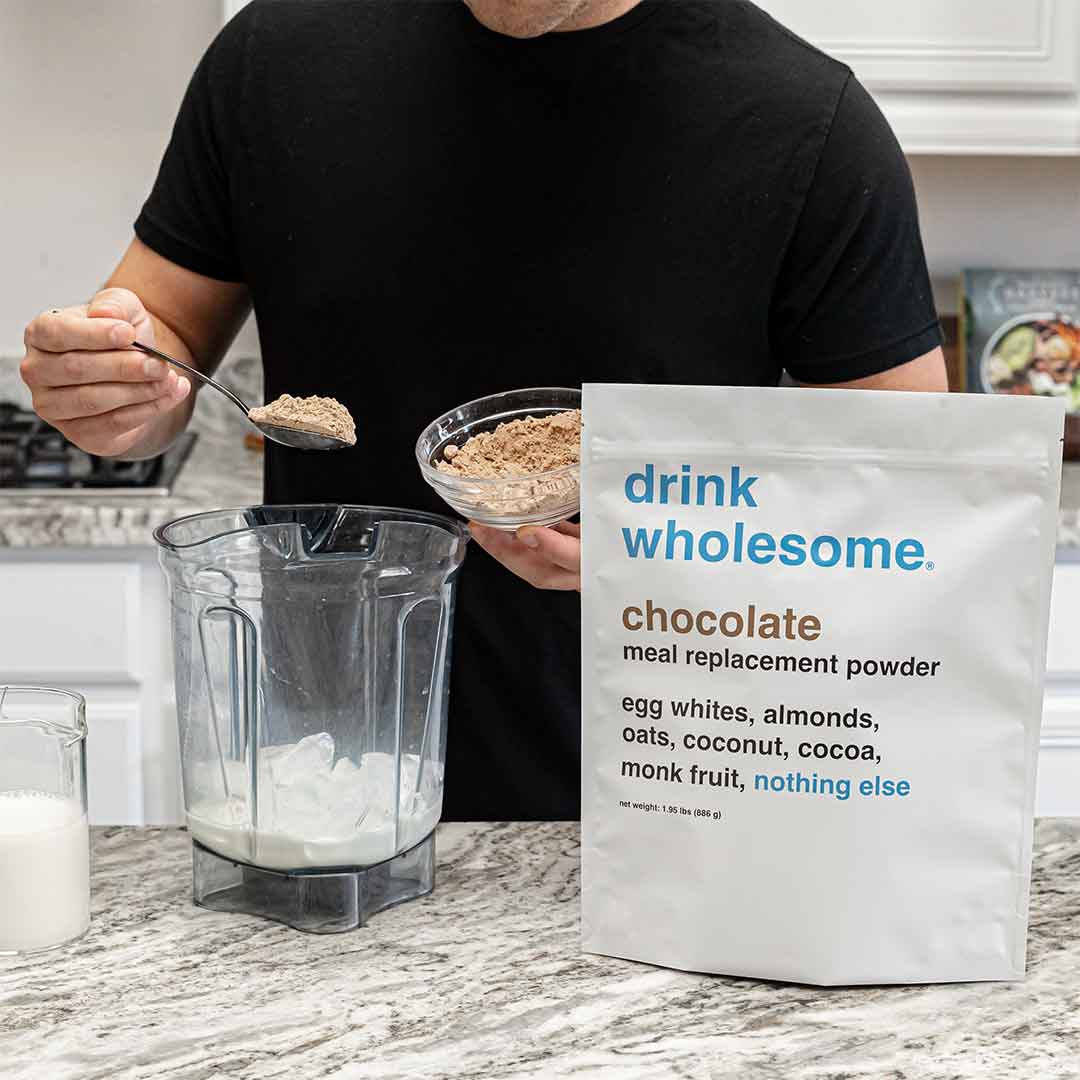
drink wholesome is made with real foods
A final reason why we make the best meal replacement protein powder is that we do not use protein concentrates or isolates. Practically every other high protein meal replacement is made from one or both of these protein sources, which have been stripped of everything but the protein.
Making protein concentrates and isolates requires heavy processing using machinery and chemicals (like hexane). As a result, what you end up putting into your body looks nothing like real food.
Your gut is designed to break down unprocessed or minimally-processed real foods. Regularly eating heavily-processed protein concentrates and isolates, it follows, can disturb your gut microbiome.
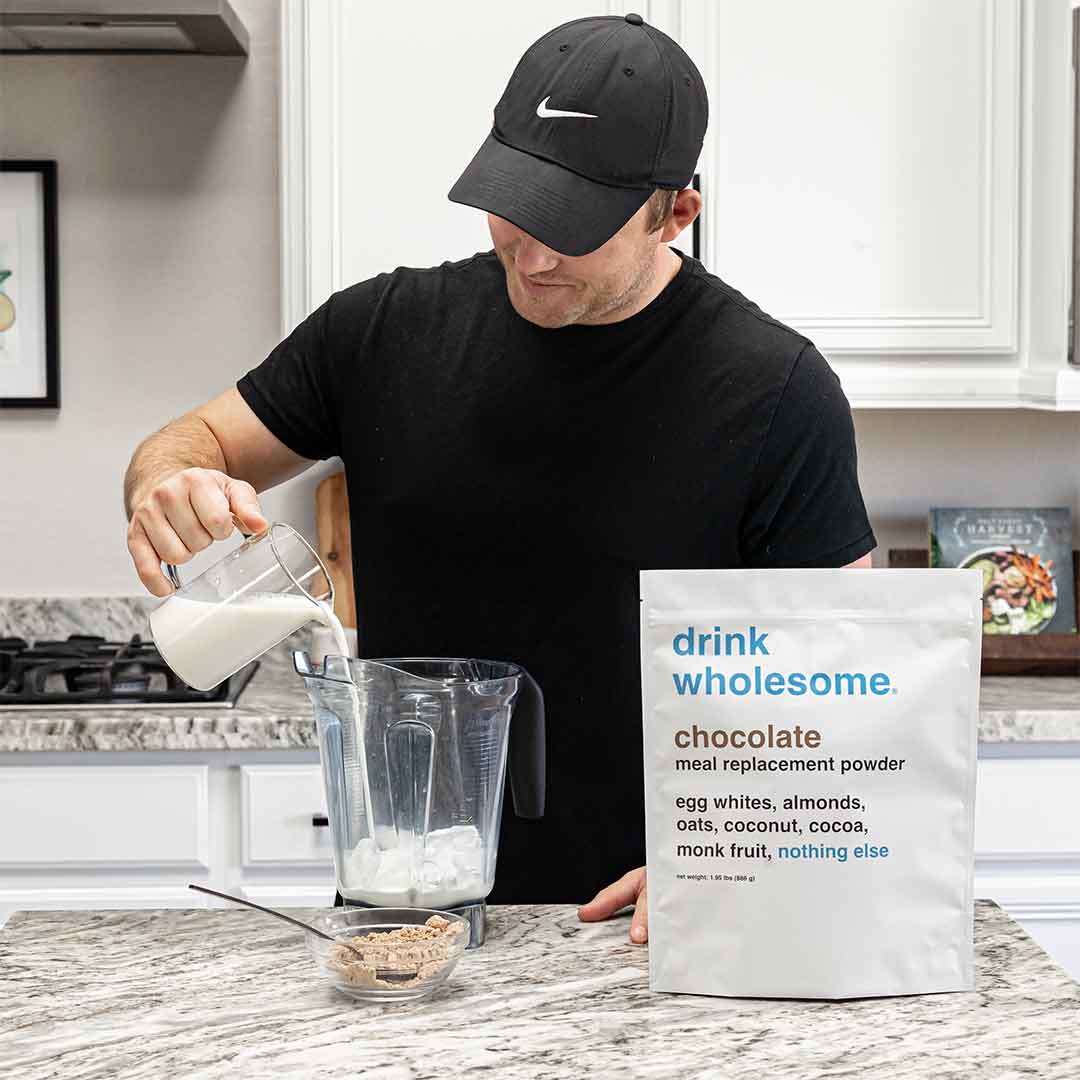
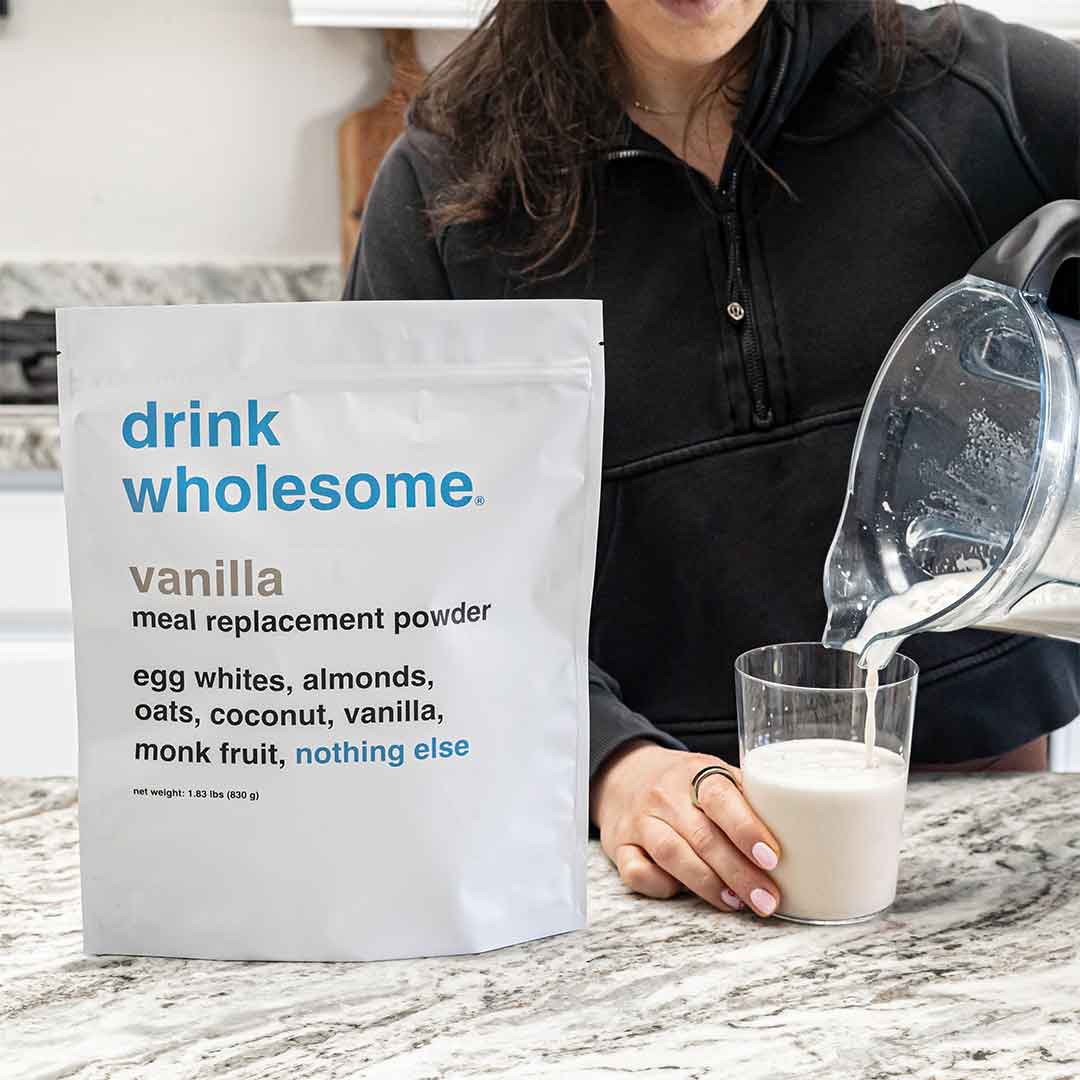
Instead of using protein concentrates or isolates, we make the best high protein meal replacement with whole food protein sources like egg whites and almonds. These are a gut-friendly alternative to protein concentrates and isolates.
Unlike protein isolates and concentrates, egg whites and almonds contain enzymes that help you break them down. Almonds are also prebiotic, meaning they improve the diversity of your gut microbiome. Egg whites, on the other hand, are low in fiber, low FODMAP, alkaline (maintaining healthy pH levels in your gut), and bioactive (promoting the growth of healthy gut bacteria).
In summary, thanks to our short list of simple ingredients, you can eat a quick, easy high protein meal (30 grams protein) without causing side effects or complications. Order samples to see for yourself.
“The only meal replacement I could find that doesn’t have soy, dairy, or pea protein. I love how it tastes (not chalky at all) and most of all I love how it makes me feel. No bloating or gas for the first time!” – Kayla
Read more reviews or take the quiz.
Meal Replacement Powder Sample Packs
$14.99
This content is not intended to be a substitute for professional medical advice, diagnosis, or treatment. drink wholesome is not intended to diagnose, treat, cure or prevent any disease.