
What are the best low sugar meal replacement shakes?
drink wholesome makes the best low sugar meal replacement shakes with a short list of simple ingredients. Say hello to a low sugar meal without extra processing and added junk. Order samples to see if our low sugar meal replacement drinks are right for you.
Written by Jack Schrupp & endorsed by Baylee Reller, RDN
How to pick low sugar meal replacement
Is sugar bad for you?
Not all sugar is bad for you. The natural sugars found in fruits and vegetables are actually healthy. Added sugars, however, are a different story.
In 2016, the U.S. Food and Drug Administration (FDA) updated the Nutrition Facts label to include both “Total Sugars” and “Added Sugars.” Added Sugars are those added during processing, while Total Sugars include both added sugars and naturally sugars like those in fruits.

What is low-sugar?
According to the FDA, “sugar-free” means that 1 serving of food contains less than 0.5 grams of Total Sugars. The term “low-sugar” is not defined by the FDA.
Food manufacturers cannot legally make “low sugar” or “reduced sugar” nutrient content claims (NCCs) on their packaging. This includes NCCs that imply low sugar like “lightly sweetened” and “slightly sweet.” Manufacturers who make claims like these risk being accused of false advertising. For instance, Kellogg once settled a class action lawsuit for labeling some of its cereals as “lightly sweetened.” Plaintiffs argued this implied the cereals were low in sugar, when in fact they contained as much as 40% Added Sugar.
A meal replacement shake company, it follows, cannot legally claim that its products are low sugar. You must read the Nutrition Facts panel and make that determination yourself. Keep reading to learn how.
The 2020-2025 Dietary Guidelines for Americans recommends that no more than 10 percent of your daily calories should come from Added Sugars. If you consume a 2,000 calorie daily diet, this amounts to 200 calories or 50 grams of Added Sugars per day. For reference, there are 39 grams of Added Sugar in a 12 oz can of Coca‑Cola.
Assuming that you eat 3 meals of similar nutritional value per day, you should limit your Added Sugar intake to no more than 16-17 grams per meal. To be honest, this is a lot more Added Sugar than I myself would eat, but it does stay within the guidelines provided by the FDA.
I myself try to limit my Added Sugar intake to no more than 10 grams per meal. This way, even if I have a sweet snack, I stay well below the FDA’s Daily Value for Added Sugar. I do not worry too much about Total Sugar because naturally occurring sugars are part of a healthy diet.
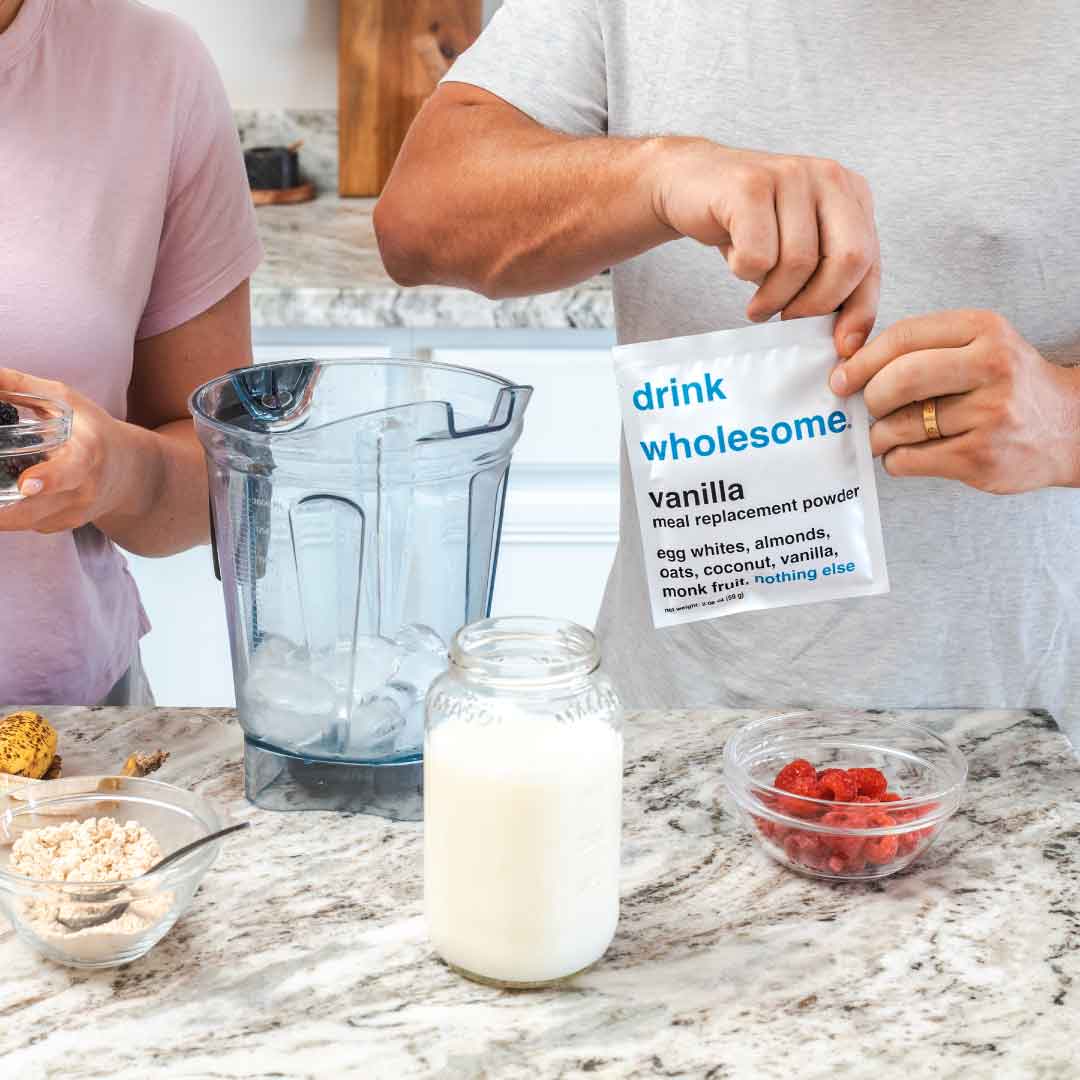
What are the best low sugar meal replacement shakes?
Our meal replacement shakes contain 5 grams of Total Sugar and 0 grams of Added Sugar per serving. The 5 grams of Total Sugar comes from ingredients like oats and coconut.
Instead of using sugar to sweeten our shakes, we use monk fruit. Monk fruit, also known as luo han guo – is a melon-like fruit native to Southeast Asia. It is sugar-free, but over intensely sweet sugar thanks to compounds called mogrosides.
We prefer monk fruit to other natural sugar substitutes like stevia because it is both better for you and better tasting. Monk fruit sweeteners are extracted using a natural water extraction method whereas stevia sweeteners are extracted using chemicals like ethanol and methyl alcohol. Monk fruit is sweet like sugar too, whereas stevia activates bitter taste receptors in addition to sweet taste receptors.
Monk fruit is also far better for you than the artificial sweeteners and sugar alcohols used to sweeten many meal replacement shakes. Sure, a pinch of artificial sweetener or sugar alcohol can be used to achieve the same amount of sweetness as several tablespoons of sugar, and at a fraction of the cost, but there are also serious drawbacks to using ingredients like these.
Artificial sweeteners and sugar alcohols can cause cravings toward sugary and sweet foods, increase the risk of glucose intolerance, which is a precursor for pre-diabetes and diabetes, alter the composition of the gut microbiome, and cause digestive issues. At the end of the day, you are probably better off just eating sugar.
All this is to say that you should be careful when shopping for low sugar meal replacement shakes. Just because a meal replacement is low in sugar does not mean that it is good for you. Take the popular brand Soylent, for example. 1 serving contains only 1 gram of Sugar, but look at the ingredients:
FILTERED WATER, SOY PROTEIN ISOLATE, MALTODEXTRIN, HIGH OLEIC SUNFLOWER OIL, ALLULOSE, CANOLA OIL, CELLULOSE, VITAMIN AND MINERAL PREMIX, NATURAL FLAVORS, SOLUBLE CORN FIBER, SOY LECITHIN, SALT, GELLAN GUM, SUCRALOSE. VITAMIN AND MINERAL PREMIX: MAGNESIUM PHOSPHATE (Magnesium), POTASSIUM CHLORIDE (Potassium), TRICALCIUM PHOSPHATE (Calcium), DIPOTASSIUM PHOSPHATE (Potassium), ASCORBIC ACID (Vitamin C), CHOLINE CHLORIDE (Choline), DL-ALPHA-TOCOPHERYL ACETATE (Vitamin E), NIACINAMIDE (Niacin), FERROUS BISGLYCINATE (Iron), ZINC OXIDE (Zinc), MANGANESE SULFATE (Manganese), D-CALCIUM PANTOTHENATE (Pantothenic Acid), COPPER GLUCONATE (Copper), THIAMINE HYDROCHLORIDE (Thiamine), PYRIDOXINE HYDROCHLORIDE (Vitamin B6), RIBOFLAVIN, VITAMIN A PALMITATE (Vitamin A), POTASSIUM IODIDE (Iodine), FOLIC ACID, CHROMIUM CHLORIDE (Chromium), VITAMIN K1, SODIUM SELENITE (Selenium), SODIUM MOLYBDATE (Molybdenum), BIOTIN, ERGOCALCIFEROL (Vitamin D2), CYANOCOBALAMIN (Vitamin B12)
Soylent contains a cocktail of food additives, including emulsifiers, thickeners, flavors, and sugar substitutes like sucralose. Ingredients like these are terrible for you health.
In contrast, here are in the ingredients in drink wholesome:
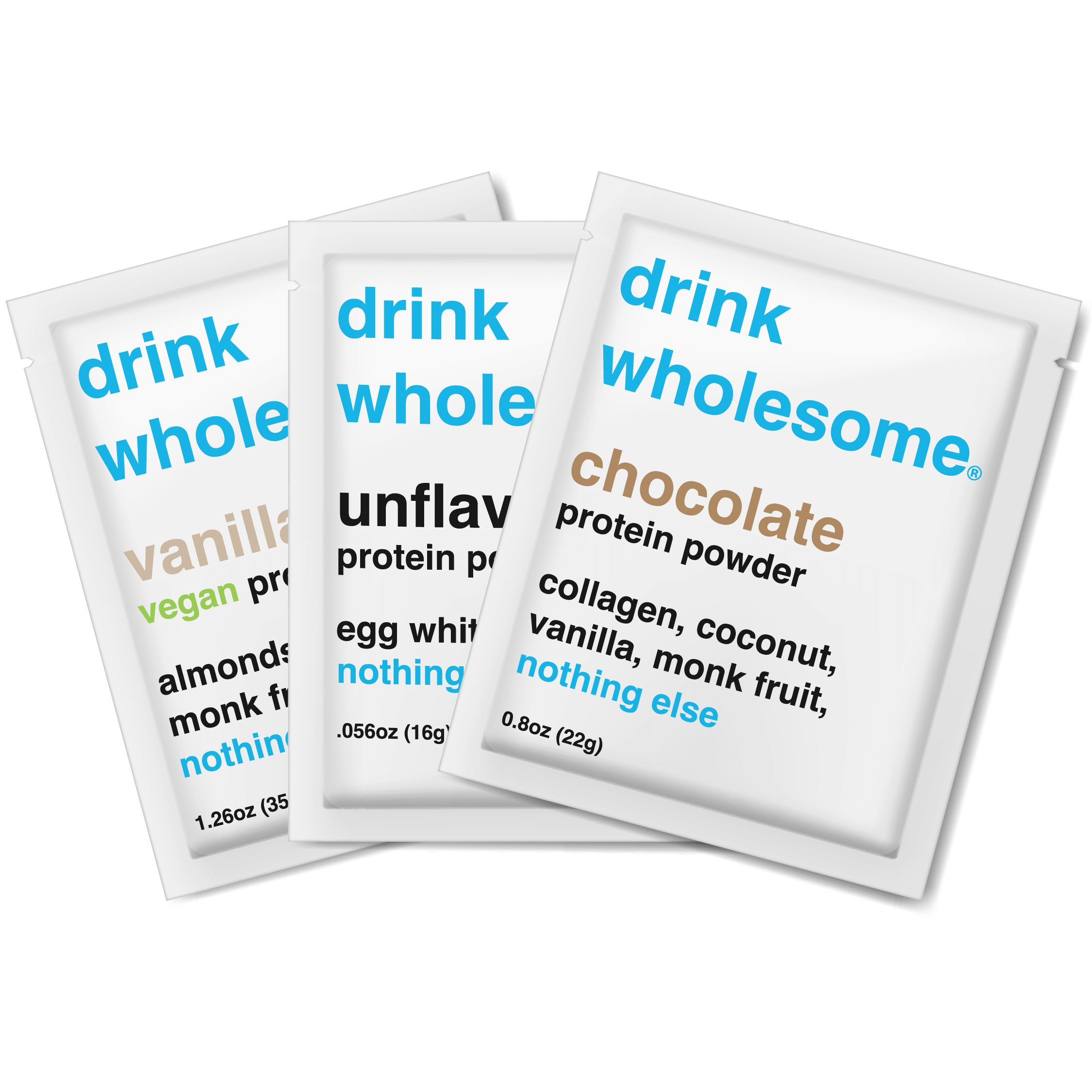
egg whites, almonds, oats, coconut, cocoa, monk fruit
Compared to what goes into Soylent, this is a short list of simple ingredients. Sure, there is a bit more sugar in drink wholesome, but it is naturally occurring sugar. Even if it were Added Sugar, I would argue that you would still be better off drinking it than drinking the added junk in Soylent.
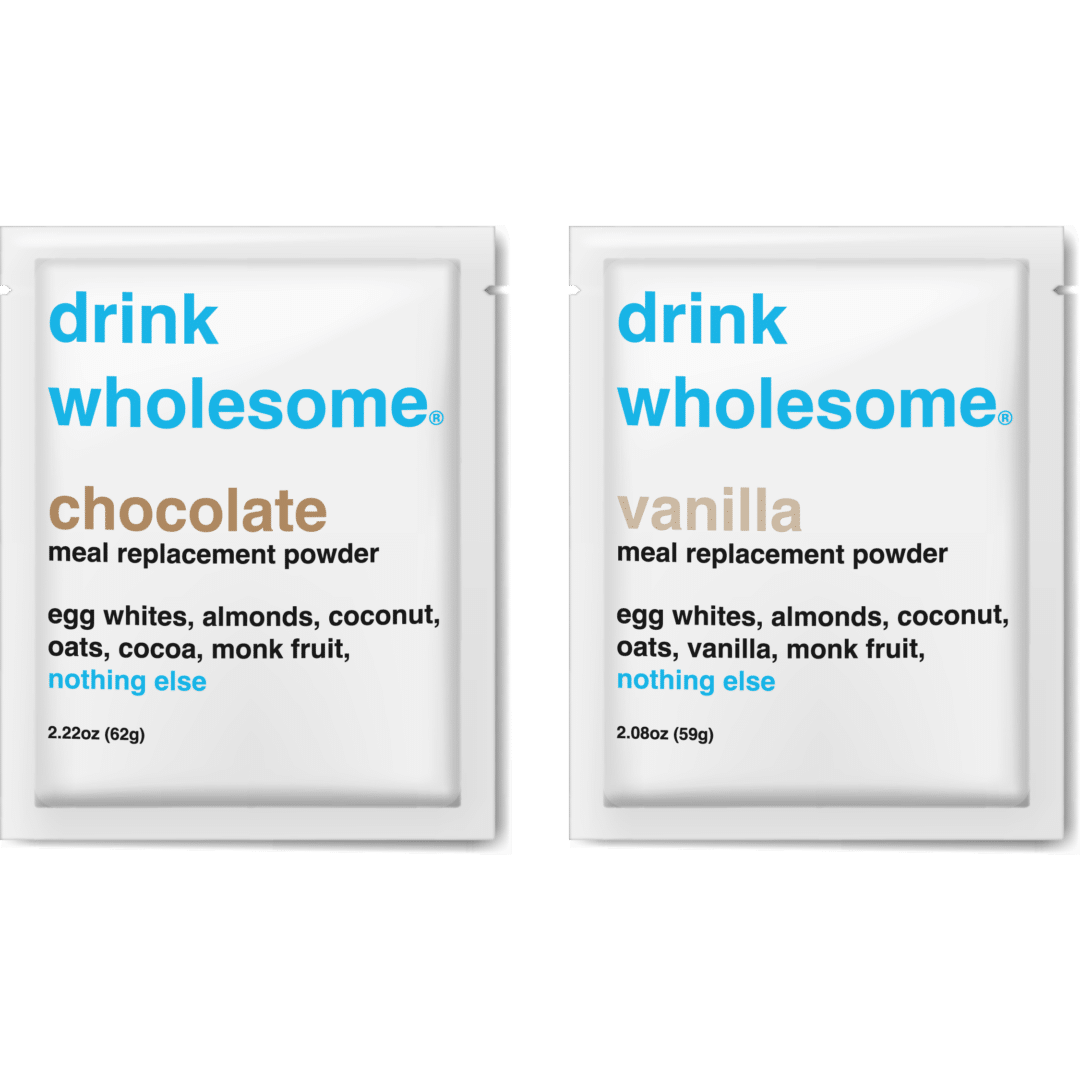
Meal Replacement Powder Sample Packs
$14.99
drink wholesome makes the best meal replacement protein powder
drink wholesome is additive-free
One of the reasons why we make the best low sugar meal replacement shakes is that we, unlike other companies, do not use food additives. Additives can cause painful gastrointestinal (GI) side effects, even when consumed in small quantities.
Food additives are hard to digest and feed your gut bacteria, which release gas as they eat. Too much intestinal gas can, in turn, cause bloating, flatulence, and stomach pain.
Partially digested food additives also cause your colon to absorb excess water, which can trigger diarrhea. Here is a list of the most common food additives in meal replacement shakes:
acacia fiber, acacia gum, acesulfame potassium, artificial flavors, ascorbic acid, aspartame, calcium carbonate, carrageenan, cellulose gum, dextrin, dicalcium phosphate, dipotassium phosphate, erythritol, gellan gum, guar gum, gum arabic, inulin, locust bean gum, maltodextrin, mono- and diglycerides, ‘natural’ flavors, rice bran extract, rice dextrin, rice hulls, rosemary extract, silica, silicon dioxide, sodium alginate, sodium bicarbonate, soluble corn fiber, soy lecithin, sucralose, sunflower lecithin, tocopherols, tricalcium phosphate, xanthan gum, xylitol, zinc oxide
Regularly eating food additives can cause long term gut health problems too. For instance, certain food additives can disrupt regulatory pathways in your intestines, causing inflammatory bowel disease (IBD).
Some food additives, especially artificial sweeteners and sugar alcohols, can also alter the composition of your gut microbiome – the collection of microorganisms living in your gut. An altered gut microbiome is a leading driver of inflammation and linked to the onset and progression of chronic digestive diseases.
drink wholesome is dairy-free
Another reason why we make the best low sugar meal replacement drinks is that we do not use dairy-based proteins like whey and casein. Whey and casein, which are byproducts of cheese and yogurt making, contain lactose – a sugar most adults cannot fully digest. As you just learned, foods that resist digestion tend to cause digestive issues.

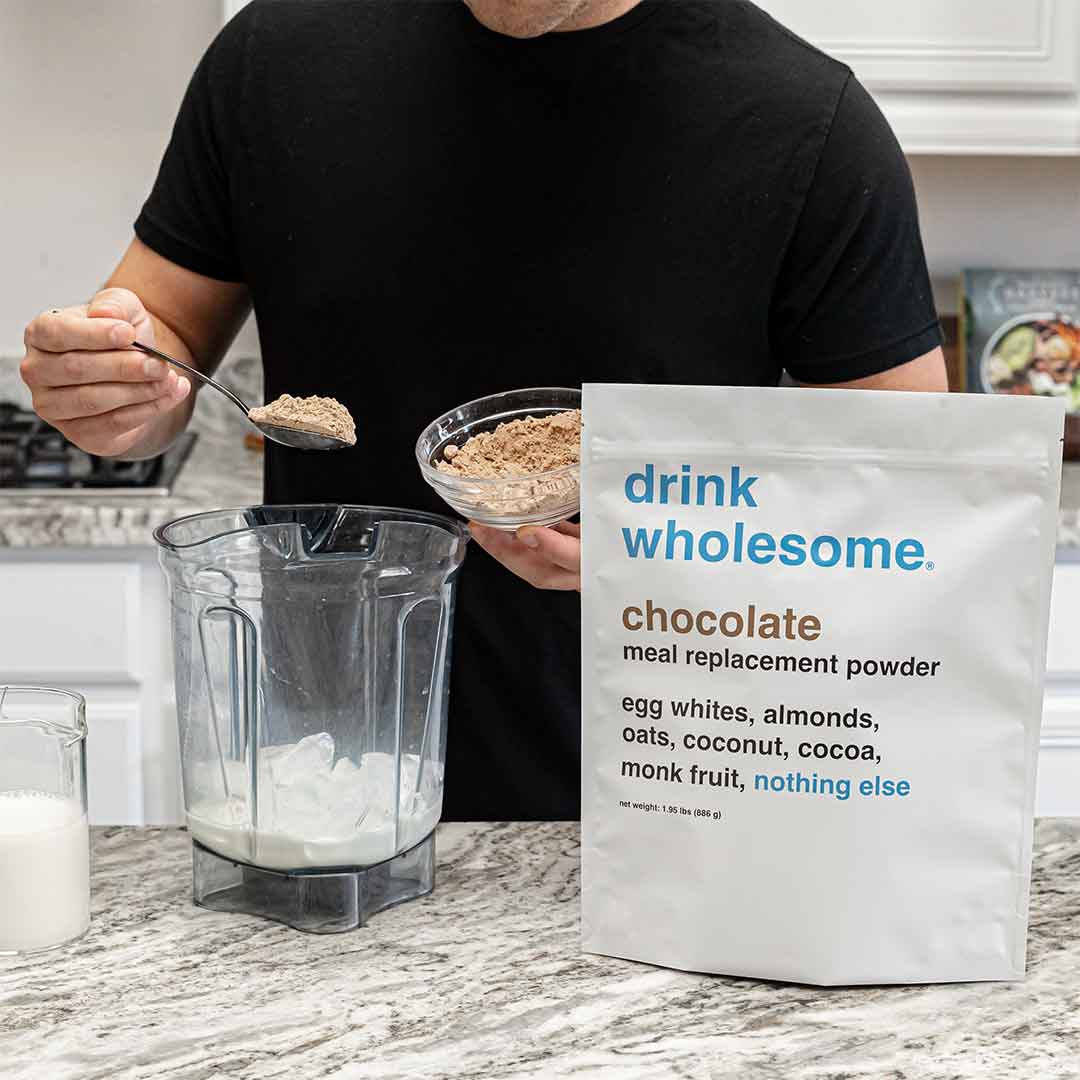
drink wholesome is made with real foods
A final reason why we make the best low sugar meal replacement shakes is that we do not use protein concentrates or isolates. Practically every other high protein meal replacement is made from one or both of these protein sources, which have been stripped of everything but the protein using machinery and chemicals (like hexane).
Protein concentrates and isolates, it follows, do not contain enzymes, fiber, and other natural digestive aids that help you break them down. This not only makes them hard to digest, but may also disrupt your gut microbiome. Once again, this is not something you want to happen.

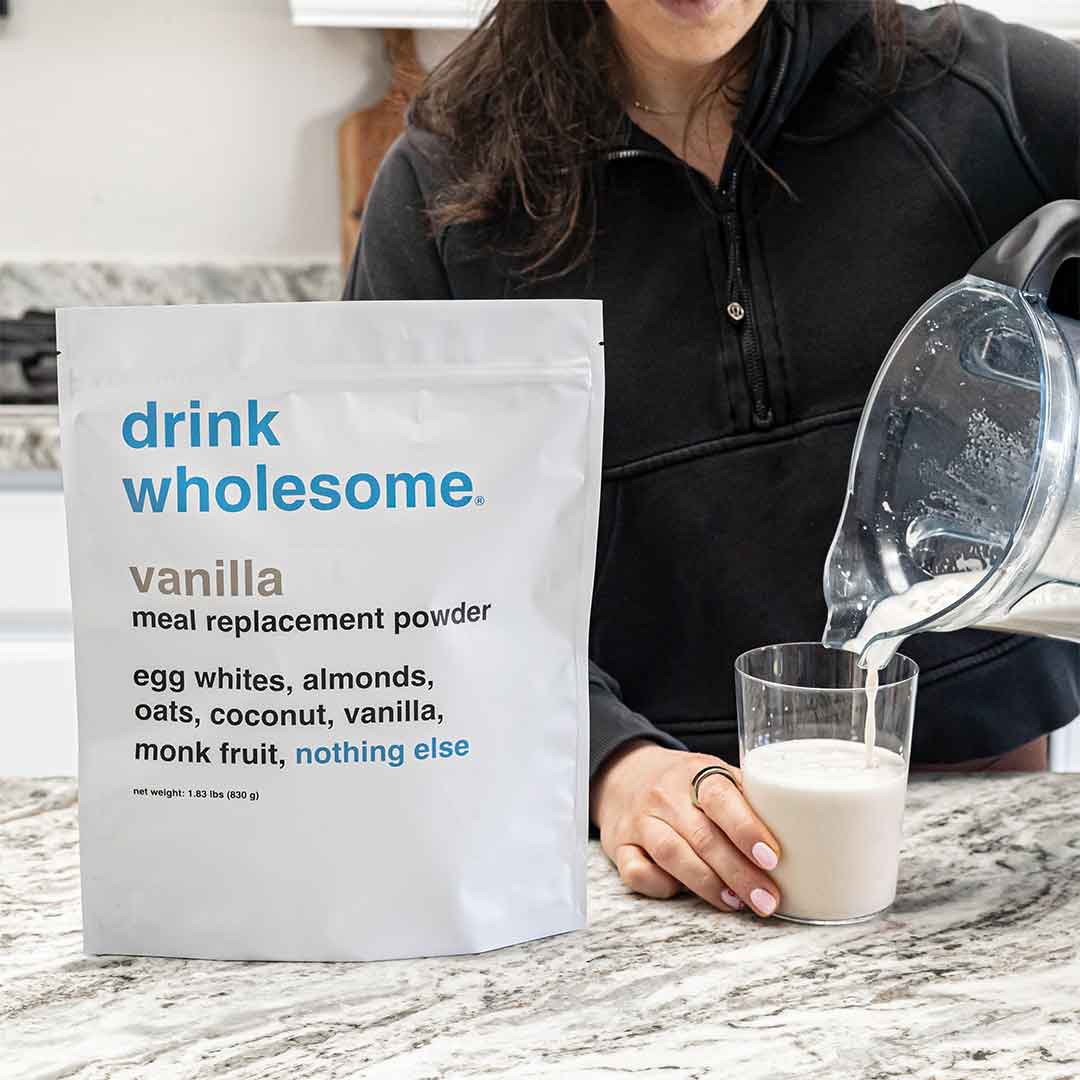
Instead of using protein concentrates or isolates, we make the best low sugar meal replacement drinks with whole food protein sources like egg whites and almonds. These are a gut-friendly alternative to protein concentrates and isolates.
Unlike protein isolates and concentrates, egg whites and almonds contain enzymes that help you break them down. Almonds are also prebiotic, meaning they improve the diversity of your gut microbiome. Egg whites, on the other hand, are low in fiber, low FODMAP, alkaline (maintaining healthy pH levels in your gut), and bioactive (promoting the growth of healthy gut bacteria).
In summary, thanks to our short list of simple ingredients, you can eat a quick, easy, low sugar meal without causing side effects or complications. Order samples to see for yourself.
“Drink wholesome is amazing. I have so many digestive issues with every other meal replacement I’ve tried, but my gut is perfectly happy with drink wholesome. And no bloating! It also happens to be the most delicious meal replacementI’ve tried 🙌🙌” – Fern
Read more reviews or take the quiz.
Meal Replacement Powder Sample Packs
$14.99
This content is not intended to be a substitute for professional medical advice, diagnosis, or treatment. drink wholesome is not intended to diagnose, treat, cure or prevent any disease.