
How to Find the Best Aspartame-Free Protein Powder
📌 Overview and Key Takeaways
This is a Dietitian’s guide on how to find the best aspartame-free protein powder.
Discover how to supplement your protein intake without artificial sweeteners.
Protein Powder Without Aspartame
Is Aspartame Bad for You?
Aspartame is an artificial sweetener added to a wide range of foods, beverages, and supplements.
It is 200 times sweeter than sugar, but sugar-free, making it a popular choice for people looking to reduce their sugar or calorie intake.
Despite its tempting benefits, aspartame might not be as healthy as you think.
For starters, studies have found little to no relationship between changes in body weight and the use of low-calorie sweeteners (Am J Clin Nutr, 2014).
People who replace sugar with sweeteners like aspartame lose less than two pounds on average (Int J Obes, 2013).
In fact, research shows that people who use artificial sweeteners might actually gain weight because they indulge themselves after having “saved calories” with their diet soda, sugar-free ice cream, etc (CMAJ, 2017; Cell Metab, 2016).
Several reviews also suggest that aspartame could have concerning side effects, including neurotoxic effects, carcinogenic risk, cardiovascular risk, and gastrointestinal effects (Nutr Rev, 2025; Nutrients, 2023; BMJ, 2022; Allergy, 2025).
In short, although aspartame seems like a healthy alternative to sugar, it could very well be the exact opposite.
What Is the Best Aspartame-Free Protein Powder?
To know if a protein powder contains aspartame, refer to the ingredient list on the Nutrition or Supplement Facts panel.
And while you are there, check to see if there are any other artificial sweeteners listed.
Other common artificial sweeteners include acesulfame potassium and sucralose.
Once you confirm that a protein powder is aspartame-free, you might then want to consider which sweetener was used.
The options are real sugar, sugar alcohols like erythritol and xylitol, or natural sugar substitutes like stevia and monk fruit.
Every type of sweetener has advantages and disadvantages.
We prefer monk fruit because it is both the best tasting and best for you.
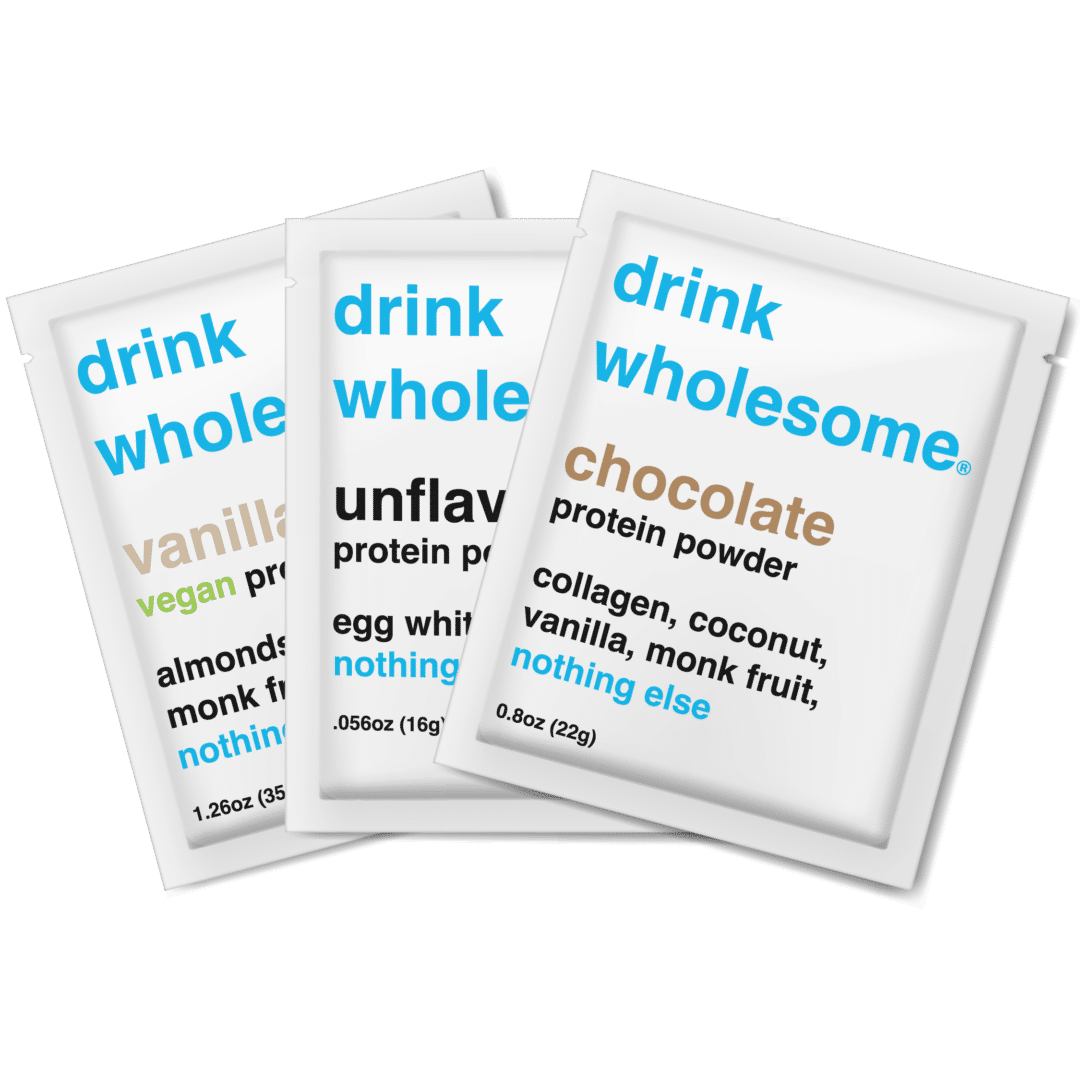
Our Ingredients

egg whites

coconut

vanilla

monk fruit
NOT Our Ingredients
acacia gum
acesulfame potassium
artificial flavors
carrageenan
erythritol
guar gum
inulin
maltodextrin
'natural' flavors
silica
soy lecithin
sucralose
xanthan gum
xylitol
Monk fruit, also known as luo han guo, is a melon-like fruit native to Southeast Asia.
It is almost sugar-free, but sweet like sugar thanks to naturally-occurring compounds called mogrosides.
And unlike other sugar substitutes, it does not activate bitter taste receptors in addition to sweet taste receptors (J Agric Food Chem, 2016).
It is worth adding that although monk fruit sweetener has only been commercially available for about a decade, it has been safely used in Asian cuisine for centuries and does not negatively impact blood sugar or insulin levels (Eur J Clin Nutr, 2017).
Order Samples to taste and feel the difference.
Product Quiz
Sources
- The American Journal of Clinical Nutrition (Am J Clin Nutr). Low-calorie sweeteners and body weight and composition: a meta-analysis of randomized controlled trials and prospective cohort studies. 2014.
- International Journal of Obesity (Int J Obes). Fuelling the obesity epidemic? Artificially sweetened beverage use and long-term weight gain. 2013.
- CMAJ (CMAJ). Nonnutritive sweeteners and cardiometabolic health: a systematic review and meta-analysis of randomized controlled trials and prospective cohort studies. 2017.
- Cell Metabolism (Cell Metab). Sucralose Promotes Food Intake through NPY and a Neuronal Fasting Response. 2016.
- Nutrition Reviews (Nutr Rev). Aspartame and Its Potential Neurocognitive Effects in Humans. 2025.
- Nutrients (Nutrients). Aspartame Safety as a Food Sweetener and Related Health Hazards. 2023.
- BMJ (Clinical research ed.) (BMJ). Artificial sweeteners and risk of cardiovascular diseases: results from the prospective NutriNet-Santé cohort. 2022.
- Allergy (Allergy). Cellular Stress, Inflammation and Barrier Damage in Gut Epithelial Cells Caused by Aspartame. 2025.
- Journal of Agricultural and Food Chemistry (J Agric Food Chem). Docking and Molecular Dynamics of Steviol Glycoside-Human Bitter Receptor Interactions. 2016.
- European Journal of Clinical Nutrition (Eur J Clin Nutr). Effects of non-nutritive (artificial vs natural) sweeteners on 24-h glucose profiles. 2017.
Editorial Guidelines
This article was written by a Registered Dietitian and reviewed by a Physician Assistant. We rely on peer-reviewed research and trusted medical sources, and regularly update our content to ensure accuracy and clarity.
Frequently asked questions
Who is Drink Wholesome for?
Drink Wholesome makes minimally-processed protein powder for sensitive stomachs. Because it’s made from a short list of simple ingredients, it’s also a great option for anyone who wants to avoid artificial and ultra-processed ingredients – including kids, seniors, and moms.
Why is Drink Wholesome easy to digest?
No Dairy
Drink Wholesome is made without whey and casein, which contain lactose, a sugar most people can’t fully digest. Dairy-based proteins, especially casein, also form a gel-like substance in your stomach, which can upset sensitive stomachs.
No Additives
Drink Wholesome is made without ultra-processed food additives. Regularly eating artificial sweeteners, emulsifiers, thickeners, and other additives can cause digestive issues and even long-term gut health problems.
Whole Food Protein
Drink Wholesome is made from whole food protein sources like almonds and egg whites. Unlike ultra-processed protein concentrates and isolates, which have been stripped of fiber, enzymes, and other natural digestive aids, whole foods are easy to break down and absorb.
Collagen vs egg white vs almond protein powder?
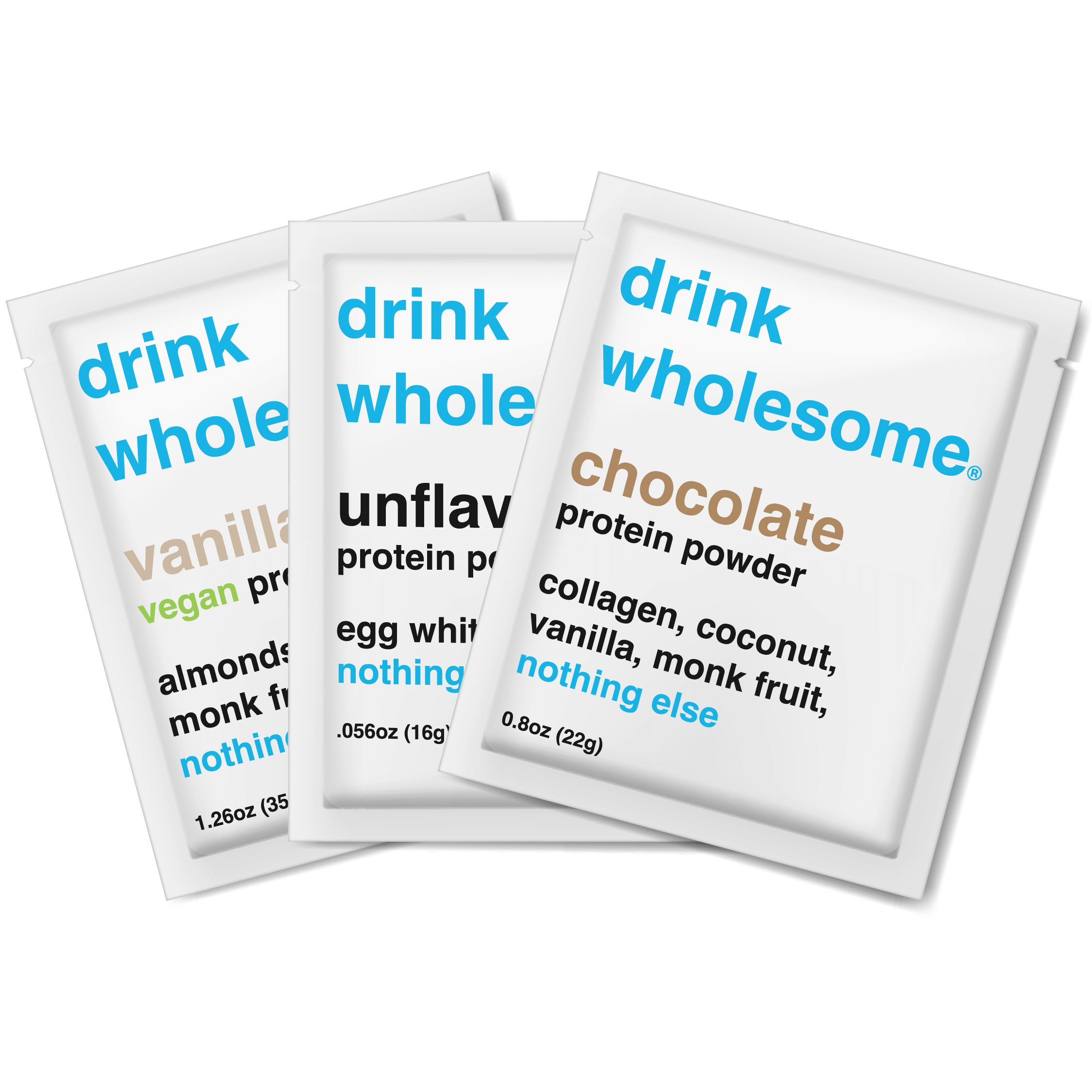
We make three types of minimally-processed Protein Powder for sensitive stomachs: Collagen Protein Powder, Egg White Protein Powder, and Vegan Almond Protein Powder. As long as you eat a balanced diet (get protein from a variety of sources), any type of protein powder can help you meet your protein needs. So just pick the type that best suits your personal preferences.
Ask our dietitian.
If you’re wondering which of our products is best for you, ask our Registered Dietitian. She’ll reply via email within 24 hours.
High Protein Blueberry Pancakes
PREP TIME
5 min
COOK TIME
5 min
SERVES
2
Ingredients
- ¼ cup Drink Wholesome
- ⅓ cup flour
- 2 egg whites
- ¼ cup plant milk
- 1 tbsp nut butter
- 2 tbsp maple syrup
- 1 cup blueberries
Instructions
In a blender, combine the egg whites, milk, ¼ cup blueberries, and almond butter. Pour the mixture into a small mixing bowl and add the protein powder and flour. Whisk until smooth. Pour ⅓ cup batter onto a heated and greased (or non-stick) pan to form pancakes. Cook each side for 2-3 minutes. This recipe makes 4-5 pancakes. Then, in a small saucepan, heat ¾ cup blueberries and the maple syrup over medium heat, stirring occasionally, for about 8 minutes. Plate the pancakes and spoon blueberry jam on top.

Protein Powder Samples
Starting at: $9.99
BUY NOWProtein Calculator
Product Quiz