Is Whey Protein Powder Bad for You?
📌 Overview and Key Takeaways
Is whey protein powder bad for you?
Discover the pros and cons of whey protein shakes and powders and explore alternatives.

The Pros and Cons of Whey
What Are the Pros of Whey Protein Powder?
Whey protein powder has long been considered to be the gold standard of protein shakes and powders. Here are some the reasons why it is so popular:
- Complete amino acid profile: Unlike most plant-based proteins, whey contains all of the “essential” amino acids that your body needs, but cannot make on its own.
- High PDCAAS: Whey has the highest protein digestibility corrected amino acid score (PDCAAS) possible, which means it is easily digested and absorbed (J Sports Sci Med, 2004).
- Good taste and texture: Whey has a pleasant aftertaste and mouthfeel.
- Affordable and widely available: Whey is inexpensive and easy to find.
At a glance, adding whey protein powder to your diet seems like a great way to meet your protein needs: it is nutritious, delicious, affordable, and widely available.
That said, whey protein powder is not a protein source I would recommend that anyone use.
That is because, despite the benefits, regularly consuming whey protein powder has several, considerable drawbacks.
What Are the Cons of Whey Protein Powder?
It is important to note that if you eat a balanced diet (get your protein from a variety of sources), you will be consuming all of the essential amino acids (including the BCAAs) that you need.
And seeing as excess amino acids are excreted as waste, the fact that whey is a complete protein high in BCAAs is not an advantage for most people.
Moreover, despite its benefits, whey is not a healthy choice for many individuals because:
- Whey causes digestive issues. Whey is notorious for causing digestive issues like bloating and diarrhea. This in part because it contains lactose, a sugar most adults cannot digest.
- Whey causes acne. Whey consumption stimulates the production of insulin and insulin-like growth factor, both of which have been linked to acne development (Clin Dermatol, 2009).
- Whey protein powder is ultra-processed. Whey protein shakes and powders are made from whey protein concentrates and isolates, which are an ultra-processed derivative of whey, which is a byproduct of cheese and yogurt-making.
- Whey is not environmentally-friendly. Dairy cows and their manure produce enormous amounts of greenhouse gas emissions, the poor handling of manure and fertilizers pollute local water resources, and unsustainable dairy farming and feed production can also lead to the loss of ecologically important areas such as prairies, wetlands, and forests.
In summary, whey protein powder is not a good choice for many people, especially those with sensitive stomachs and acne-prone skin.
But the fact that it is ultra-processed is what concerns me the most.
Whey protein concentrates and isolates have been mechanically and/or chemically stripped of everything but the protein, including the enzymes, fiber, and other natural digestive aids that help you break them down.
Your digestive system does not digest them in the same way that it does whole foods, which can affect everything from satiety to gut health.
In fact, research shows that regularly eating protein concentrates and isolates can disrupt your gut microbiome, which, in turn, can contribute to a wide range of chronic diseases, including obesity, diabetes, and cancer (Nutrients, 2018; J Exp Med, 2019).
So, instead of using protein concentrates and isolates to meet your protein needs, I recommend simply eating more high protein, whole foods.
Product Quiz
What is the Best Alternative to Whey Protein Powder?
Egg White Protein Powder is hands down the best alternative to whey protein powder.
It is almost identical in terms of nutritional quality, has a similar taste and texture, and requires far less processing to make.
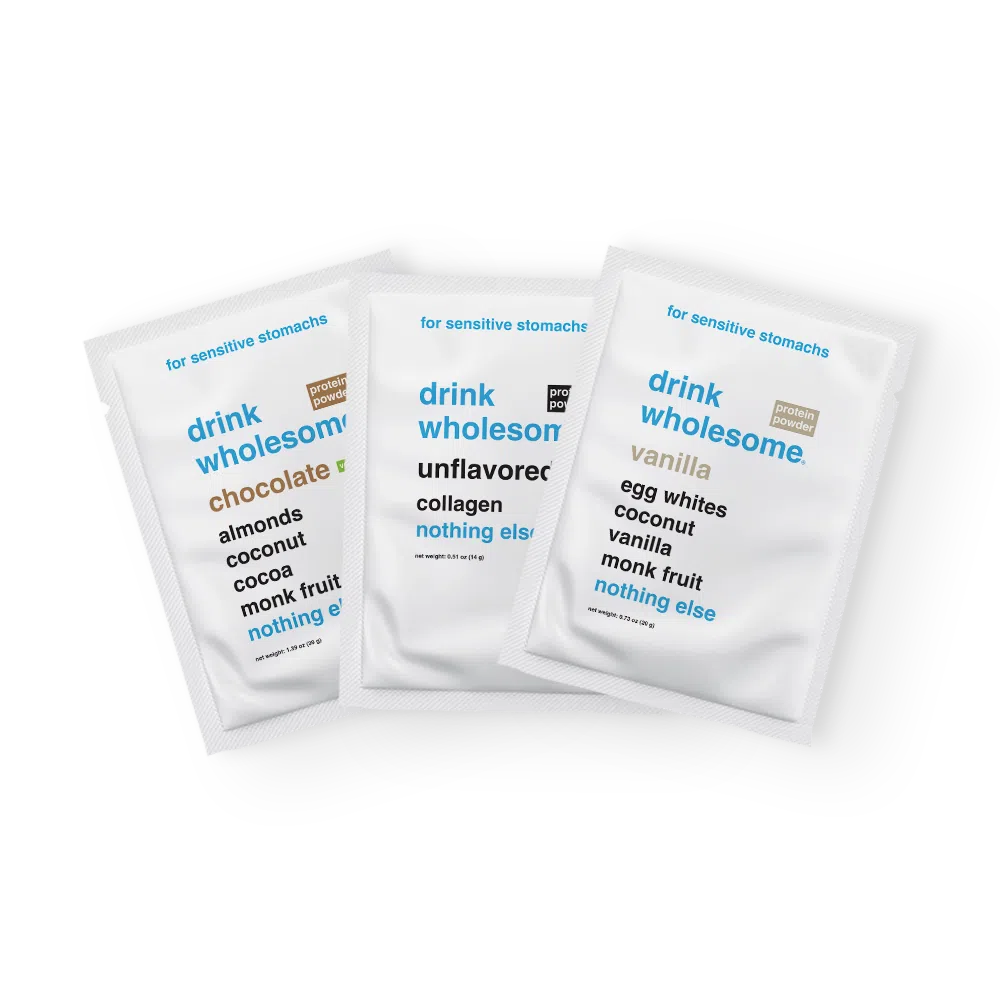
Order Samples to taste and feel the difference for yourself.
Sources
- Journal of Sports Science & Medicine (J Sports Sci Med). Protein – Which is Best?. 2004.
- Clinics in Dermatology (Clin Dermatol). Acne: the role of medical nutrition therapy. 2009.
- Nutrients (Nutrients). Effect of a Protein Supplement on the Gut Microbiota of Endurance Athletes: A Randomized, Controlled, Double-Blind Pilot Study. 2018.
- The Journal of Experimental Medicine (J Exp Med). The gut microbiome: Relationships with disease and opportunities for therapy. 2019.
Editorial Guidelines
This article was written by a Certified Nutrition Coach and reviewed by a Registered Dietitian. We rely on peer-reviewed research and trusted medical sources, and regularly update our content to ensure accuracy and clarity.
Frequently asked questions
Who Is Drink Wholesome for?
Drink Wholesome is a protein powder for people who struggle to eat enough protein but can’t stomach other protein powders because of food sensitivities or digestive conditions like IBS, GERD, SIBO, Crohn’s and colitis, and gastroparesis. It’s made without the artificial and ultra-processed ingredients that can contribute to digestive symptoms like acid reflux, bloating, gas, or stomach pain, so it’s gentle on even the most sensitive stomachs. If it upsets your stomach, it’s free.
Why Is Drink Wholesome Good for Sensitive Stomachs?
Drink Wholesome is the best gut-friendly protein powder for sensitive stomachs because it’s additive, dairy, and gluten-free. It’s also made from minimally-processed protein sources like egg whites and almonds. Other protein powders are made from ultra-processed protein concentrates and isolates, which look nothing like real food.
What’s the Difference Between Protein Powder and Meal Replacement Powder?
Drink Wholesome makes Protein Powders and Meal Replacement Powders. Protein powder is high in protein and low in everything else, whereas meal replacement powder contains fats, carbs, fiber, and protein because it’s intended to replace the nutritional value of a balanced meal.
What’s the Difference Between Almond, Collagen, and Egg White Protein?
Drink Wholesome makes three types of Protein Powder: Collagen Protein Powder, Egg White Protein Powder, and Vegan Almond Protein Powder. As long as you are eating a balanced diet – getting protein from a variety of sources – any type of protein can help you meet your total daily protein needs. Take the Product Quiz or order Samples to see which type of stomach-friendly protein powder is right for you.
Ask Nutrition Coach
If you’re wondering which Drink Wholesome product is best for you, ask our Certified Nutrition Coach. For personalized medical advice, consult your healthcare provider.
High Protein Balls
PREP TIME
5 min
COOK TIME
5 min
SERVES
2
Ingredients
- ⅓ cup Protein Powder
- ½ cup nut butter
- ¼ cup maple syrup
- 1 tsp vanilla extract
- ½ cup rolled oats
- ¼ cup mini chocolate chips
- ¼ cup shredded coconut
Instructions
Combine the Protein Powder, nut butter, syrup, extract, and oats in a food processor or blender. Pulse until well combined. Add the chocolate and coconut, and pulse a few more times. Roll the dough into 10 balls. Enjoy!
Author(s)
Protein Powder Samples
Starting at $9.99
BUY NOW