How to Find the Best Non Artificial Protein Powder
📌 Overview and Key Takeaways
This is a Certified Nutrition Coach’s guide on how to find the best non artificial protein powder.
Discover how to meet your protein needs with only natural ingredients.

Non Artificial Protein Powder
What Are the Artificial Ingredients in Protein Powder?
The U.S. Food and Drug Administration (FDA) defines “artificial” ingredients as ingredients that are synthetic or derived from artificial sources rather than natural sources.
At first, this definition seems straightforward, but it is complicated by the fact that many artificial ingredients are molecularly identical to natural ingredients.
Vitamin C (ascorbic acid), for example, can be derived from an orange or made in a laboratory.
And there is no way of knowing just by looking at the ingredient list!
Natural ingredients, on the other hand, can be found in nature or derived from naturally-occurring sources.
Although this too may seem straightforward, it is not because the term “derived from” allows for almost any amount of mechanical and/or chemical processing.
Soy lecithin, for example, is technically a natural ingredient because it is derived from soybeans, but if you know anything about lecithin, you know that it looks nothing like a soybean.
- To make soy lecithin, soybean oil is extracted from raw soybeans using a chemical solvent (usually hexane). The solvent is then boiled off, leaving behind lecithins (a mixture of fats).
- Next, the lecithins are hydrated to form a sludge, which is then subjected to a process called desliming (Yes, that is a technical term.) in which the lecithins are placed in a centrifuge. During desliming, the lecithins are often treated with hydrogen peroxide to make them light in color.
- The last step in this process is drying, at which time calcium may be added to make the final product more viscous.
Now that you know how soy lecithin is made, how could you possibly say that both soybeans and soy lecithin are natural?
One looks like a plant, whereas the other looks like a science experiment.
Also, did you know that while food manufacturers are required to disclose their ingredients, natural flavor manufacturers are not?
They can add solvents, preservatives, emulsifiers, carriers, and other additives to a flavor that qualifies as ‘natural’ under current regulations.
In short, the FDA’s definitions of artificial and natural are way too ambiguous.
In fact, they are so ambiguous that in many cases the average consumer has no idea of knowing what he or she is actually eating.
Knowing what you know now, how many of these ingredients below should qualify as natural?
Protein Matrix Comprised of (Whey Protein Concentrate, Whey Protein Isolate, Calcium Caseinate, Micellar Casein, Milk Protein Isolate, Egg Albumen, Glutamine Peptides), Polydextrose, Sunflower Creamer (Sunflower Oil, Corn Syrup Solids, Sodium Caseinate, Mono- and Diglycerides, Dipotassium Phosphate, Tricalcium Phosphate, Soy Lecithin, Tocopherols), Natural and Artificial Flavor, MCT Powder (Medium Chain Triglycerides, Nonfat Dry Milk, Disodium Phosphate, Silicon Dioxide), Lecithin, Cellulose Gum, Salt, Yellow 5, Sucralose, Acesulfame Potassium, Papain, Bromelain
We can all agree that Artificial Flavors, Yellow 5, and Sucralose are artificial, but what about corn syrup solids?
The FDA would say that they are natural because they come from corn, but this seems like a stretch to me.
Corn syrup is made by mixing refined corn starch with a weak solution of hydrochloric acid and heating it under pressure.
This process, called hydrolysis, breaks down the starch molecules into something that looks nothing like corn.
Sucralose (an artificial sweetener), on the other hand, is made by taking table sugar and replacing three hydrogen-oxygen groups with chlorine atoms.
Is this process radically different from that used to make corn syrup?
In both cases we start with a simple carbohydrate and convert it into something new.
Sucralose and corn syrup are certainly different, but are they so different that one product should be classified as natural and the other artificial?
The point here is that most ingredients in most protein powders might look artificial, even though they may be technically natural (according to the FDA).
This is why I choose to define natural ingredients as foods that can be found in nature.
In other words, if you cannot harvest, hunt, or gather it, it is not natural.
With that in mind, here are a few tips on how to pick the best non artificial protein powder.
Product Quiz
What Is the Best Non Artificial Protein Powder?
As long as you are getting your protein from a variety of sources, the type of protein you choose does not matter.
That is, eggs, nuts, and hemp, despite having different amino acid profiles, have more or less the same health benefits for someone eating a balanced diet.
The protein source itself (not the type of protein, but the form) does make a difference, however.

🚫 Avoid Protein Concentrates and Isolates
Most protein shakes and powders are made from protein concentrates and isolates, which have been mechanically and/or chemically stripped of everything but the protein.
This includes the enzymes, fiber, and other natural digestive aids that help your gut break them down.
You therefore do not digest them in the same way that it does whole foods, which can affect your gut health.
In fact, studies show that regularly eating protein concentrates and isolates can disrupt your gut microbiome and cause the formation of toxic byproducts in your gut (Nutrients, 2018; Mol Nutr Food Res, 2024).
So, pending further research, it is recommended that you stick to protein powders made from whole food protein sources.
🚫 Avoid Food Additives
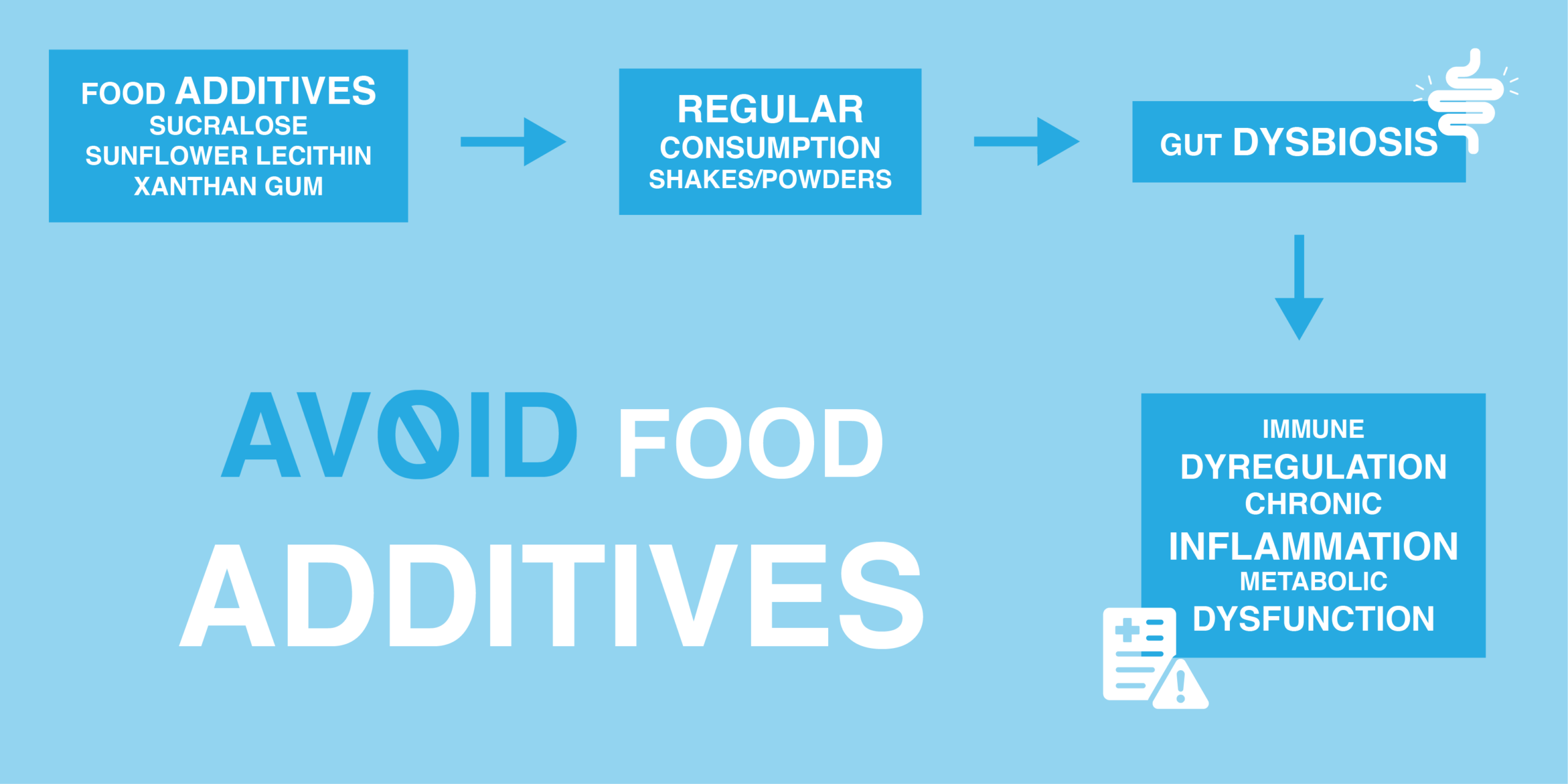
Unfortunately, most protein powders also contain a cocktail of unnatural food additives.
And regularly eating emulsifiers, thickeners, and flavorings can alter the composition and function of your gut microbiome (North Clin Istanb, 2019).
This can lead to gut dysbiosis, or an imbalance in his gut microbiota, which contributes to a wide range of chronic diseases, including obesity, type 2 diabetes, and even certain cancers (Microorganisms, 2022; J Exp Med, 2019).
This might be because disruptions to your gut microbiome can affect the permeability of your intestinal barrier, allowing toxins to pass into your bloodstream (Autoimmun Rev, 2015).
⚠️ Here is a list of the most common food additives in protein shakes and powders:
- acacia fiber
- acacia gum
- acesulfame potassium
- artificial flavors
- ascorbic acid
- aspartame
- calcium carbonate
- carrageenan
- cellulose gum
- dextrin
- dicalcium phosphate
- dipotassium phosphate
- erythritol
- gellan gum
- guar gum
- gum arabic
- inulin
- locust bean gum
- maltitol
- maltodextrin
- mono- and diglycerides
- ‘natural’ flavors
- rice bran extract
- rice dextrin
- rice hulls
- rosemary extract
- silica
- silicon dioxide
- sodium alginate
- soluble corn fiber
- sorbitol
- soy lecithin
- sucralose
- sunflower lecithin
- tocopherols
- tricalcium phosphate
- xanthan gum
- xylitol
- zinc oxide
As a rule of thumb, if you cannot find it in nature or make it at home, it is probably a food additive.
🚫 Avoid Dairy-Based Proteins
Dairy-based proteins like whey and casein, although not an issue for everyone, can cause digestive issues.
This is usually because they contain lactose, a sugar many individuals with sensitive stomachs cannot fully digest.
But you might be sensitive to dairy-based proteins even if you are not lactose intolerant.
This is particularly true for casein protein, which forms a gel-like substance in your stomach that slows down digestion.
🚫 Avoid Protein Concentrates and Isolates
You might also want to avoid ultra-processed protein concentrates and isolates.
Most protein shakes and powders are made from one or both of these ultra-processed protein sources, which have been mechanically and/or chemically stripped of everything but the protein.
This includes the enzymes, fiber, and other natural digestive aids that help your gut break them down.
You therefore do not digest them in the same way that you do whole foods, which could affect your gut health.
Studies show that regularly eating protein concentrates and isolates might disrupt your gut microbiome and cause the formation of toxic byproducts in your gut (Nutrients, 2018; Mol Nutr Food Res, 2024).
You should thus look for protein shakes and powders made from whole food protein sources like egg whites and almonds, which are easier to digest and absorb.
Order Samples to see for yourself.
Daily Protein Intake Calculator
Sources
- Nutrients (Nutrients). Effect of a Protein Supplement on the Gut Microbiota of Endurance Athletes: A Randomized, Controlled, Double-Blind Pilot Study. 2018.
- Molecular Nutrition & Food Research (Mol Nutr Food Res). In Vitro Fermentation of Animal and Plant Protein Isolates by the Human Gut Microbiota Under High and Low Carbohydrate Conditions.. 2024.
- Northern Clinics of Istanbul (North Clin Istanb). Food additives and microbiota. 2019.
- Microorganisms (Microorganisms). Gut Microbiota Dysbiosis: Triggers, Consequences, Diagnostic and Therapeutic Options. 2022.
- The Journal of Experimental Medicine (J Exp Med). The gut microbiome: Relationships with disease and opportunities for therapy. 2019.
- Autoimmunity Reviews (Autoimmun Rev). Changes in intestinal tight junction permeability associated with industrial food additives explain the rising incidence of autoimmune disease.. 2015.
Editorial Guidelines
This article was written by a Certified Nutrition Coach and reviewed by a Registered Dietitian. We rely on peer-reviewed research and trusted medical sources, and regularly update our content to ensure accuracy and clarity.
Frequently asked questions
Who Is Drink Wholesome for?
Drink Wholesome is a protein powder for people who struggle to eat enough protein but can’t stomach other protein powders because of food sensitivities or digestive conditions like IBS, GERD, SIBO, Crohn’s and colitis, and gastroparesis. It’s made without the artificial and ultra-processed ingredients that can contribute to digestive symptoms like acid reflux, bloating, gas, or stomach pain, so it’s gentle on even the most sensitive stomachs. If it upsets your stomach, it’s free.
Why Is Drink Wholesome Good for Sensitive Stomachs?
Drink Wholesome is the best gut-friendly protein powder for sensitive stomachs because it’s additive, dairy, and gluten-free. It’s also made from minimally-processed protein sources like egg whites and almonds. Other protein powders are made from ultra-processed protein concentrates and isolates, which look nothing like real food.
What’s the Difference Between Protein Powder and Meal Replacement Powder?
Drink Wholesome makes Protein Powders and Meal Replacement Powders. Protein powder is high in protein and low in everything else, whereas meal replacement powder contains fats, carbs, fiber, and protein because it’s intended to replace the nutritional value of a balanced meal.
What’s the Difference Between Almond, Collagen, and Egg White Protein?
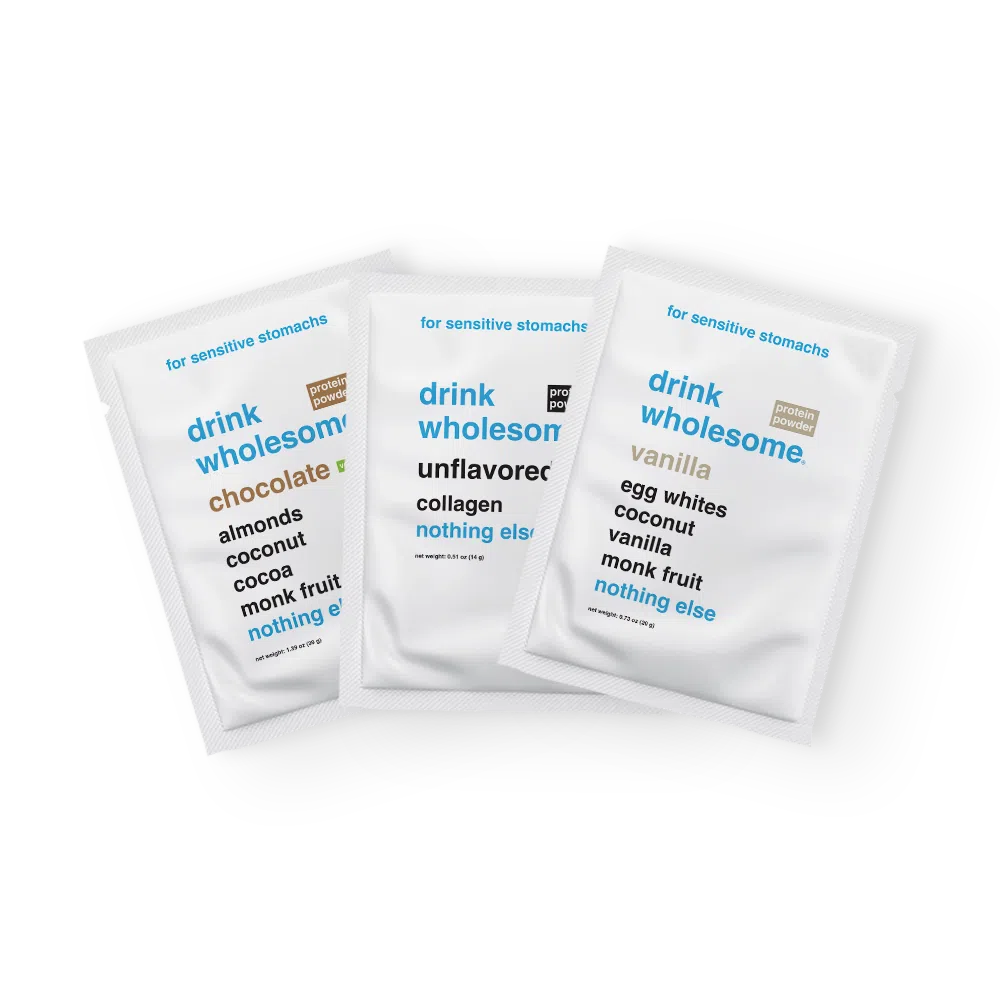
Drink Wholesome makes three types of Protein Powder: Collagen Protein Powder, Egg White Protein Powder, and Vegan Almond Protein Powder. As long as you are eating a balanced diet – getting protein from a variety of sources – any type of protein can help you meet your total daily protein needs. Take the Product Quiz or order Samples to see which type of stomach-friendly protein powder is right for you.
Ask Nutrition Coach
If you’re wondering which Drink Wholesome product is best for you, ask our Certified Nutrition Coach. For personalized medical advice, consult your healthcare provider.
High Protein Balls
PREP TIME
5 min
COOK TIME
5 min
SERVES
2
Ingredients
- ⅓ cup Protein Powder
- ½ cup nut butter
- ¼ cup maple syrup
- 1 tsp vanilla extract
- ½ cup rolled oats
- ¼ cup mini chocolate chips
- ¼ cup shredded coconut
Instructions
Combine the Protein Powder, nut butter, syrup, extract, and oats in a food processor or blender. Pulse until well combined. Add the chocolate and coconut, and pulse a few more times. Roll the dough into 10 balls. Enjoy!
Author(s)
Protein Powder Samples
Starting at $9.99
BUY NOW