
Protein Powder Ingredients
Not all protein powders are created equal. Learn about the top protein powder ingredients to avoid.
Most protein powders are made with protein concentrates and/or isolates, foods stripped of everything but the protein. They appear on the ingredient list as “pea protein” and “whey protein” as opposed to “peas” and “whey.”
I will not go into the details, but protein concentrates and isolates undergo heavy mechanical and chemical processing before becoming protein powder. Sometimes, manufacturers use chemical solvents like hexane to isolate (separate) the protein from the food. This means that what you end up putting into your body looks nothing like real food.
If you think about it, your gut was designed to digest naturally occurring foods, not laboratory formulated imitations, so if you feed it anything but real food, it might get upset. The long term implications of eating processed foods like protein isolates are still not well understood, but more and more research is finding that it can alter the composition of your gut microbiota, and lead to permanent damage to your gut microbiome.
Your gut does more than just help you to digest food; it protects against pathogens, educates your immune system, and affects directly or indirectly most of your physiologic functions. Disruptions to the gut microbiome have therefore been linked to the development of many chronic diseases. It follows that it is in your best interest to avoid protein powders made with protein concentrates and isolates.
The average protein powder is also full of food additives. Protein powder companies are getting away with murder; they market themselves as health and wellness products, yet half of their ingredients were made in a lab.
Food additives are heavily-processed ingredients added to protein powder to improve characteristics like freshness, taste, texture, and appearance. Although not necessarily bad for you in small quantities, additives can add up quickly (especially if you drink a protein shake every day) and cause gastrointestinal (GI) side effects like bloating, constipation, diarrhea, gas, and stomach pain. This is because food additives are, generally speaking, hard to digest. They sit in your gut for longer than food should, which gives your gut bacteria more time to eat. As they eat, these bacteria produce gas, which causes bloating and stomach pain. Gas also slows colonic transit (the amount of time it takes food to travel through the colon) and can lead to constipation.
In the long term, food additives can disrupt regulatory pathways in the intestine, which can result in the development of inflammatory bowel disease (IBD) and systemic inflammatory disorders. Artificial sweeteners are among the most harmful additives in the long term as they alter the composition of your gut microbiota (the collection of microorganisms that help you digest food). This can lead to serious, chronic GI problems and widespread inflammation.
Here is a list of the most common food additives in protein powder:
acacia gum, acesulfame potassium, artificial flavors, aspartame, carrageenan, cellulose gum, dextrin, dextrose, erythritol, gellan gum, guar gum, gum arabic, inulin, locust bean gum, “natural” flavors, maltodextrin, rice syrup solids, soy lecithin, silica, sucralose, sunflower lecithin, xanthan gum, xylitol
Please note that some sweeteners, notably sugar alcohols like xylitol, are especially poorly absorbed by the gut (meaning they feed those hungry gut bacteria) and cause diarrhea because they draw water into your intestine. Now, you may finally have something to blame for those post-protein shake trips to the bathroom!
I understand that you are probably not a nutritionist, and that you might have difficulty identifying all of the additives in your protein powder. If this is the case, do not despair. I will now examine the ingredient labels on a few of the most popular protein powders and point out some of the worst food additives.
The first protein powder on the list is Optimum Nutrition’s Gold Standard 100% Whey Protein Powder. It is the best selling protein powder in the United States. Here is the ingredient list:
Protein Blend (Whey Protein Isolates, Whey Protein Concentrate, Whey Peptides), Cocoa (Processed with Alkali), Lecithin, Natural and Artificial Flavors, Acesulfame Potassium, Aminogen®, Lactase
This is far from the worst ingredient list that I have seen, but it still has its fair share of additives. I want to call your attention to three of them. The first is lecithin, one of the most common additives in protein powder. Interestingly, Optimum Nutrition does not specify what type of lecithin it is using, but we can assume that it is soy lecithin given that there is soy on the ingredient list. Soy lecithin is a collection of fats taken from soybeans. It acts as an emulsifier and thickener, and is so popular because it is cheap. Lecithin looks nothing like real food, however, and should be avoided whenever possible.
The second additive that I would like to highlight is acesulfame potassium, also known as ace K. Acesulfame potassium is a zero calorie artificial sweetener popular for its intense sweetness. A pinch of it can be used to achieve the same amount of sweetness as several tablespoons of sugar. Unfortunately, however, the sweetness of ace K is too good to be true.
Acesulfame potassium has been linked to a number of adverse side effects. Several studies, for instance, have shown that artificial sweeteners may increase cravings toward sugary and sweet foods, which can lead to binging and feelings of withdrawal. Researchers have also associated artificial sweeteners with a higher risk of glucose intolerance, which is a precursor for pre-diabetes and diabetes. Artificial sweeteners like acesulfame potassium may also be bad for the stomach because they alter the composition of our gut microbiota, the collection of microorganisms that help us digest food. This can lead to serious stomach pain and widespread inflammation.
The third and final additive that I would like to discuss is natural flavors. Everyone seems to agree that artificial flavors are bad for you, but there is no consensus on natural flavors. This perplexes me, because “natural flavor” is more or less a catch-all term for everything that a manufacturer would rather not spell out on the ingredient list. While food manufacturers are required to disclose their ingredients, flavor manufacturers are not. They can add solvents, preservatives, emulsifiers, carriers and other additives to a flavor that qualifies as “natural” under current regulations. This, I would argue, makes natural flavors no better for you than artificial flavors.
Overall, the ingredients in Optimum Nutrition’s Gold Standard 100% Whey Protein Powder are not particularly bad, but they are definitely not good.
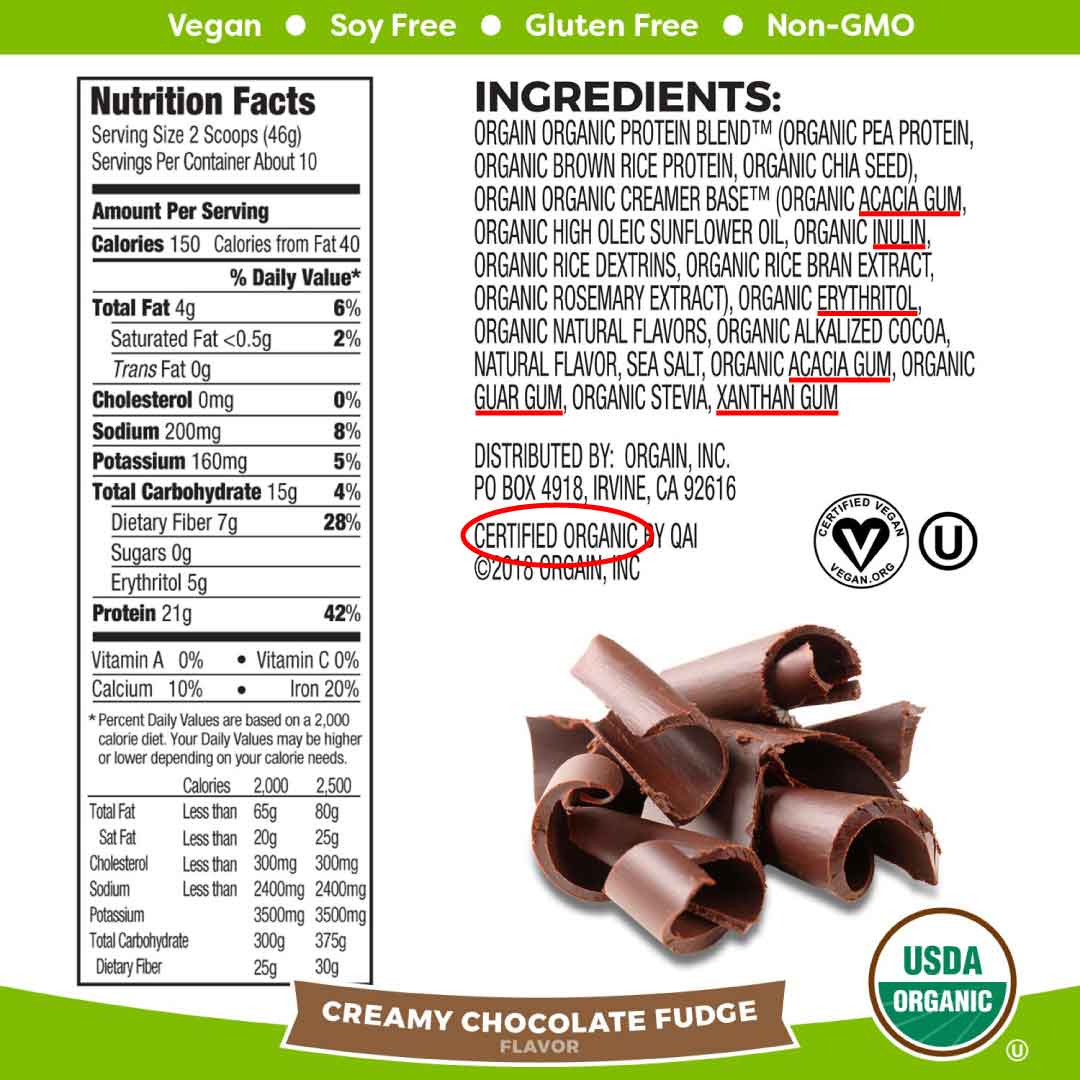
Let us now take a look at one of the most popular vegan protein powders, Orgain. Orgain is Certified Organic, which is great, but just because something is organic does not mean that it is good for you. Orgain, like most protein powders, is full of food additives. I counted over ten. For time’s sake, I will only touch on a few of them.
Orgain Organic Protein Blend (Organic Pea Protein, Organic Brown Rice Protein, Organic Chia Seed), Orgain Organic Creamer Base (Organic Acacia Gum, Organic High Oleic Sunflower Oil, Organic Inulin, Organic Rice Dextrins, Organic Rice Bran Extract, Organic Rosemary Extract), Organic Erythritol, Organic Natural Flavors, Organic Alkalized Cocoa, Natural Flavor, Sea Salt, Organic Acacia Gum, Organic Guar Gum, Organic Stevia, Xanthan Gum
The first additive on the list is erythritol. Erythritol, organic or not, is not good for you. Technically a sugar alcohol, erythritol is found naturally in some foods, but that is not the erythritol that we are talking about. The erythritol in Orgain was made in a laboratory, and much like acesulfame potassium, has been linked to a number of adverse side effects. It can cause diarrhea, for example, because it draws water into the gut like a laxative.
The other additives in Orgain that concern me are the thickeners, of which there are four: acacia gum (which appears twice), guar gum, inulin, and xanthan gum. Most protein powders are full of gums like these. They act as stabilizers and thickeners, and some people view them as nothing more than cheap fillers. Others hate them because they upset their stomach. I avoid them, as you might expect, because they look nothing like real food. My philosophy is simple: if it is not real food, I do not eat it.
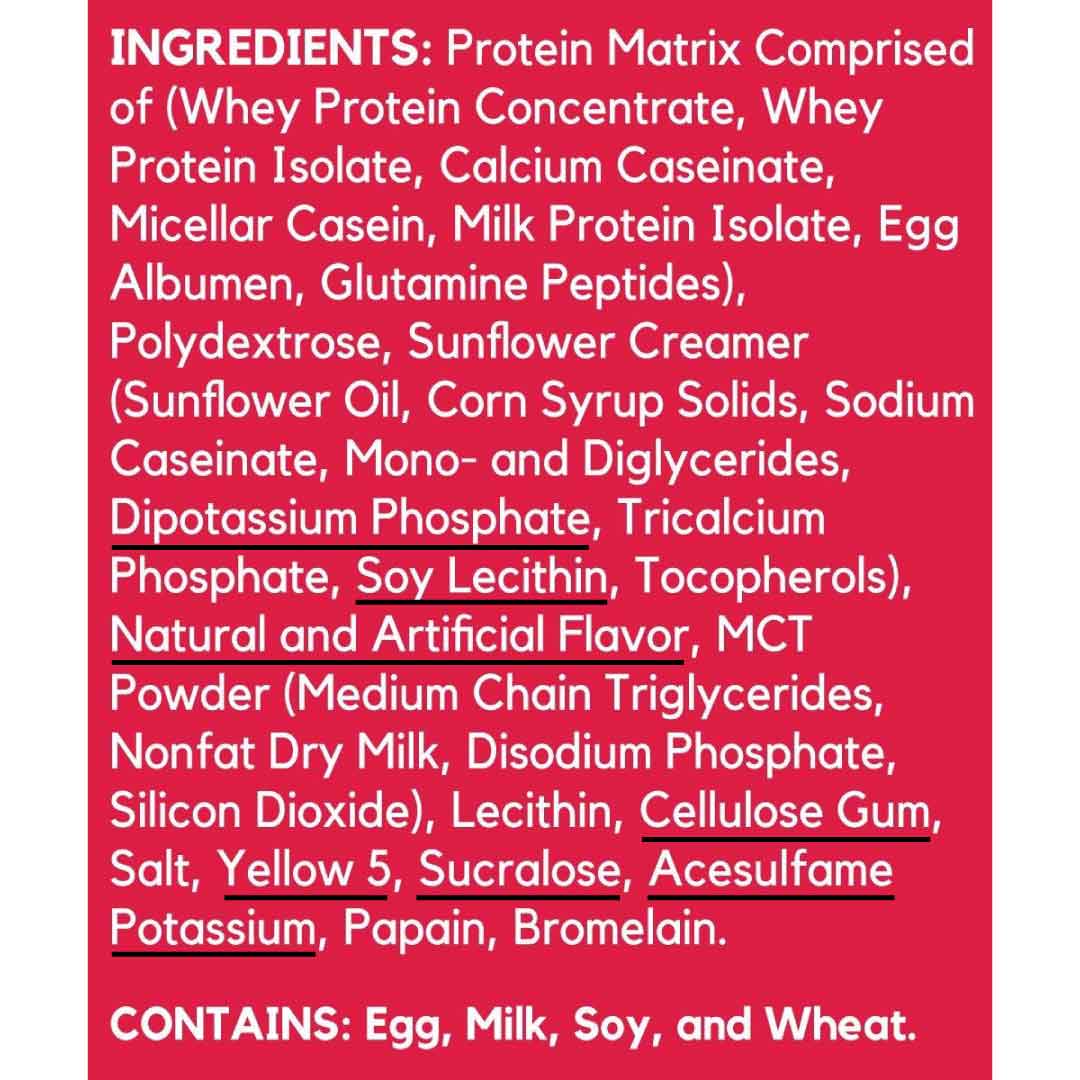
Let us turn our attention to our third and final protein powder, BSN SYNTHA-6 Whey Protein Powder.
Protein Matrix Comprised of (Whey Protein Concentrate, Whey Protein Isolate, Calcium Caseinate, Micellar Casein, Milk Protein Isolate, Egg Albumen, Glutamine Peptides), Polydextrose, Sunflower Creamer (Sunflower Oil, Corn Syrup Solids, Sodium Caseinate, Mono- and Diglycerides, Dipotassium Phosphate, Tricalcium Phosphate, Soy Lecithin, Tocopherols), Natural and Artificial Flavor, MCT Powder (Medium Chain Triglycerides, Nonfat Dry Milk, Disodium Phosphate, Silicon Dioxide), Lecithin, Cellulose Gum, Salt, Yellow 5, Sucralose, Acesulfame Potassium, Papain, Bromelain.
I chose this protein powder simply because I could not get over how many additives it contains. BSN SYNTHA-6 Whey Protein Powder contains 21 additives! This might be the worst protein powder ingredient list that I have ever seen. I am not sure what many of these additives are and to be honest, I do not care. They are certainly not real foods, and that is enough for me.
Here we see several repeat offenders: soy lecithin, natural and artificial flavors, and acesulfame potassium. We also see newcomers like popular artificial sweetener sucralose and thickener cellulose gum. Then there is Yellow 5, which is about as far from real food as you can get, and dipotassium phosphate, which is also used as a fertilizer. Think about it, if you do not recognize it, your body probably will not either. Say no to BSN SYNTHA-6.
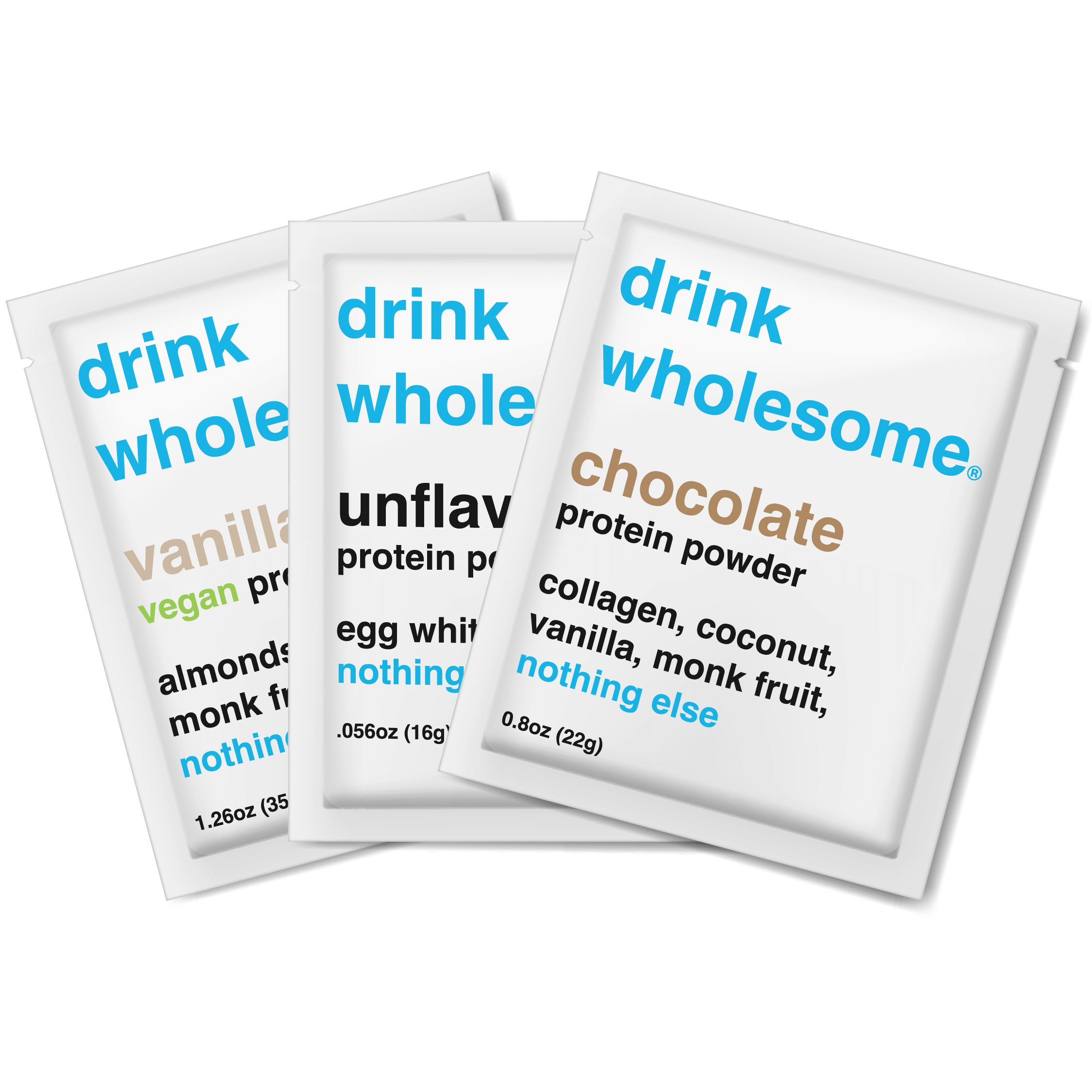
Sick of protein powder ingredients that you cannot pronounce? Try drink wholesome. It is made with a short list of simple ingredients. Order samples to see for yourself.
egg whites, coconut, cocoa, monk fruit
Protein Matrix Comprised of (Whey Protein Concentrate, Whey Protein Isolate, Calcium Caseinate, Micellar Casein, Milk Protein Isolate, Egg Albumen, Glutamine Peptides), Polydextrose, Sunflower Creamer (Sunflower Oil, Corn Syrup Solids, Sodium Caseinate, Mono- and Diglycerides, Dipotassium Phosphate, Tricalcium Phosphate, Soy Lecithin, Tocopherols), Natural and Artificial Flavor, MCT Powder (Medium Chain Triglycerides, Nonfat Dry Milk, Disodium Phosphate, Silicon Dioxide), Lecithin, Cellulose Gum, Salt, Yellow 5, Sucralose, Acesulfame Potassium, Papain, Bromelain.
*This is the actual ingredient list of one of the best-selling protein powders in the United States.
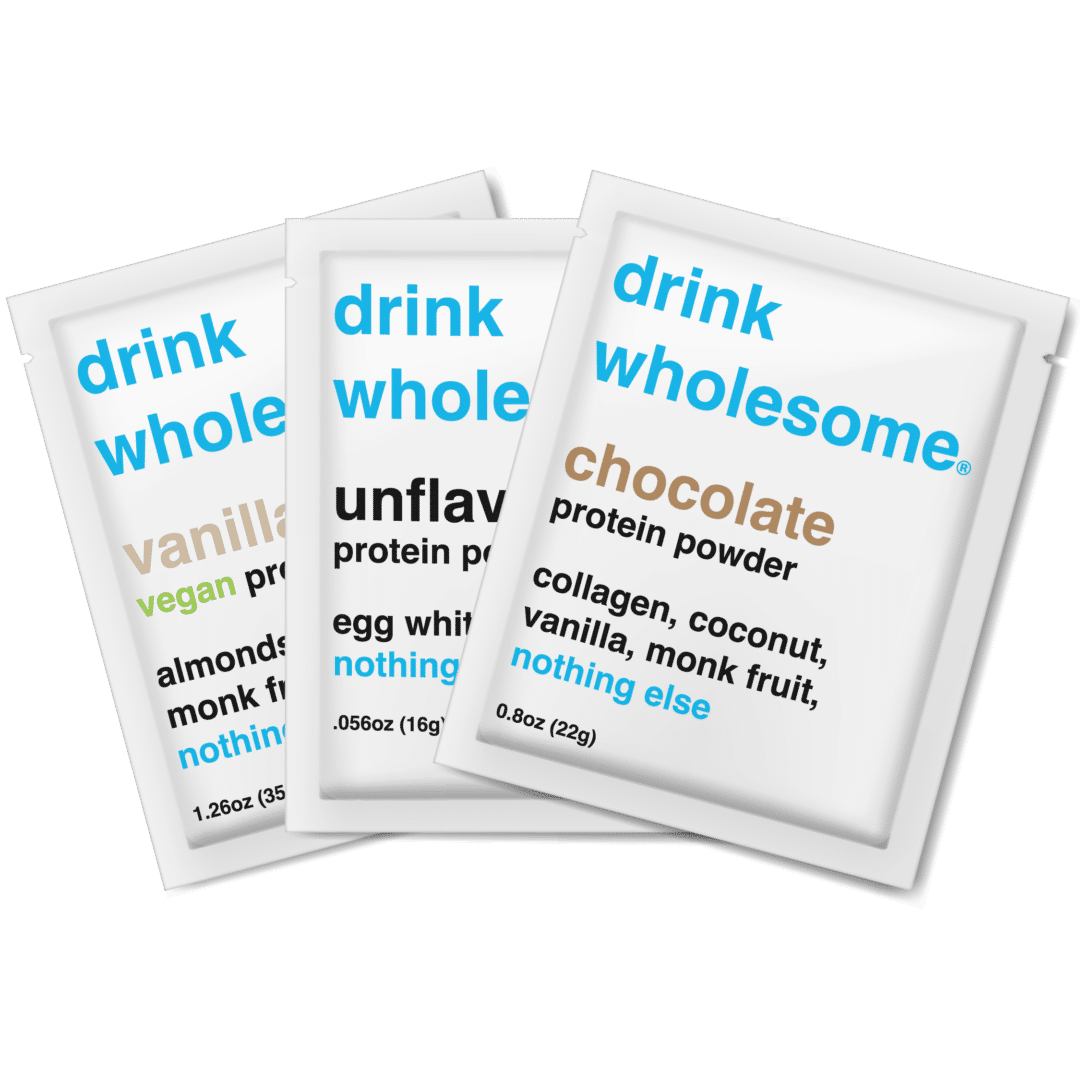
Protein Powder Sample Packs
This content is not intended to be a substitute for professional medical advice, diagnosis, or treatment. drink wholesome is not intended to diagnose, treat, cure or prevent any disease.