

Why Do Protein Shakes Make Me Feel Sick?
📌 Overview and Key Takeaways
Why do protein shakes make me feel sick?
This is a Certified Nutrition Coach’s guide on how to meet your protein needs without upsetting your stomach.
Protein Shakes Make Me Feel Sick
Can Protein Shakes Make Me Feel Sick?
Protein shakes are notorious for making people feel sick.
Common symptoms include bloating, nausea, and stomach pain.
These side effects can last anywhere from a few minutes to a few hours.
Fortunately, understanding why they occur can help you prevent them.
Sometimes, feeling sick is simply a question of eating too much or eating too fast, but it can also be related to what you ate and how it affects your digestion.
The problem with many protein shakes and powders is that they can contain ingredients that are hard to break down and absorb.
This can cause painful digestive side effects in the short-term and lead to long-term digestive issues in some cases.
What Do I Do if Protein Shakes Make Me Feel Sick?
If you just drank a protein shake and feel sick, here are a few things that may provide relief:
- Hydrate. Water plays an essential role in the digestion process. Being dehydrated can cause nausea and cramping.
- Eat ginger. Ginger tea, ginger ale, and fresh ginger can help calm an unsettled stomach.
- Drink peppermint. Peppermint tea can help relax muscles and allow painful gas to pass.
- Use over-the-counter medication. Medications such as antacids, ibuprofen, or acetaminophen may help relieve digestive discomfort. Always follow the recommended dosage.
- Try heat therapy. Applying a heating pad or hot water bottle to your abdomen can help relax muscles and relieve cramps.
- Rest. Stress and anxiety can aggravate stomach pain. Practice relaxation techniques such as deep breathing, meditation, or yoga to help calm your mind and body.
- Consult a healthcare professional. If your digestive issues are severe, persistent, or accompanied by other symptoms such as fever, vomiting, or bloody stools, seek medical attention promptly. It could be a sign of a more serious condition that requires professional diagnosis and treatment.
Although the tips above can help relieve symptoms, the best course of action is to learn how to avoid causing them in the first place.
Product Quiz
Why Do Protein Shakes Make Me Feel Sick?
Again, many protein powders are made from ingredients that can cause painful digestive side effects and even long-term digestive issues.
The most problematic ingredients are food additives, dairy-based proteins, and protein concentrates and isolates.
🚫 Avoid Food Additives
Emulsifiers, thickeners, and other ultra-processed additives can upset your stomach because they are hard to digest.
Foods that are hard to break down and absorb feed your gut bacteria, which release gas as they eat.
And too much intestinal gas can cause bloating, stomach pain, and even constipation.
Regularly eating certain food additives can also alter the composition and function of your gut microbiome – the collection of microorganisms living in your gut (North Clin Istanb, 2020).
These shifts, known as gut dysbiosis, have been linked to a number of chronic digestive issues (JGH Open, 2021).
Gut dysbiosis is so problematic because it causes a cascade of problems, including intestinal permeability and systemic inflammation.
⚠️ Here is a list of the most common food additives in protein shakes and powders:
- acacia fiber
- acacia gum
- acesulfame potassium
- artificial flavors
- ascorbic acid
- aspartame
- calcium carbonate
- carrageenan
- cellulose gum
- dextrin
- dicalcium phosphate
- dipotassium phosphate
- erythritol
- gellan gum
- guar gum
- gum arabic
- inulin
- locust bean gum
- maltitol
- maltodextrin
- mono- and diglycerides
- ‘natural’ flavors
- rice bran extract
- rice dextrin
- rice hulls
- rosemary extract
- silica
- silicon dioxide
- sodium alginate
- soluble corn fiber
- sorbitol
- soy lecithin
- sucralose
- sunflower lecithin
- tocopherols
- tricalcium phosphate
- xanthan gum
- xylitol
- zinc oxide
Also note that as a rule of thumb, if you could not find it in nature or make it at home, it is probably a food additive.
🚫 Avoid Dairy-Based Proteins
Dairy-based proteins like whey and casein, although not a problem for everyone, can cause digestive issues too.
This is usually because they contain lactose – a sugar many individuals with sensitive stomachs cannot fully digest.
But you might be sensitive to dairy-based proteins even if you are not lactose intolerant.
For starters, the digestion of some caseins releases a bioactive peptide that has been linked to digestive issues (Adv Nutr, 2017).
Casein also forms a gel-like substance in your stomach that slows down digestion (Crit Rev Food Sci Nutr, 2023).
For sensitive individuals, particularly true for those with cow’s milk protein allergy or intolerance, slower digestion can contribute to bloating, constipation, and other side effects.
🚫 Avoid Protein Concentrates and Isolates
If you have a sensitive stomach, you might also want to avoid protein concentrates and isolates.
Most protein shakes and powders are made from one or both of these ultra-processed protein sources, which have been mechanically and/or chemically stripped of everything but the protein.
This includes the enzymes, fiber, and other natural digestive aids that help you break them down.
You therefore do not digest them in the same way that you do whole foods, which could affect your gut health.
For example, one study shows that regularly consuming protein concentrates and isolates might disrupt your gut microbiome (Nutrients, 2018).
Another study shows that it could cause the formation of toxic byproducts in your gut (Mol Nutr Food Res, 2024).
Although further research is needed, individuals with sensitive stomachs can play it safe by choosing protein shakes and powders made from minimally-processed protein sources like egg whites and almonds.
They are more gut-friendly.
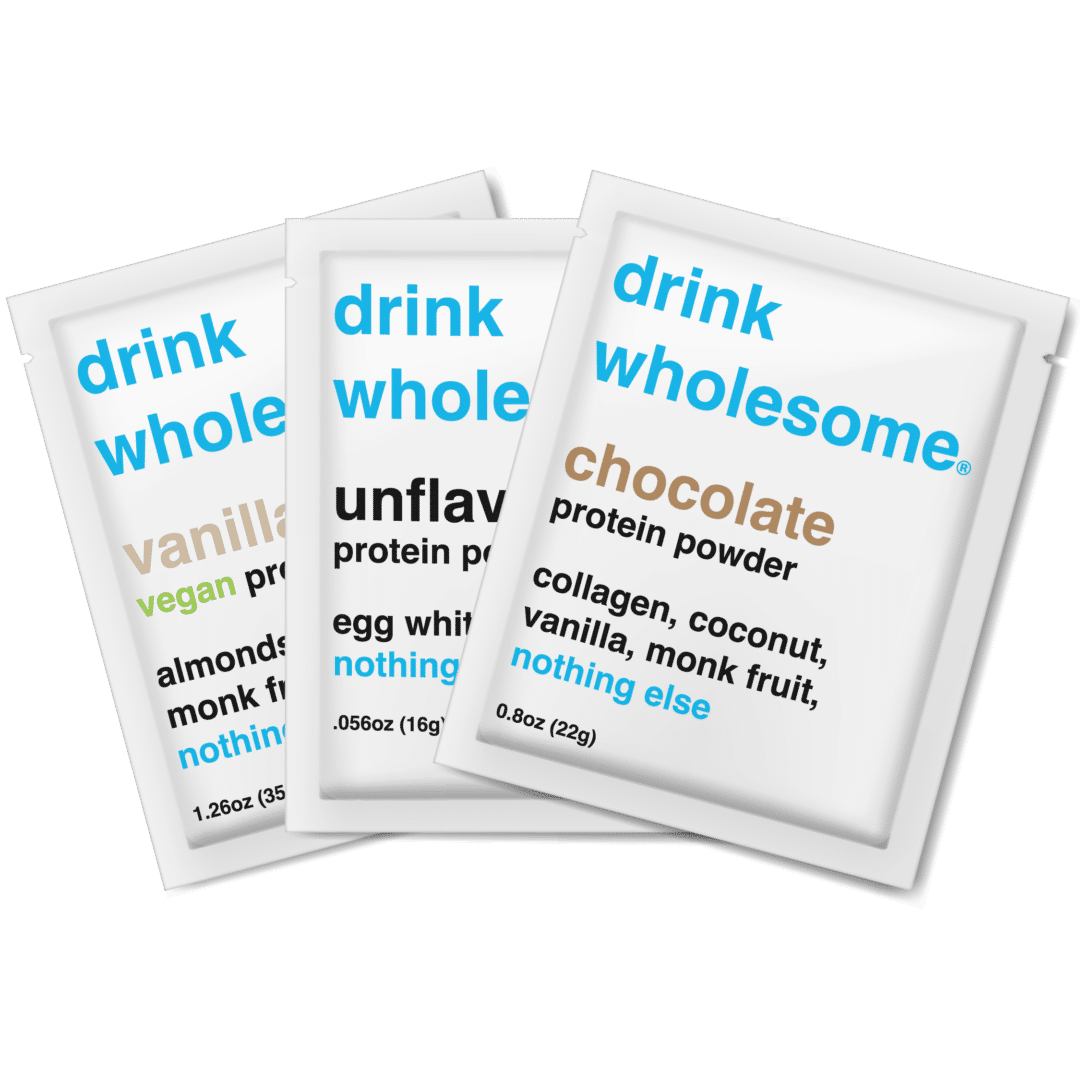
Order Samples to see for yourself.
Sources
- Northern Clinics of Istanbul (North Clin Istanb). Food additives and microbiota. 2020.
- Microorganisms (Microorganisms). Gut Microbiota Dysbiosis: Triggers, Consequences, Diagnostic and Therapeutic Options. 2022.
- JGH Open (JGH Open). Gut microbiota dysbiosis in functional gastrointestinal disorders: Underpinning the symptoms and pathophysiology. 2021.
- Critical Reviews in Food Science and Nutrition (Crit Rev Food Sci Nutr). Milk proteins: Processing, gastric coagulation, amino acid availability and muscle protein synthesis. 2023.
- Advances in Nutrition | Journal (Adv Nutr). Systematic Review of the Gastrointestinal Effects of A1 Compared with A2 β-Casein. 2017.
- Critical Reviews in Food Science and Nutrition (Crit Rev Food Sci Nutr). Milk proteins: Processing, gastric coagulation, amino acid availability and muscle protein synthesis. 2023.
- Nutrients (Nutrients). Effect of a Protein Supplement on the Gut Microbiota of Endurance Athletes: A Randomized, Controlled, Double-Blind Pilot Study. 2018.
- Molecular Nutrition & Food Research (Mol Nutr Food Res). In Vitro Fermentation of Animal and Plant Protein Isolates by the Human Gut Microbiota Under High and Low Carbohydrate Conditions. 2024.
Editorial Guidelines
This article was written by a Certified Nutrition Coach and reviewed by a Registered Dietitian. We rely on peer-reviewed research and trusted medical sources, and regularly update our content to ensure accuracy and clarity.
Frequently asked questions
Who Is Drink Wholesome for?
Drink Wholesome makes protein powder for sensitive stomachs, GERD, IBS, and other gut issues. It’s suitable for most food sensitivities, including lactose intolerance, and won’t cause side effects like bloating, constipation, and reflux.
Why Is Drink Wholesome Good for Sensitive Stomachs?
Drink Wholesome is the best protein powder for sensitive stomachs because it’s additive, dairy, and gluten-free. It’s also made from minimally-processed protein sources like egg whites and almonds. Other protein powders are made from ultra-processed protein concentrates and isolates, which look nothing like real food.
What’s the Difference Between Protein Powder and Meal Replacement Powder?
Drink Wholesome makes gut-friendly Protein Powders and Meal Replacement Powders. Protein powder is high in protein and low in everything else, whereas meal replacement powder contains fats, carbs, fiber, and protein because it’s intended to replace the nutritional value of a balanced meal.
What’s the Difference Between Almond, Collagen, and Egg White Protein?
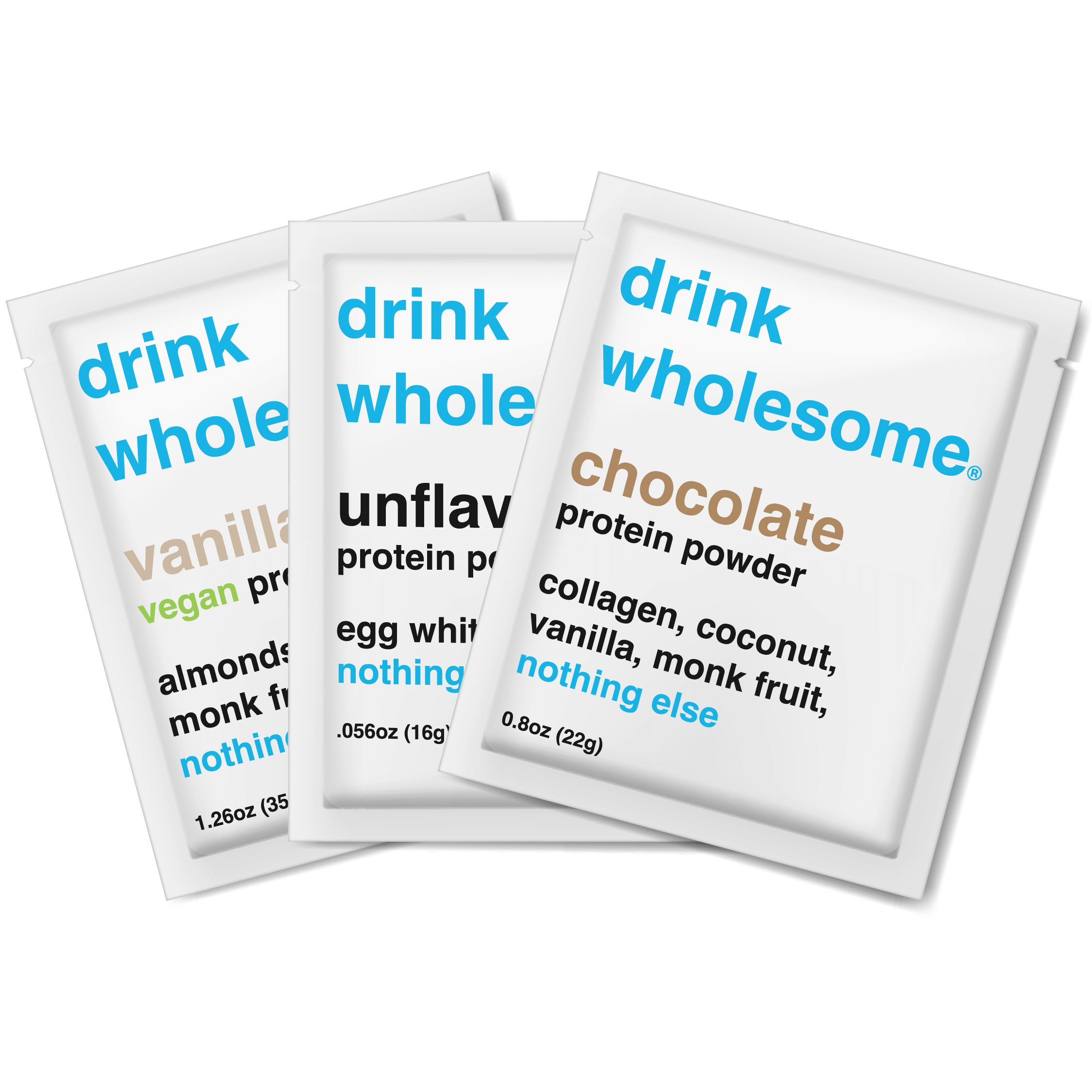
We make three types of stomach-friendly Protein Powder: Collagen Protein Powder, Egg White Protein Powder, and Vegan Almond Protein Powder. As long as you get protein from a variety of sources, any type of protein can help you meet your total daily protein needs. In other words, for someone with a balanced diet, there is no advantage to consuming one type of protein over another. Order Samples to see which type you like the most.
Ask Nutrition Coach
If you’re wondering which Drink Wholesome product is best for you, ask our Certified Nutrition Coach. For personalized medical advice, consult your healthcare provider.
Protein Powder Samples
Starting at: $9.99
BUY NOWProtein Calculator
Product Quiz