

What are the side effects of meal replacement shakes?
What are the side effects of meal replacement shakes? Learn more about the meal replacement ingredients most likely to cause side effects.

Meal replacement shakes can cause side effects.
Written by Jack Schrupp & endorsed by Baylee Reller, RDN
What are the side effects of meal replacement shakes?
Meal replacement side effects, also known as adverse reactions, are unwanted symptoms caused by the consumption of meal replacement shakes. Common meal replacement side effects include acne, headaches, and digestive distress.
This last one is really common. Roughly 1 in 5 people experience bloating, constipation, diarrhea, gas, nausea, or stomach pain after drinking meal replacement shakes. The severity of the side effects varies from person to person, but it is not unusual to run to the bathroom or feel bloated when using meal replacements.

Why do meal replacements cause side effects?
If your meal replacement upsets your stomach, and you are wondering why, you have come to the right place. In this article, I will explain why the average meal replacement is hard to digest, and what you can do to avoid gastrointestinal (GI) side effects.
The reason(s) why most meal replacements cause GI side effects can usually be found in the ingredient list. Although they are marketed to health conscious consumers, meal replacements tend to be made with heavily-processed, or altogether artificial ingredients. To skip the side effects, you therefore have to a) read the ingredient list, and b) know which ingredients to avoid.
The most common ingredients that can cause side effects are dairy-based proteins and food additives. Both of these ingredients are problematic for the same reason: they are hard to digest. Dairy-based proteins are hard to digest because they contain lactose. Food additives are hard to digest because they look nothing like real food. Keep reading to learn more.

Why drink wholesome?
drink wholesome is additive-free.
One of the reasons why our meal replacements do not cause side effects is that we, unlike most meal replacement companies, do not use food additives. Additives can cause painful side effects – even in small amounts – because they do not look like real foods and are hard to digest.
Partially digested additives hang around in your gut longer than food should, feeding your gut bacteria, which release gas as they eat. Extra gas can cause bloating, flatulence, stomach pain, and even constipation. Partially digested food additives can also cause your colon to absorb extra water, which can lead to diarrhea.
Here is a list of the most common food additives in meal replacement powder:
acacia gum, acesulfame potassium, artificial flavors, aspartame, carrageenan, cellulose gum, dextrin, dextrose, erythritol, gellan gum, guar gum, gum arabic, inulin, locust bean gum, “natural” flavors, maltodextrin, rice syrup solids, soy lecithin, silica, sucralose, sunflower lecithin, xanthan gum, xylitol
Over time, regularly eating additives can interfere with regulatory pathways in your intestines, increasing your chances of developing inflammatory bowel disease (IBD) and other chronic inflammatory conditions. Food additives, particularly artificial sweeteners and sugar alcohols, can also upset the balance of your gut microbiome, which can cause widespread inflammation and a number of chronic diseases.
the alternative:
SOY PROTEIN ISOLATE, CANOLA OIL, MALTODEXTRIN, ISOMALTULOSE, SOLUBLE CORN FIBER, MODIFIED FOOD STARCH, VITAMIN AND MINERAL PREMIX, CELLULOSE, NATURAL & ARTIFICIAL FLAVORS, SOY LECITHIN, SALT, MONO & DIGLYCERIDE, XANTHAN GUM, SUCRALOSE
drink wholesome is dairy-free.
Another reason why our meal replacements do not cause side effects is that we do not use dairy-based proteins. A lot of other meal replacements contain whey and/or casein protein, which come from cheese and yogurt production.
These dairy-based protein sources often bring about digestion problems, particularly for those with lactose intolerance. Lactose intolerance, which affects over one-third of all adults, limits your ability to digest lactose, the sugar in dairy. And as you just found out, when food is not fully broken down, it can result in painful side effects.

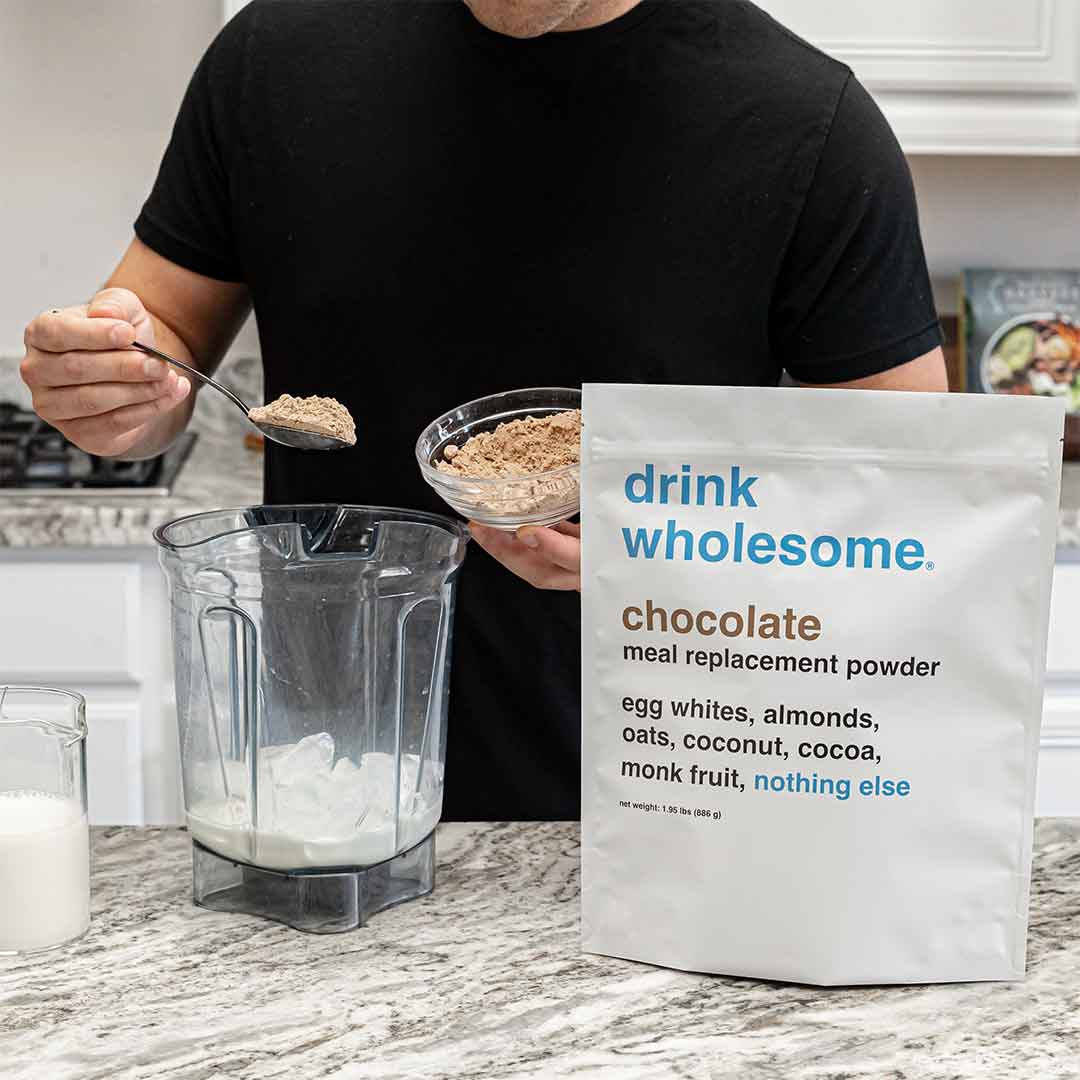
drink wholesome is made with real foods.
A final reason why our meal replacements do not cause side effects is that we do not use protein concentrates or isolates. Nearly all other meal replacements rely heavily on one or both of these protein sources, which have been stripped down to just their protein content.
Producing protein concentrates and isolates involves significant mechanical and chemical changes. Sometimes, chemicals like hexane are used to extract the protein. As a result, the shake you drink ends up bearing only a faint resemblance to real, natural food.
Your digestive system is built to digest minimally or unprocessed foods, not protein concentrates or isolates. This is why more and more research shows that regularly eating ingredients like these can alter the composition of your gut microbiome. This, as you now know, can contribute to some particularly worrisome side effects.


Instead of using protein concentrates or isolates, we make easy to digest meal replacements with whole foods like egg whites and almonds. Simple ingredients like these are gut-friendly alternatives to protein concentrates and isolates.
Unlike protein isolates and concentrates, egg whites and almonds contain enzymes and other natural digestive aids that make them super easy to digest. Egg whites are also low fiber, low FODMAP, alkaline (they help maintain healthy pH levels in your gut), and bioactive (they enable the growth of healthy gut bacteria).
Almonds, on the other hand, are also particularly gut-friendly! They are prebiotic, meaning they improve the diversity of your gut microbiome, and promote regular and healthy bowel movements. Simple ingredients like this are our secret to making meal replacement shakes that do not cause side effects.
“Best, most digestible meal replacement powder I have ever had.” – Jennifer
Read more reviews or take the quiz.
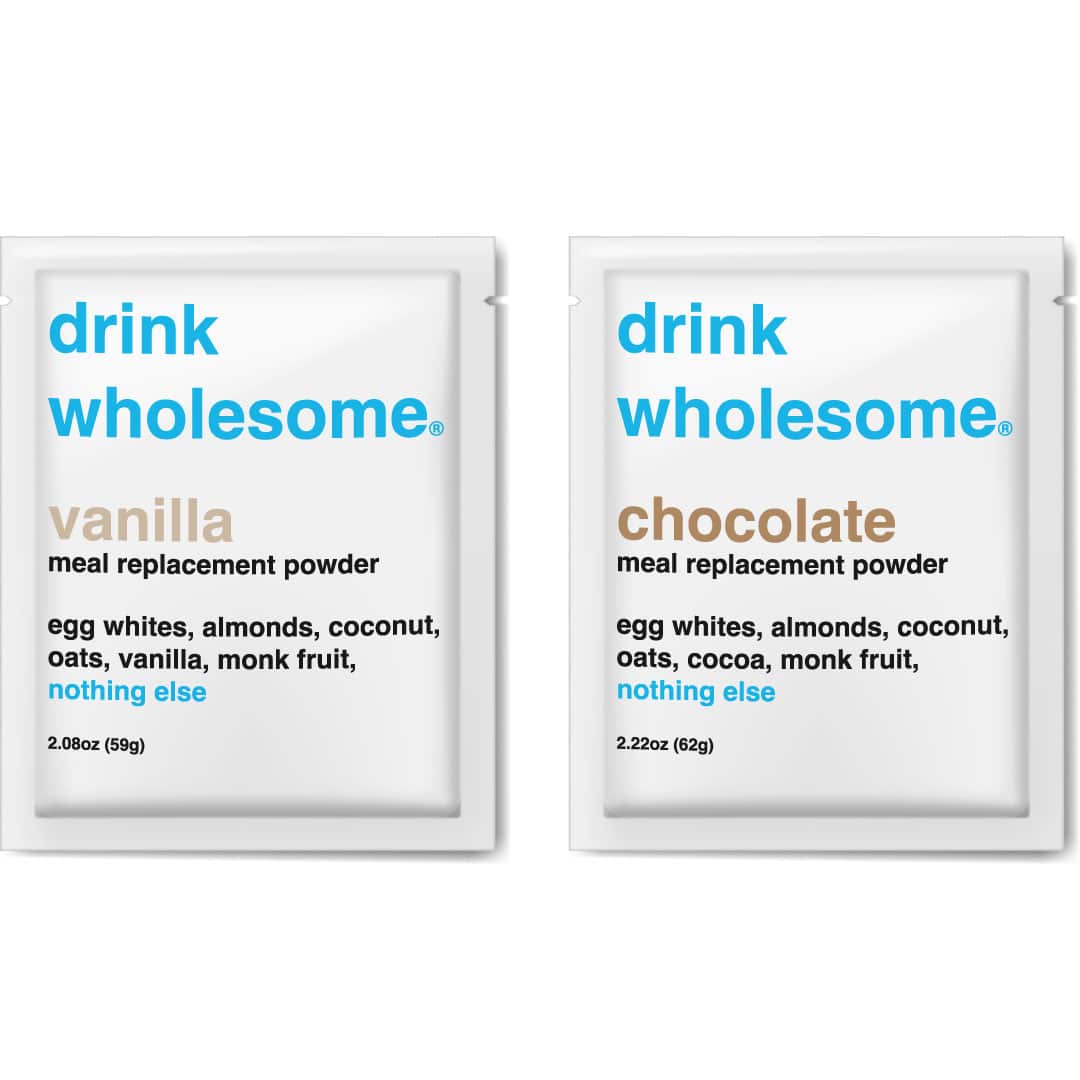
Meal Replacement Powder Sample Packs
This content is not intended to be a substitute for professional medical advice, diagnosis, or treatment. drink wholesome is not intended to diagnose, treat, cure or prevent any disease.