How to Find the Best Protein Powder for Food Intolerances
📌 Overview and Key Takeaways
This is a Nutrition Coach’s guide on how to find the best protein powder for food intolerances.
Discover how to meet your daily protein needs without upsetting your stomach.

Protein Powder for Food Intolerances
Is Protein Powder Good for Food Intolerances?
Protein powder can be a good source of protein for people with food intolerances, but the ingredients matter.
Food intolerance is a reproducible, non-immune reaction to a food usually caused by impaired digestion/absorption.
Common examples include:
- Lactose intolerance, where you do not make enough of the enzyme lactase to break down milk sugar (lactose).
- Fructose malabsorption, which is the incomplete absorption of fructose in the small intestine
- Reactions to caffeine or additives such as sulfites.
Symptoms, which usually depend on how much was eaten, are mostly gastrointestinal, including bloating, gas, stomach pain, diarrhea, nausea.
Unlike an allergy, their onset is often delayed by hours, and can last hours to days.
Testing for food intolerances typically involves lactose or fructose breath tests, and an elimination diet followed by structured reintroduction.
It is worth noting that the overlap of food intolerances with irritable bowel syndrome (IBS) is large: 50–84% of IBS patients link their symptoms to specific foods (Aliment Pharmacol Ther, 2015).
When it comes to choosing a protein powder for someone with food intolerances, it is important to familiarize yourself with common triggers.
Whey and casein are the most common, as they contain lactose.
Inulin and sugar alcohols like xylitol are also common triggers, as they are high FODMAP.
Natural flavors are another ingredient to avoid.
Natural flavor manufacturers can add artificial solvents, preservatives, and carriers to a flavor, and not disclose them on the ingredient list (FDA regulations 21 CFR §101.22).
Note that if you have an actual allergy (not just an intolerance), look for allergen-free manufacturing statements, since many powders are made on shared equipment.
You could also consider a single-ingredient powder.
Pea-, hemp-, and collagen-based proteins tend to be good options for people with allergies.
Daily Protein Intake Calculator
What is the Best Protein Powder for Food Intolerances?
You should try to meet your daily protein needs by eating a balanced diet.
If you struggle to do so, however – perhaps due to dietary restrictions related to food intolerances – you might benefit from the convenience and versatility of protein powder.
Protein powder can be mixed with just milk or water, or added to smoothies, oatmeals, and other recipes, making it a quick and easy way to fill gaps in your diet.
It is also worth noting that as long as you are getting protein from a variety of sources, any type of protein shake or powder can help you meet your total daily protein needs.
Ingredients do matter, however.
Many protein powders contain ingredients that might contribute to painful gut issues, especially for people with food intolerances.
Among the top offenders are artificial and ultra-processed food additives.
🚫 Avoid Food Additives
Some people find that certain food additives, particularly sugar alcohols, cause digestive symptoms such as bloating and stomach pain (Gastroenterology, 2023).
Most of this evidence is anecdotal, however, and tolerance varies from person to person.
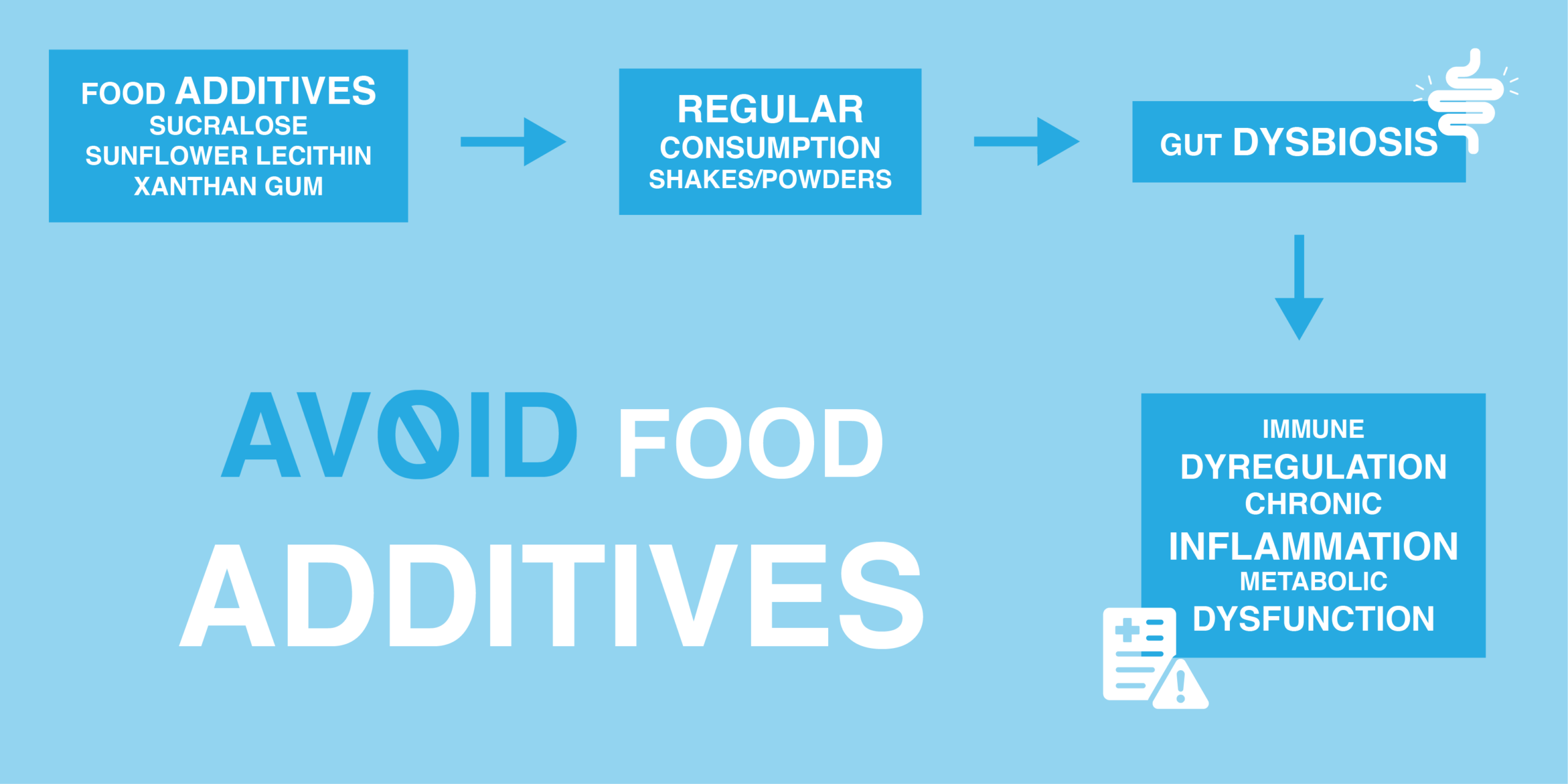
Regularly consuming certain food additives – including certain emulsifiers and thickeners – might also alter the composition and function of your gut microbiome, the community of bacteria and other microbes living in your digestive tract (North Clin Istanb, 2019).
Although most of this evidence comes from animal and laboratory studies, and the limited human data are mixed, it is worthy of consideration.
If diets high in food additives do disrupt the balance of gut bacteria, they could contribute to chronic digestive conditions such as IBS (JGH Open, 2021).
For instance, when harmful bacteria crowd out beneficial ones, the gut lining can weaken, allowing bacteria and their toxins to pass into the body (Front Immunol, 2025).
The immune response that follows not only drives inflammation, but can also worsen the bacterial imbalance, creating a self-reinforcing cycle (Front Immunol, 2025).
Again, more research is needed to confirm these links.
But because protein shakes and powders are often consumed daily, even small amounts of potentially problematic additives can add up over time, so their cumulative effect might be worth taking seriously.
⚠️ Here is a list of the most common food additives in protein shakes and powders:
- acacia fiber
- acacia gum
- acesulfame potassium
- artificial flavors
- ascorbic acid
- aspartame
- calcium carbonate
- carrageenan
- cellulose gum
- dextrin
- dicalcium phosphate
- dipotassium phosphate
- erythritol
- gellan gum
- guar gum
- gum arabic
- inulin
- locust bean gum
- maltitol
- maltodextrin
- mono- and diglycerides
- ‘natural’ flavors
- rice bran extract
- rice dextrin
- rice hulls
- rosemary extract
- silica
- silicon dioxide
- sodium alginate
- soluble corn fiber
- sorbitol
- soy lecithin
- sucralose
- sunflower lecithin
- tocopherols
- tricalcium phosphate
- xanthan gum
- xylitol
- zinc oxide
As a rule of thumb, if you cannot find it in nature or make it at home, it is probably a food additive.
🚫 Avoid Dairy-Based Proteins
Dairy-based proteins like whey and casein, although not a problem for everyone, can cause gut issues too.
This is usually because they contain lactose.
But you might be sensitive to dairy-based proteins even if you are not lactose intolerant.
For starters, the digestion of some caseins releases a bioactive peptide that has been linked to stomach pain (Adv Nutr, 2017).
Casein also forms a gel-like substance in your stomach that slows down digestion (Crit Rev Food Sci Nutr, 2023).
For sensitive individuals, slower digestion can contribute to bloating, constipation, and other side effects.

🚫 Avoid Protein Concentrates and Isolates
If you have a sensitive stomach, you might also want to avoid protein concentrates and isolates.
Most protein shakes and powders are made from one or both of these protein sources, which have undergone industrial mechanical and often chemical processing.
This not only strips away fiber, enzymes, and other natural digestive aids, but it also breaks down the food’s natural structure.
As a result, you might not digest protein concentrates and isolates in the same way that you do whole foods, which could negatively affect your gut health.
For example, one study shows that regularly consuming protein concentrates and isolates might disrupt your gut microbiome (Nutrients, 2018).
Another study shows that it might cause the formation of toxic byproducts in your gut (Mol Nutr Food Res, 2024).
It is worth adding that protein concentrates and isolates are often paired with emulsifiers and thickeners to restore their texture and taste, which, as you just learned, might further affect gut health.
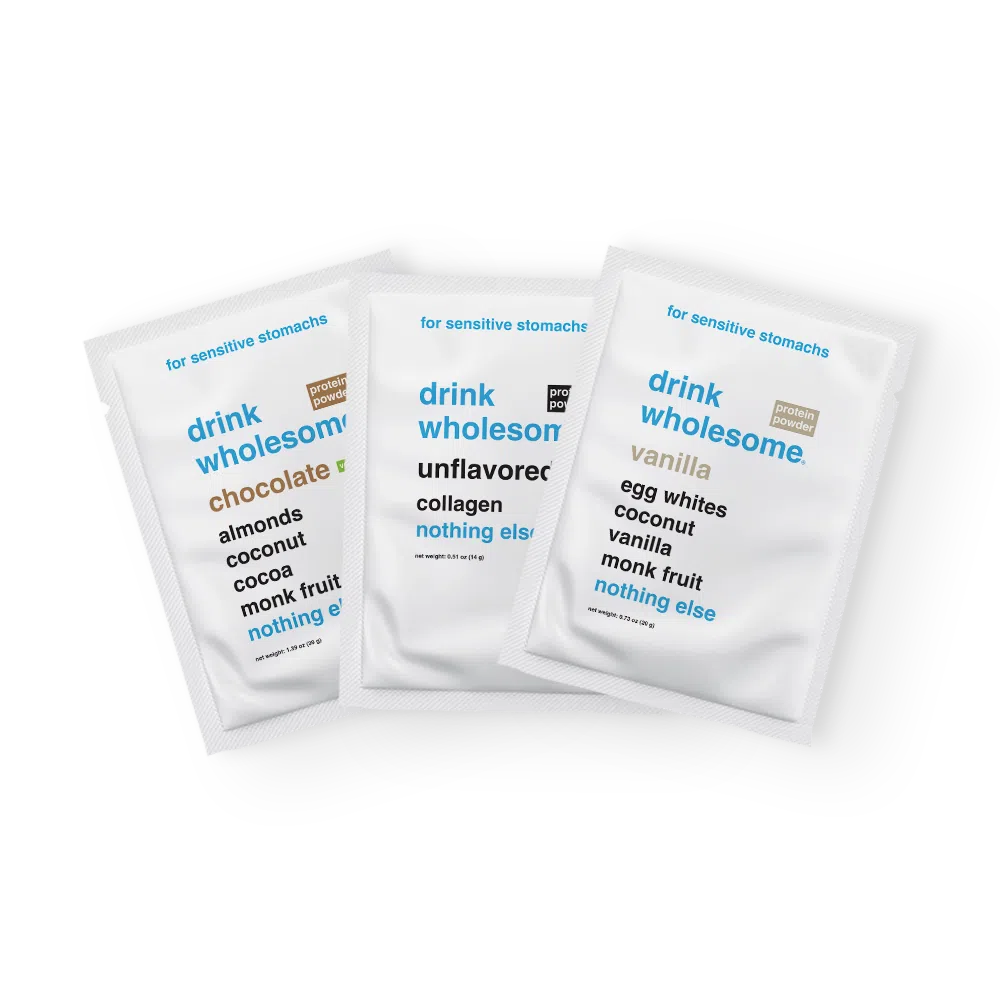
Additional studies are needed to clarify these relationships, but you can play it safe by choosing protein shakes and powders made from minimally-processed, whole food protein sources like egg whites and almonds.
Our customers find them to be more gut-friendly.
Order Samples to see for yourself.
Product Quiz
Sources
- Alimentary Pharmacology & Therapeutics (Aliment Pharmacol Ther). Review article: the aetiology, diagnosis, mechanisms and clinical evidence for food intolerance. 2015.
- Gastroenterology (Gastroenterology). AGA Clinical Practice Update on Evaluation and Management of Belching, Abdominal Bloating, and Distention: Expert Review. 2023.
- Northern Clinics of Istanbul (NCI). Food additives and microbiota. 2019.
- Journal of Gastroenterology and Hepatology Open (JGH Open). Gut microbiota dysbiosis in functional gastrointestinal disorders: Underpinning the symptoms and pathophysiology. 2021.
- Frontiers in Immunology (Front Immunol). Systemic dysregulation of the gut microenvironment plays a pivotal role in the onset and progression of inflammatory bowel disease. 2025.
- Advances in Nutrition | Journal (Adv Nutr). Systematic Review of the Gastrointestinal Effects of A1 Compared with A2 β-Casein. 2017.
- Critical Reviews in Food Science and Nutrition (Crit Rev Food Sci Nutr). Milk proteins: Processing, gastric coagulation, amino acid availability and muscle protein synthesis. 2023.
- Nutrients. Effect of a Protein Supplement on the Gut Microbiota of Endurance Athletes: A Randomized, Controlled, Double-Blind Pilot Study. 2018.
- Molecular Nutrition & Food Research (Mol Nutr Food Res). In Vitro Fermentation of Animal and Plant Protein Isolates by the Human Gut Microbiota Under High and Low Carbohydrate Conditions. 2024.
Editorial Guidelines
This article was written by a Certified Nutrition Coach and reviewed by a Registered Dietitian. We rely on peer-reviewed research and trusted medical sources, and regularly update our content to ensure accuracy and clarity.
Frequently asked questions
Who Is Drink Wholesome for?
Drink Wholesome is a protein powder for people who struggle to eat enough protein but can’t stomach other protein powders because of food sensitivities or digestive conditions like IBS, GERD, SIBO, Crohn’s and colitis, and gastroparesis. It’s made without the artificial and ultra-processed ingredients that can contribute to digestive symptoms like acid reflux, bloating, gas, or stomach pain, so it’s gentle on even the most sensitive stomachs. If it upsets your stomach, it’s free.
Why Is Drink Wholesome Good for Sensitive Stomachs?
Drink Wholesome is the best gut-friendly protein powder for sensitive stomachs because it’s additive, dairy, and gluten-free. It’s also made from minimally-processed protein sources like egg whites and almonds. Other protein powders are made from ultra-processed protein concentrates and isolates, which look nothing like real food.
What’s the Difference Between Protein Powder and Meal Replacement Powder?
Drink Wholesome makes Protein Powders and Meal Replacement Powders. Protein powder is high in protein and low in everything else, whereas meal replacement powder contains fats, carbs, fiber, and protein because it’s intended to replace the nutritional value of a balanced meal.
What’s the Difference Between Almond, Collagen, and Egg White Protein?
Drink Wholesome makes three types of Protein Powder: Collagen Protein Powder, Egg White Protein Powder, and Vegan Almond Protein Powder. As long as you are eating a balanced diet – getting protein from a variety of sources – any type of protein can help you meet your total daily protein needs. Take the Product Quiz or order Samples to see which type of stomach-friendly protein powder is right for you.
Ask Nutrition Coach
If you’re wondering which Drink Wholesome product is best for you, ask our Certified Nutrition Coach. For personalized medical advice, consult your healthcare provider.
High Protein Balls
PREP TIME
5 min
COOK TIME
5 min
SERVES
2
Ingredients
- ⅓ cup Protein Powder
- ½ cup nut butter
- ¼ cup maple syrup
- 1 tsp vanilla extract
- ½ cup rolled oats
- ¼ cup mini chocolate chips
- ¼ cup shredded coconut
Instructions
Combine the Protein Powder, nut butter, syrup, extract, and oats in a food processor or blender. Pulse until well combined. Add the chocolate and coconut, and pulse a few more times. Roll the dough into 10 balls. Enjoy!
Author(s)
Protein Powder Samples
Starting at $9.99
BUY NOW