How to Find the Best Protein Powder for Dialysis Patients
📌 Overview and Key Takeaways
This is a Certified Nutrition Coach’s guide on how to find the best protein powder for dialysis patients.
Discover how to safely meet your protein needs while on dialysis.

Protein Powder for Dialysis Patients
Is Protein Powder Good for Dialysis Patients?
If you are beginning hemodialysis, you are likely going to make several dietary changes, one of which is increasing your protein intake.
Not only does protein play an essential role in the creation and maintenance of every cell in your body, but dialysis also removes proteins from your blood.
This means that your protein needs are now higher than they were before the treatment.
The recommended protein intake for non-dialysis patients is 0.6-0.8 grams per kilogram of body weight per day with > 50% HBV proteins (Nutrients, 2017).
HBV stands for high biological value, and refers to protein sources such as eggs, fish, poultry, meat and dairy.
For patients on dialysis, the daily protein intake recommendation is 1.0-1.2 grams per kilogram of bodyweight (AJKD, 2020).
If you do not eat enough protein to make up for what is lost during dialysis, your body will break down muscles to get the protein that it needs.
This can lead to weight loss, fatigue, and put you at higher risk for infection.
It is therefore imperative that you find easy ways to increase the amount of protein in your diet, which is where protein powders can help.
Adding protein powder to your diet can ensure that you are meeting your protein goals.
That said, people with chronic kidney disease (CKD) should use protein shakes and powders in moderation.
When you digest dietary protein, it breaks down into amino acids, which are used for building and repairing muscles, among other things.
Any extra amino acids that your body does not need get excreted by the kidneys.
If you eat a lot of protein, your kidneys have to work extra hard to remove the excess amino acids, which can cause kidney damage over time.
A high-protein diet can also raise the levels of urea in your blood, which is a waste product created when protein breaks down.
Research shows that having too much urea and other waste products in your blood can cause kidney damage and increase the risk for chronic kidney disease in individuals with impaired kidney function (J Am Soc Nephrol, 2020).
Protein shakes and powders can be a valuable nutritional tool for dialysis patients, but should be used judiciously.
Always consult your doctor for personalized recommendations.
What Is the Best Protein Powder for Dialysis Patients?
Research suggests Egg White Protein is a good source of protein for those undergoing dialysis treatment (Nutr Metab Cardiovasc Dis, 2019).
This is because dialysis patients have high protein needs, but need to limit their phosphorus and potassium intakes, and egg whites are low in phosphorus and potassium.
Egg whites do contain a moderate amount of sodium, however, so if this is a concern for you, then they might not be the best option.
Moreover, if you need to limit your potassium intake, it is recommended you use unflavored egg white protein powder.
Added ingredients tend to contribute phosphorus to a formula, so it may be best to keep it simple!
All that said, the amount of egg whites allowed in your diet is dependent on your individual nutritional status, so consult with a healthcare professional before making changes to your diet.
Product Quiz
What Protein Powder Ingredients Should Dialysis Patients Avoid?
Many protein powders contain added ingredients that can cause long term health problems for dialysis patients. Among these ingredients are food additives and protein concentrates and isolates.
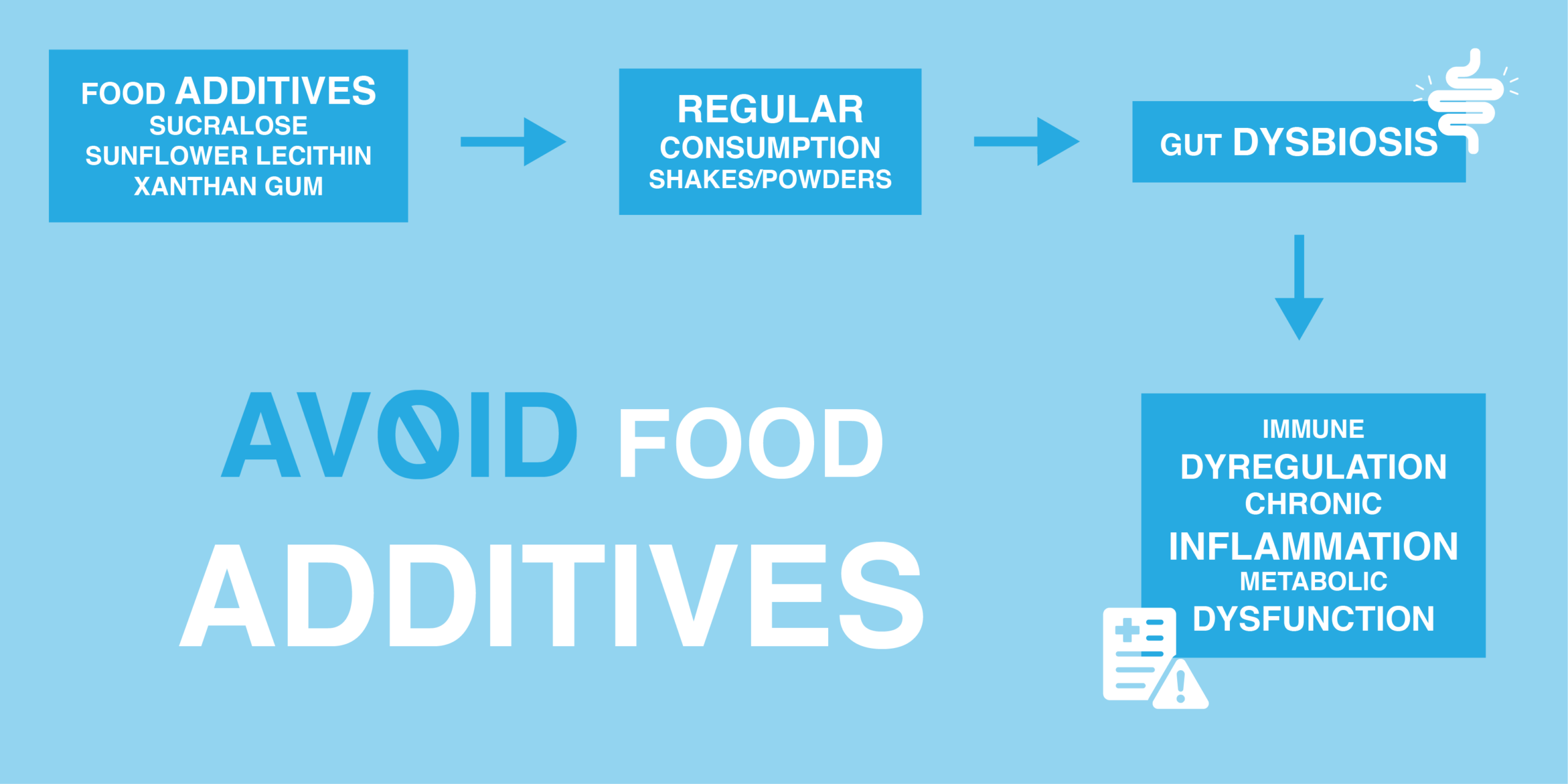
🚫 Avoid Food Additives
Regularly eating emulsifiers, thickeners, and other additives can alter the composition of your gut microbiome – the collection of microorganisms living in your gut (North Clin Istanb, 2019).
This can lead to gut dysbiosis, or an imbalance in gut bacteria, which may contribute to the development of kidney disease (Microorganisms, 2022; Front Med, 2021).
In case you were wondering, an imbalance in gut bacteria can result in the increased production of uremic toxins, which, in turn, can exacerbate local and systemic kidney inflammation.
⚠️ Here is a list of the most common food additives in protein shakes and powders:
- acacia fiber
- acacia gum
- acesulfame potassium
- artificial flavors
- ascorbic acid
- aspartame
- calcium carbonate
- carrageenan
- cellulose gum
- dextrin
- dicalcium phosphate
- dipotassium phosphate
- erythritol
- gellan gum
- guar gum
- gum arabic
- inulin
- locust bean gum
- maltitol
- maltodextrin
- mono- and diglycerides
- ‘natural’ flavors
- rice bran extract
- rice dextrin
- rice hulls
- rosemary extract
- silica
- silicon dioxide
- sodium alginate
- soluble corn fiber
- sorbitol
- soy lecithin
- sucralose
- sunflower lecithin
- tocopherols
- tricalcium phosphate
- xanthan gum
- xylitol
- zinc oxide
As a rule of thumb, if you cannot find it in nature or make it at home, it is probably a food additive.

🚫 Avoid Protein Concentrates and Isolates
You might also want to avoid ultra-processed protein concentrates and isolates.
Most protein shakes and powders are made from one or both of these ultra-processed protein sources, which have been mechanically and/or chemically stripped of everything but the protein.
This includes the enzymes, fiber, and other natural digestive aids that help your gut break them down.
You therefore do not digest them in the same way that you do whole foods, which could affect your gut health.
Studies show that regularly eating protein concentrates and isolates might disrupt your gut microbiome and cause the formation of toxic byproducts in your gut (Nutrients, 2018; Mol Nutr Food Res, 2024).
You should thus look for protein shakes and powders made from whole food protein sources like egg whites and almonds, which are easier to digest and absorb.
Order Samples to see for yourself.
Sources
- Nutrients (Nutrients). Protein Nutrition and Malnutrition in CKD and ESRD. 2017.
- Nutrition, Metabolism & Cardiovascular Diseases (Nutr Metab Cardiovasc Dis). The impact of a nutritional intervention based on egg white for phosphorus control in hemodialyis patients. 2019.
- American Journal of Kidney Diseases (AJKD). KDOQI Clinical Practice Guideline for Nutrition in CKD: 2020 Update. 2020.
- Journal of the American Society of Nephrology : JASN (J Am Soc Nephrol). The Effects of High-Protein Diets on Kidney Health and Longevity.. 2020.
- Journal of Renal Care (J Ren Care). DIETARY EGG WHITES FOR PHOSPHORUS CONTROL IN MAINTENANCE HAEMODIALYSIS PATIENTS: A PILOT STUDY. 2011.
- Northern Clinics of Istanbul (North Clin Istanb). Food additives and microbiota. 2019.
- Microorganisms (Microorganisms). Gut Microbiota Dysbiosis: Triggers, Consequences, Diagnostic and Therapeutic Options. 2022.
- Frontiers in Medicine (Front Med). The Gut-Kidney Axis in IgA Nephropathy and IgA Vasculitis: Role in Pathogenesis, Diagnosis and Treatment. 2021.
- Nutrients (Nutrients). Effect of a Protein Supplement on the Gut Microbiota of Endurance Athletes: A Randomized, Controlled, Double-Blind Pilot Study. 2018.
- Molecular Nutrition & Food Research (Mol Nutr Food Res). In Vitro Fermentation of Animal and Plant Protein Isolates by the Human Gut Microbiota Under High and Low Carbohydrate Conditions.. 2024.
Editorial Guidelines
This article was written by a Certified Nutrition Coach and reviewed by a Registered Dietitian. We rely on peer-reviewed research and trusted medical sources, and regularly update our content to ensure accuracy and clarity.
Frequently asked questions
Who Is Drink Wholesome for?
Drink Wholesome is a protein powder for people who struggle to eat enough protein but can’t stomach other protein powders because of food sensitivities or digestive conditions like IBS, GERD, SIBO, Crohn’s and colitis, and gastroparesis. It’s made without the artificial and ultra-processed ingredients that can contribute to digestive symptoms like acid reflux, bloating, gas, or stomach pain, so it’s gentle on even the most sensitive stomachs. If it upsets your stomach, it’s free.
Why Is Drink Wholesome Good for Sensitive Stomachs?
Drink Wholesome is the best gut-friendly protein powder for sensitive stomachs because it’s additive, dairy, and gluten-free. It’s also made from minimally-processed protein sources like egg whites and almonds. Other protein powders are made from ultra-processed protein concentrates and isolates, which look nothing like real food.
What’s the Difference Between Protein Powder and Meal Replacement Powder?
Drink Wholesome makes Protein Powders and Meal Replacement Powders. Protein powder is high in protein and low in everything else, whereas meal replacement powder contains fats, carbs, fiber, and protein because it’s intended to replace the nutritional value of a balanced meal.
What’s the Difference Between Almond, Collagen, and Egg White Protein?
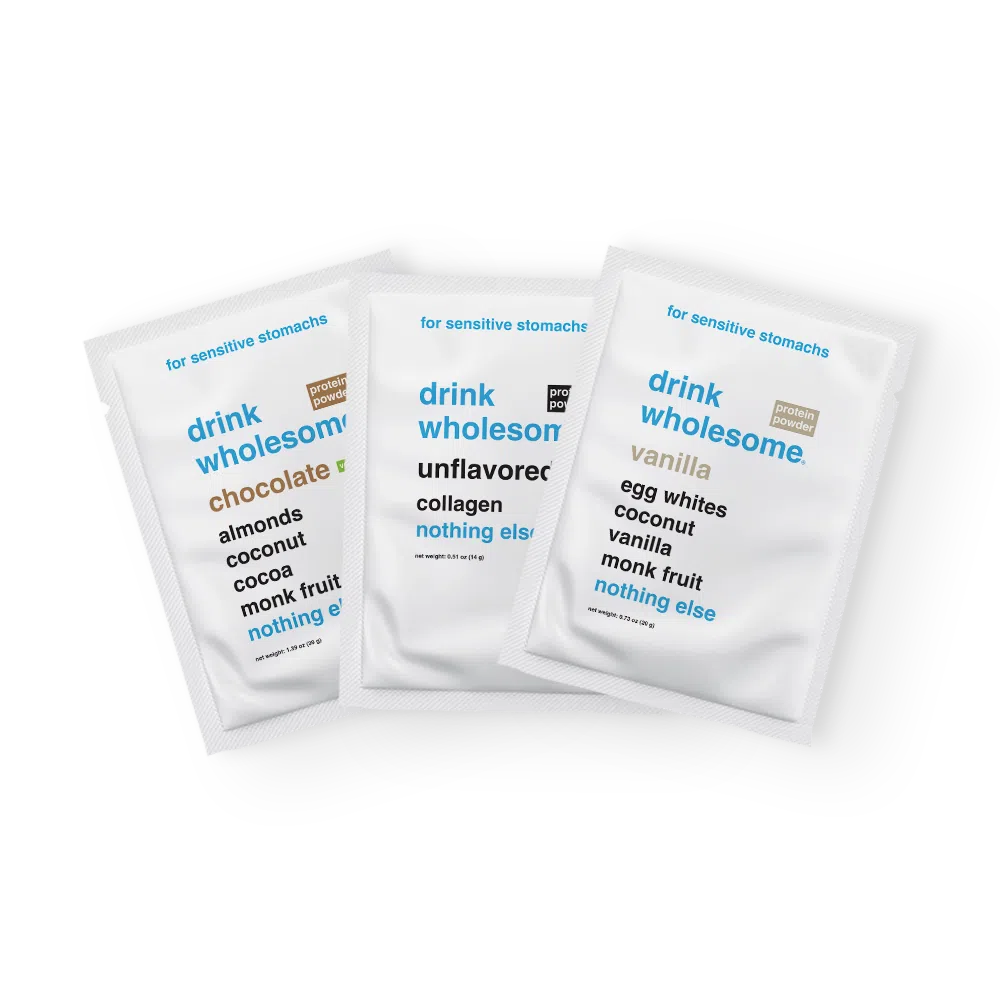
Drink Wholesome makes three types of Protein Powder: Collagen Protein Powder, Egg White Protein Powder, and Vegan Almond Protein Powder. As long as you are eating a balanced diet – getting protein from a variety of sources – any type of protein can help you meet your total daily protein needs. Take the Product Quiz or order Samples to see which type of stomach-friendly protein powder is right for you.
Ask Nutrition Coach
If you’re wondering which Drink Wholesome product is best for you, ask our Certified Nutrition Coach. For personalized medical advice, consult your healthcare provider.
High Protein Balls
PREP TIME
5 min
COOK TIME
5 min
SERVES
2
Ingredients
- ⅓ cup Protein Powder
- ½ cup nut butter
- ¼ cup maple syrup
- 1 tsp vanilla extract
- ½ cup rolled oats
- ¼ cup mini chocolate chips
- ¼ cup shredded coconut
Instructions
Combine the Protein Powder, nut butter, syrup, extract, and oats in a food processor or blender. Pulse until well combined. Add the chocolate and coconut, and pulse a few more times. Roll the dough into 10 balls. Enjoy!
Author(s)
Protein Powder Samples
Starting at $9.99
BUY NOW