Is Protein Powder Processed Food?
📌 Overview and Key Takeaways
Is protein powder processed food?
In this article, a Certified Nutrition Coach explains what goes into making your protein powder.

Protein Powder Processing
What is Protein Powder?
Protein powder is a protein shake or powder in powder form.
Common types include whey, soy, pea, hemp, and egg white.
It can be mixed with just water to make a simple protein shake, or added to smoothies, oatmeal, and other recipes.
Although people add protein powder to their diets to achieve different wellness goals, they all consume it for the same basic reason: to increase their dietary protein intake.
Research shows that for those who need the protein, protein shakes and powders are effective for the maintenance, repair, and synthesis of muscle, particularly in the context of resistance training (Med Sci Sports Exerc, 2016).
Protein shakes and powders can also have advantages for satiety and weight management (Physiol Behav, 2020) (J Cachexia Sarcopenia Muscle, 2022).
Protein Intake Calculator
What is Processing?
Processing, in the context of diet, refers to the manufacturing methods used to make foods, beverages, and supplements.
The NOVA classification system is the most widely used framework for categorizing these methods.
Rather than focusing on what foods, beverages, or supplements contain (calories, protein, etc.), it asks how far they have been transformed from their original states.
It also considers what techniques and substances were used in that transformation.
The Four Processing Groups
- Unprocessed or Minimally-Processed Foods – These are edible parts of plants or animals, fungi, algae, and water. Minimally-processed foods are altered only by processes like drying, milling, roasting, pasteurization, freezing, and fermentation.
- Processed Culinary Ingredients – These are extracted from Group 1 foods and typically used in home or restaurant cooking. Examples include oils, butter, flour, sugar, and salt.
- Processed Foods – These are made by adding Group 2 foods to Group 1 foods, mainly to preserve them or enhance flavor.
- Ultra-Processed Foods (UPFs) – These have undergone extensive industrial processing and are often very convenient, highly palatable, and shelf-stable. They typically contain ingredients rarely found in home kitchens, such as flavors, emulsifiers, thickeners, and other additives.
Note that this system is not without controversy, and critics note that not all ultra-processed foods are equal.
That said, epidemiological studies have linked high consumption of ultra-processed foods to negative health outcomes, including obesity, diabetes, cardiovascular disease, and even mental health issues (Rev Bras Epidemiol, 2025).

Is Protein Powder Processed?
Most protein shakes and powders (bars, powders, and shakes) fit squarely under Group 4: Ultra-Processed Foods (UPFs).
In fact, the main ingredient is usually an ultra-processed protein concentrate or isolate.
Here is an overview of what making pea protein isolate looks like:
Step 1: Milling
- Whole peas are cleaned, dehulled, and ground into a fine flour.
- Note that this flour is not just protein; it is fats, carbs, and fiber all mixed together.
Step 2: Slurry & Solubilization
- The pea flour is dumped into giant vats of water to make a slurry.
- Chemicals are then added to force only the protein to dissolve.
- This is basically pea soup spiked with chemicals to tease apart its components.
Step 3: Isoelectric Precipitation
- The protein-rich liquid is shifted to the isoelectric point of pea protein (pH 4.5).
- At this pH, the proteins lose their charge, aggregate, and precipitate out of solution.
- In other words, they “curdle” into wet clumps, similar to how milk proteins form curds when making cheese.
Step 4: Neutralization & Washing
- The pea protein clumps are rinsed and neutralized (back toward pH 7) with more chemicals.
- This removes much of the natural color, flavor, and most of the non-protein nutrients.
Step 5: Separation & Refinement
- Industrial centrifuges and filtration systems further separate the protein.
Step 6: Drying
- The damp protein curds are fed into spray dryers.
- This turns them into a fine powder known as pea protein isolate.
Clearly, this ingredient can only be classified as an ultra-processed foods.
It is worth adding that because protein concentrates and isolates have been mechanically and/or chemically stripped of nutrients such as fats, carbs, etc, they taste terrible.
For this reason, manufacturers have to add ultra-processed food additives to make them palatable.
This, as you might recall, is another hallmark of ultra-processing.
Are All Protein Powders Ultra-Processed?
Not all protein powders are ultra-processed.
In fact, some are minimally-processed, meaning they are derived from whole protein food sources using simple processing methods.
Egg white protein powder, for example, is made by simply pasteurizing and drying egg whites.
Characteristics of a minimally-processed protein powder typically include:
- Short ingredient list – often just the protein source itself
- Mechanical extraction – i.e., cold-pressing or drying (no chemical solvents)
- No additives – no emulsifiers, thickeners, preservatives, etc.
- Recognizable source – you can trace it back clearly to a whole food
The types of protein powder that qualify as minimally-processed include:
- Nut (almond, peanut, etc.) protein — made by cold-pressing nuts and grinding the meal
- Egg white protein – made by pasteurizing and spray-drying egg whites
- Seed (hemp, pumpkin, etc.) protein — made by cold-pressing seeds and grinding the meal
In simple terms, a minimally-processed protein powder is made from only ingredients that you could find in nature or make at home.
Is Ultra-Processed Protein Powder Unhealthy?
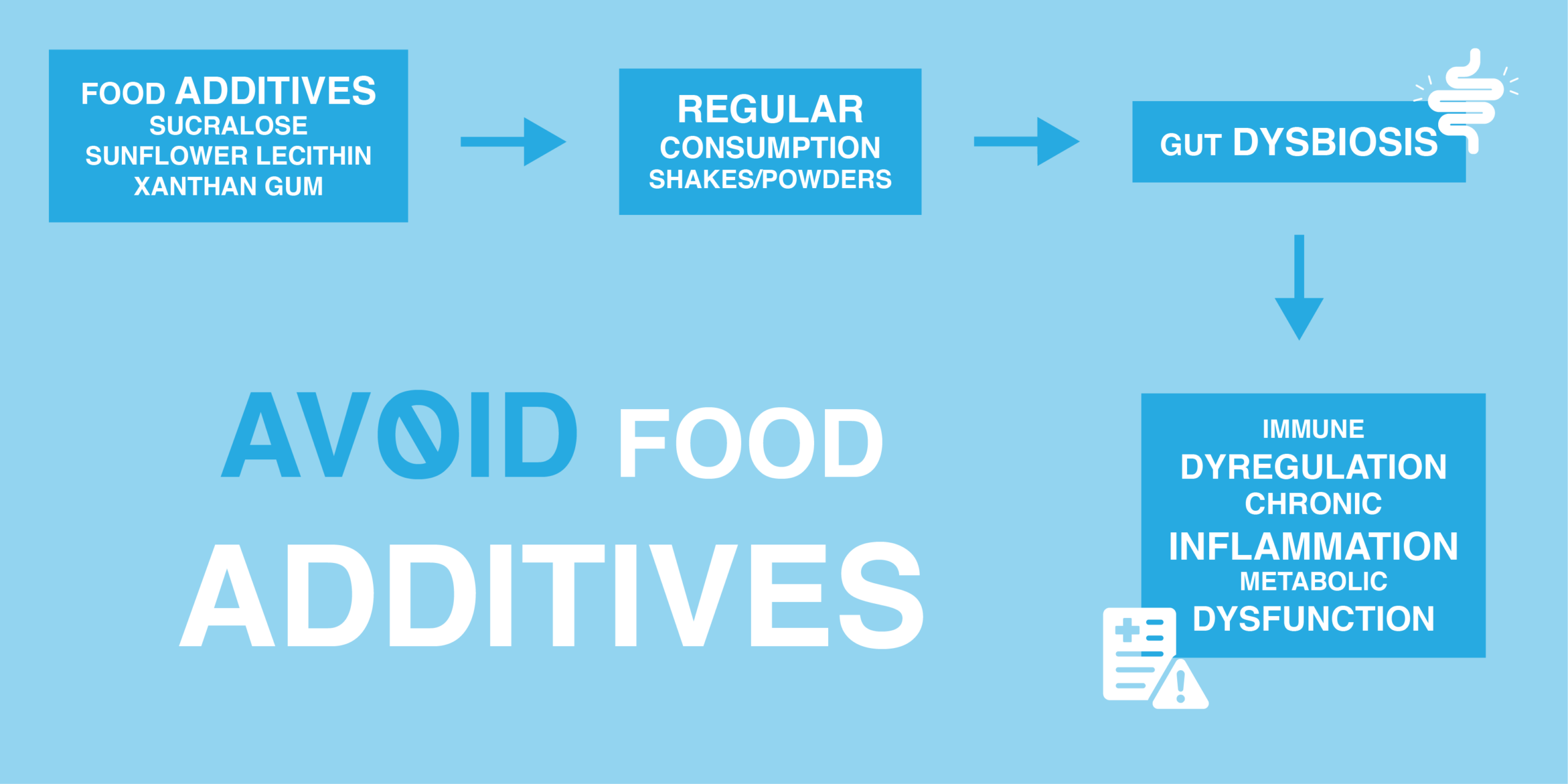
First of all, regularly consuming certain ultra-processed additives can alter the composition of your gut microbiome – the collection of microorganisms living in your gut (North Clin Istanb, 2019).
These shifts, known as gut dysbiosis, have been shown to contribute to chronic diseases like obesity, type 2 diabetes, and even cardiovascular disease (J Food Biochem, 2019).
Gut dysbiosis is so problematic because it can cause a cascade of problems, including intestinal permeability, systemic inflammation, and impaired nutrient absorption.
⚠️ Here is a list of the most common food additives in protein shakes and powders:
- acacia fiber
- acacia gum
- acesulfame potassium
- artificial flavors
- ascorbic acid
- aspartame
- calcium carbonate
- carrageenan
- cellulose gum
- dextrin
- dicalcium phosphate
- dipotassium phosphate
- erythritol
- gellan gum
- guar gum
- gum arabic
- inulin
- locust bean gum
- maltitol
- maltodextrin
- mono- and diglycerides
- ‘natural’ flavors
- rice bran extract
- rice dextrin
- rice hulls
- rosemary extract
- silica
- silicon dioxide
- sodium alginate
- soluble corn fiber
- sorbitol
- soy lecithin
- sucralose
- sunflower lecithin
- tocopherols
- tricalcium phosphate
- xanthan gum
- xylitol
- zinc oxide
As a rule of thumb, if you cannot find it in nature or make it at home, it is probably a food additive.
Note that consuming protein concentrates and isolates might not be good for you either.
These ultra-processed protein sources have been mechanically and/or chemically stripped of everything but the protein.
This includes the enzymes, fiber, and other natural digestive aids that help you break them down.
You therefore do not digest them in the same way that you do whole foods, which could affect your gut health.
For example, one study shows that regularly consuming protein concentrates and isolates might disrupt your gut microbiome (Nutrients, 2018).
Another study shows that it could cause the formation of toxic byproducts in your gut (Mol Nutr Food Res, 2024).
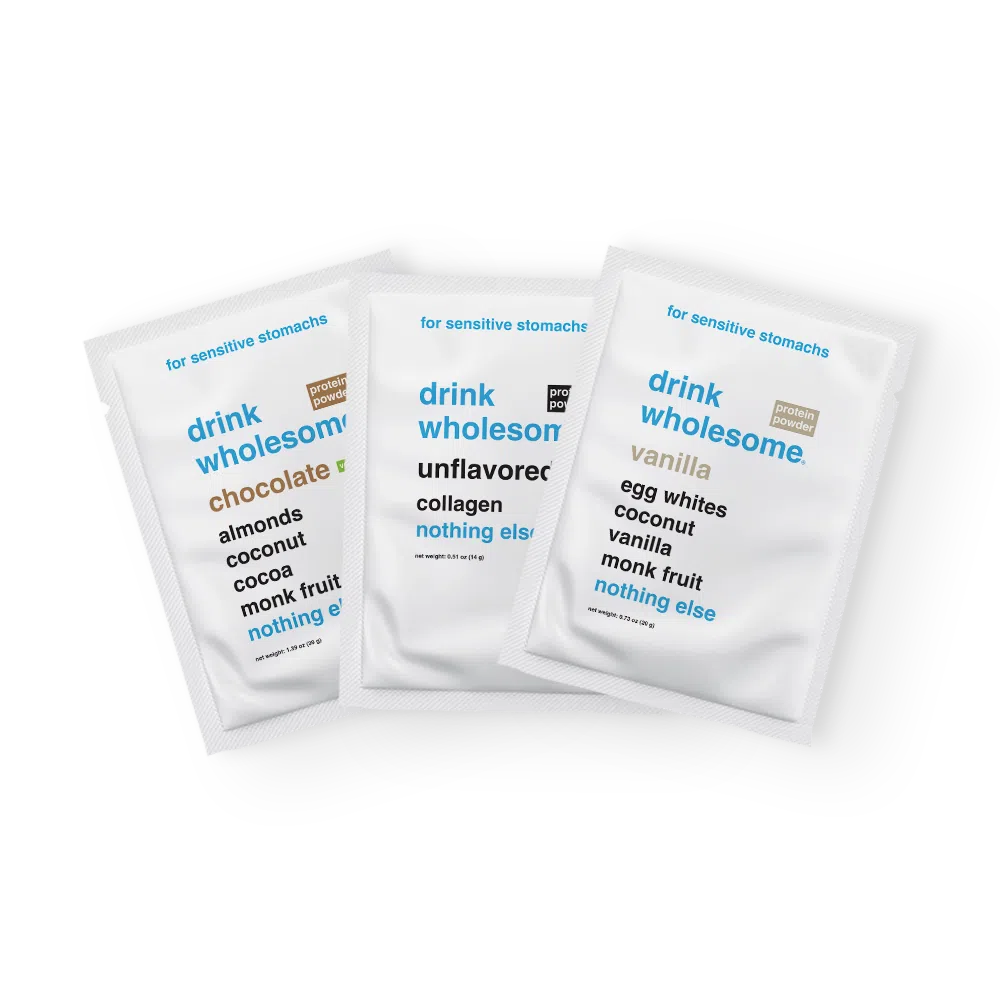
Although further research is needed, individuals with sensitive stomachs can play it safe by choosing protein shakes and powders made from minimally-processed protein sources like egg whites and almonds.
They are more gut-friendly.
Order Samples to see for yourself.
Product Quiz
Sources
- Medicine & Science in Sports & Exercise (Med Sci Sports Exerc). Nutrition and Athletic Performance. 2016.
- Physiology & Behavior (Physiol Behav). Effect of short- and long-term protein consumption on appetite and appetite-regulating gastrointestinal hormones, a systematic review and meta-analysis of randomized controlled trials. 202
- Journal of Cachexia, Sarcopenia and Muscle (J Cachexia Sarcopenia Muscle). Systematic review and meta-analysis of protein intake to support muscle mass and function in healthy adults. 2022.
- Revista Brasileira de Epidemiologia (Rev Bras Epidemiol). Nova food classification system: a contribution from Brazilian epidemiology. 2025.
- Northern Clinics of Istanbul (North Clin Istanb). Food additives and microbiota. 2019.
- Nutrients (Nutrients). Effect of a Protein Supplement on the Gut Microbiota of Endurance Athletes: A Randomized, Controlled, Double-Blind Pilot Study. 2018.
- Molecular Nutrition & Food Research (Mol Nutr Food Res). In Vitro Fermentation of Animal and Plant Protein Isolates by the Human Gut Microbiota Under High and Low Carbohydrate Conditions.. 2024.
Editorial Guidelines
This article was written by a Certified Nutrition Coach and reviewed by a Registered Dietitian. We rely on peer-reviewed research and trusted medical sources, and regularly update our content to ensure accuracy and clarity.
Frequently asked questions
Who Is Drink Wholesome for?
Drink Wholesome is a protein powder for people who struggle to eat enough protein but can’t stomach other protein powders because of food sensitivities or digestive conditions like IBS, GERD, SIBO, Crohn’s and colitis, and gastroparesis. It’s made without the artificial and ultra-processed ingredients that can contribute to digestive symptoms like acid reflux, bloating, gas, or stomach pain, so it’s gentle on even the most sensitive stomachs. If it upsets your stomach, it’s free.
Why Is Drink Wholesome Good for Sensitive Stomachs?
Drink Wholesome is the best gut-friendly protein powder for sensitive stomachs because it’s additive, dairy, and gluten-free. It’s also made from minimally-processed protein sources like egg whites and almonds. Other protein powders are made from ultra-processed protein concentrates and isolates, which look nothing like real food.
What’s the Difference Between Protein Powder and Meal Replacement Powder?
Drink Wholesome makes Protein Powders and Meal Replacement Powders. Protein powder is high in protein and low in everything else, whereas meal replacement powder contains fats, carbs, fiber, and protein because it’s intended to replace the nutritional value of a balanced meal.
What’s the Difference Between Almond, Collagen, and Egg White Protein?
Drink Wholesome makes three types of Protein Powder: Collagen Protein Powder, Egg White Protein Powder, and Vegan Almond Protein Powder. As long as you are eating a balanced diet – getting protein from a variety of sources – any type of protein can help you meet your total daily protein needs. Take the Product Quiz or order Samples to see which type of stomach-friendly protein powder is right for you.
Ask Nutrition Coach
If you’re wondering which Drink Wholesome product is best for you, ask our Certified Nutrition Coach. For personalized medical advice, consult your healthcare provider.
High Protein Balls
PREP TIME
5 min
COOK TIME
5 min
SERVES
2
Ingredients
- ⅓ cup Protein Powder
- ½ cup nut butter
- ¼ cup maple syrup
- 1 tsp vanilla extract
- ½ cup rolled oats
- ¼ cup mini chocolate chips
- ¼ cup shredded coconut
Instructions
Combine the Protein Powder, nut butter, syrup, extract, and oats in a food processor or blender. Pulse until well combined. Add the chocolate and coconut, and pulse a few more times. Roll the dough into 10 balls. Enjoy!
Author(s)
Protein Powder Samples
Starting at $9.99
BUY NOW