How to Find the Best Protein Powder Without Fillers
📌 Overview and Key Takeaways
This is a Nutrition Coach’s guide on how to find the best protein powder without fillers.
Discover how to meet your protein needs without fillers.

Protein Powder Without Fillers
What Are Fillers in Protein Powder?
Fillers are ingredients added to foods, beverages, and supplements to increase volume without providing nutritional or functional benefits.
They are typically inexpensive, which helps brands reduce costs.
In other words, manufacturers add fillers to improve their profit margins, not your health.
Common protein powder fillers include:
- maltodextrin
- gums (xanthan, guar, acacia)
- carrageenan
- cellulose
- inulin
- silicon dioxide
While some of these ingredients may help improve texture or prevent clumping, there is often no way of knowing why they were added to a specific product.
It is worth mentioning that while many consider the ingredients above to be fillers, they are also functional food additives.
Carrageenan, for example, is a popular emulsifier, thickener, and stabilizer.
Daily Protein Intake Calculator
Are Fillers Bad for You?
In the United States, the Food and Drug Administration (FDA) approves fillers and other food additives for human consumption, which suggests they are safe when consumed within certain limits.
But research suggests regularly consuming certain additives, some of which are considered fillers, causes long-term gut health problems (Nat Rev Gastroenterol Hepatol, 2024).
It is thought that these complications are driven by several interconnected mechanisms, including changes to the composition of the gut microbiome, disruptions to the gut’s mucus barrier, and activation of proinflammatory pathways.
Although more research is needed, I recommend that you limit your consumption of fillers and other food additives whenever possible, especially if you have pre-existing gut issues.
⚠️ Here is a list of the most common food additives in protein shakes and powders:
- acacia fiber
- acacia gum
- acesulfame potassium
- artificial flavors
- ascorbic acid
- aspartame
- calcium carbonate
- carrageenan
- cellulose gum
- dextrin
- dicalcium phosphate
- dipotassium phosphate
- erythritol
- gellan gum
- guar gum
- gum arabic
- inulin
- locust bean gum
- maltitol
- maltodextrin
- mono- and diglycerides
- ‘natural’ flavors
- rice bran extract
- rice dextrin
- rice hulls
- rosemary extract
- silica
- silicon dioxide
- sodium alginate
- soluble corn fiber
- sorbitol
- soy lecithin
- sucralose
- sunflower lecithin
- tocopherols
- tricalcium phosphate
- xanthan gum
- xylitol
- zinc oxide
As a rule of thumb, if you cannot find it in nature or make it at home, it is probably a food additive.
It is also worth noting that some fillers are marketed as healthy ingredients.
A good example is inulin, which is a type of soluble fiber found naturally in plants like chicory root.
In its natural form, inulin may have health benefits like improving gut health (Adv Nutr, 2022)
But the inulin in protein powder has been extracted, refined, and isolated through extensive mechanical and often chemical processing.
This does not necessarily make it bad for you, but there is concerning evidence from animal models, where inulin consistently exacerbated colitis – a form of inflammatory bowel disease (Gut Microbes, 2025).
What Is the Best Protein Powder With No Fillers?
Finding a protein powder free from fillers can be difficult.
Finding a protein powder free from ultra-processed ingredients altogether is even harder.
Approximately 99% of protein shakes and powders contain one or more ultra-processed ingredients, including the protein itself.
Did you know that most protein concentrates or isolates are ultra-processed?
These protein sources have been mechanically and/or chemically stripped of the enzymes, fiber, and other natural digestive aids that help you break them down.
You therefore might not digest them in the same way that you do whole foods, which could affect your gut health.
For example, one study shows that regularly consuming protein concentrates and isolates might disrupt your gut microbiome (Nutrients, 2018).
Another study shows that it could cause the formation of toxic byproducts in your gut (Mol Nutr Food Res, 2024).
Although further research is needed, individuals with sensitive stomachs can play it safe by choosing protein shakes and powders made from minimally-processed protein sources like egg whites and almonds.
They might be more gut-friendly.
Order Samples to see for yourself.
Sources
- Nature Reviews Gastroenterology & Hepatology (Nat Rev Gastroenterol Hepatol). Ultra-processed foods and food additives in gut health and disease. 2024.
- Advances in Nutrition (Adv Nutr). The Prebiotic Potential of Inulin-Type Fructans: A Systematic Review. 2022.
- Gut Microbes (Gut Microbes). Inulin aggravates colitis through gut microbiota modulation and MyD88/IL-18 signaling. 2025.
- Nutrients (Nutrients). Effect of a Protein Supplement on the Gut Microbiota of Endurance Athletes: A Randomized, Controlled, Double-Blind Pilot Study. 2018.
- Molecular Nutrition & Food Research (Mol Nutr Food Res). In Vitro Fermentation of Animal and Plant Protein Isolates by the Human Gut Microbiota Under High and Low Carbohydrate Conditions. 2024.
Editorial Guidelines
This article was written by a Certified Nutrition Coach and reviewed by a Registered Dietitian. We rely on peer-reviewed research and trusted medical sources, and regularly update our content to ensure accuracy and clarity.
Frequently asked questions
Who Is Drink Wholesome for?
Drink Wholesome is a protein powder for people who struggle to eat enough protein but can’t stomach other protein powders because of food sensitivities or digestive conditions like IBS, GERD, SIBO, Crohn’s and colitis, and gastroparesis. It’s made without the artificial and ultra-processed ingredients that can contribute to digestive symptoms like acid reflux, bloating, gas, or stomach pain, so it’s gentle on even the most sensitive stomachs. If it upsets your stomach, it’s free.
Why Is Drink Wholesome Good for Sensitive Stomachs?
Drink Wholesome is the best gut-friendly protein powder for sensitive stomachs because it’s additive, dairy, and gluten-free. It’s also made from minimally-processed protein sources like egg whites and almonds. Other protein powders are made from ultra-processed protein concentrates and isolates, which look nothing like real food.
What’s the Difference Between Protein Powder and Meal Replacement Powder?
Drink Wholesome makes Protein Powders and Meal Replacement Powders. Protein powder is high in protein and low in everything else, whereas meal replacement powder contains fats, carbs, fiber, and protein because it’s intended to replace the nutritional value of a balanced meal.
What’s the Difference Between Almond, Collagen, and Egg White Protein?
Drink Wholesome makes three types of Protein Powder: Collagen Protein Powder, Egg White Protein Powder, and Vegan Almond Protein Powder. As long as you are eating a balanced diet – getting protein from a variety of sources – any type of protein can help you meet your total daily protein needs. Take the Product Quiz or order Samples to see which type of stomach-friendly protein powder is right for you.
Ask Nutrition Coach
If you’re wondering which Drink Wholesome product is best for you, ask our Certified Nutrition Coach. For personalized medical advice, consult your healthcare provider.
High Protein Balls
PREP TIME
5 min
COOK TIME
5 min
SERVES
2
Ingredients
- ⅓ cup Protein Powder
- ½ cup nut butter
- ¼ cup maple syrup
- 1 tsp vanilla extract
- ½ cup rolled oats
- ¼ cup mini chocolate chips
- ¼ cup shredded coconut
Instructions
Combine the Protein Powder, nut butter, syrup, extract, and oats in a food processor or blender. Pulse until well combined. Add the chocolate and coconut, and pulse a few more times. Roll the dough into 10 balls. Enjoy!
Author(s)
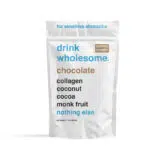
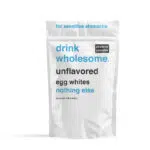
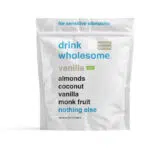
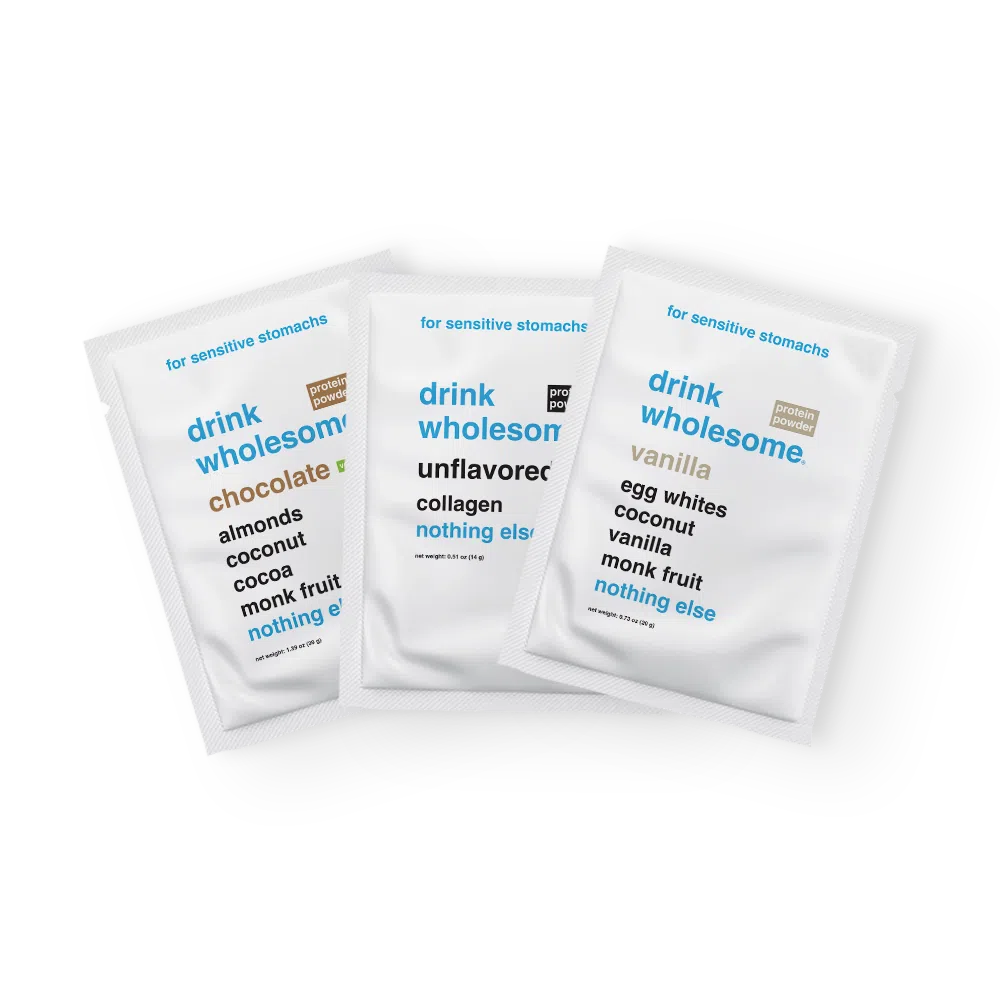
Protein Powder Samples
Starting at $9.99
BUY NOW