How to Make Protein Shakes Taste Better: A Nutrition Coach’s Guide
📌 Overview and Key Takeaways
This is a Certified Nutrition Coach’s guide on how to make protein shakes taste better.
Discover 5 easy ways to improve the flavor and texture of protein shakes.

5 Ways to Make Delicious Protein Shakes
Why Does My Protein Shake Taste Bad?
Your protein shake likely tastes bad because of the ingredients used to make it.
This might seem like silly advice, but if you do not like how your shake tastes, my first suggestion is to find a new one.
Delicious protein shakes and powders do exist, and to find one, you just need to know which ingredients to avoid.
Below are the most common ingredients that make protein shakes taste bad.
Protein Concentrates and Isolates
Many protein shakes taste bad because they are made from protein concentrates and isolates.
Unlike whole foods, concentrates and isolates have been processed to remove most of their fat and carbohydrates, which gives them a chalky aftertaste.
Sugar Substitutes
Many protein shakes have a bitter aftertaste because they are sweetened with sugar substitutes rather than real sugar.
Sugar substitutes like stevia activate bitter taste receptors in addition to sweet taste receptors (Genes Nutr, 2014).
It is important to note that individual sensitivity to these sweeteners varies from person to person.
Added Flavorings
Many protein shakes are made with artificial or natural flavorings, which some people find have a chemical aftertaste.
Insoluble Fiber
Some protein shakes, particularly plant-based ones, can taste gritty because of their insoluble fiber content.
Insoluble fiber is a type of fiber that does not dissolve in water.
Generally speaking, the more insoluble fiber a protein shake contains, the grittier it is.
The grittiest protein powders tend to be those made with seeds, such as chia, hemp, and pumpkin.
Product Quiz
How Do I Make My Protein Shake Taste Better?
If you cannot afford to buy a new protein shake or powder right now, or if you are committed to finishing what you already have, try the following:
- Mix it with milk. If you are making a homemade protein shake with protein powder, use milk instead of water. Milk can improve the texture and help mask the bitter aftertaste of sugar substitutes.
- Use a blender. If your protein shake is too gritty, use a good blender, Electric Mixer, or Shaker Bottle (with a whisk).
- Add ice or frozen fruit. If your protein shake is too watery, add ice cubes or a frozen banana.
- Add cocoa powder. If your protein shake is too sweet, try adding something bitter, such as unsweetened cocoa powder.
- Try a recipe. If you cannot make your protein shake taste good despite your best efforts, consider finding another use for your protein powder. Mixing it into oatmeal or adding it to baked goods are two great options. Check out our protein powder recipes for inspiration.
Finally, if you are drinking a ready-to-drink protein shake and do not like how it tastes, I highly recommend making your own protein shakes with protein powder instead.
Protein powder is more versatile, and you can adjust liquid to powder ration until you find one that works for you.
Sources
- Genes & Nutrition (Genes Nutr). Genetic signature of differential sensitivity to stevioside in the Italian population. 2014.
Editorial Guidelines
This article was written by a Certified Nutrition Coach and reviewed by a Registered Dietitian. We rely on peer-reviewed research and trusted medical sources, and regularly update our content to ensure accuracy and clarity.
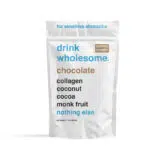
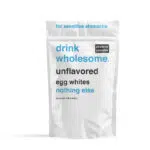
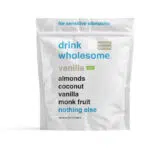
Drink Wholesome is a protein powder for people who struggle to eat enough protein but can’t stomach other protein powders because of food sensitivities or digestive conditions like IBS, GERD, SIBO, Crohn’s and colitis, and gastroparesis. It’s made without the artificial and ultra-processed ingredients that can contribute to digestive symptoms like acid reflux, bloating, gas, or stomach pain, so it’s gentle on even the most sensitive stomachs. If it upsets your stomach, it’s free. Drink Wholesome is the best gut-friendly protein powder for sensitive stomachs because it’s additive, dairy, and gluten-free. It’s also made from minimally-processed protein sources like egg whites and almonds. Other protein powders are made from ultra-processed protein concentrates and isolates, which look nothing like real food. Drink Wholesome makes Protein Powders and Meal Replacement Powders. Protein powder is high in protein and low in everything else, whereas meal replacement powder contains fats, carbs, fiber, and protein because it’s intended to replace the nutritional value of a balanced meal. Drink Wholesome makes three types of Protein Powder: Collagen Protein Powder, Egg White Protein Powder, and Vegan Almond Protein Powder. As long as you are eating a balanced diet – getting protein from a variety of sources – any type of protein can help you meet your total daily protein needs. Take the Product Quiz or order Samples to see which type of stomach-friendly protein powder is right for you. If you’re wondering which Drink Wholesome product is best for you, ask our Certified Nutrition Coach. For personalized medical advice, consult your healthcare provider.Frequently asked questions
Who Is Drink Wholesome for?
Why Is Drink Wholesome Good for Sensitive Stomachs?
What’s the Difference Between Protein Powder and Meal Replacement Powder?
What’s the Difference Between Almond, Collagen, and Egg White Protein?
Ask Nutrition Coach
PREP TIME 5 min COOK TIME 5 min SERVES 2 Combine the Protein Powder, nut butter, syrup, extract, and oats in a food processor or blender. Pulse until well combined. Add the chocolate and coconut, and pulse a few more times. Roll the dough into 10 balls. Enjoy!High Protein Balls
Ingredients
Instructions
Author(s)
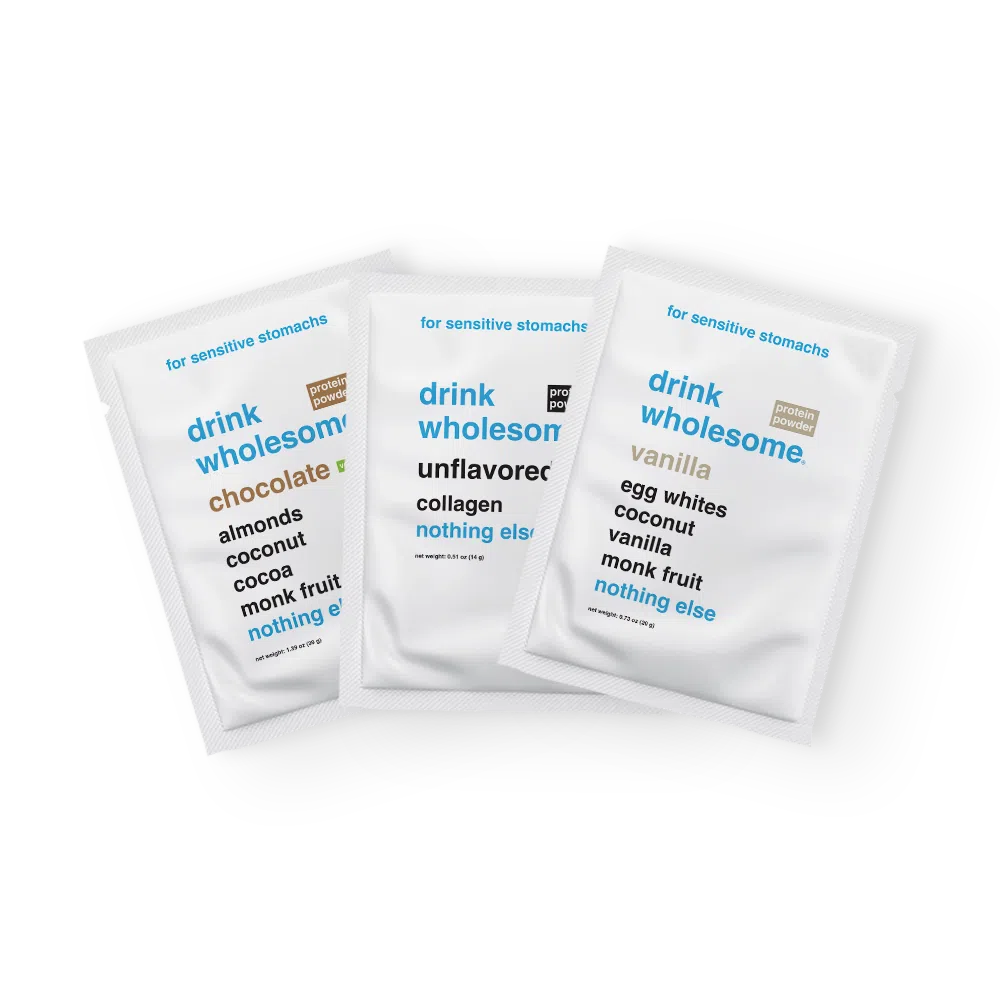
Protein Powder Samples
Starting at $9.99
BUY NOW