How to Find the Best Protein Powder Without Fake Sugar
📌 Overview and Key Takeaways
This is a Certified Nutrition Coach’s guide to finding the best protein powder without fake sugar.
Discover how to meet your protein needs with natural sweeteners.

Protein Powder Without Fake Sugar
What Is Fake Sugar?
Fake sugar is a common name for sugar substitutes or non-nutritive sweeteners.
These are ingredients used to sweeten food and drinks without the calories and carbohydrates found in regular sugar.
The most common types are artificial sweeteners, sugar alcohols, and rare sugars.
Artificial sweeteners, such as sucralose and acesulfame potassium, are synthetic.
There is nothing natural about them.
Sugar alcohols and rare sugars, on the other hand, do exist in nature in trace amounts.
The commercial versions – erythritol, xylitol, allulose, etc. – are synthesized in a lab, however.
Many people consider stevia and monk fruit to be fake sugars too, but this is debatable.
Both stevia and monk fruit are derived from plants.
For this reason, I do not put them in the same category as artificial sweeteners, sugar alcohols, and rare sugars.
Is Fake Sugar Bad for You?
Fake sugars are not necessarily healthier than the real thing.
Replacing real sugar with a sugar substitute can lead to modest weight loss (Int J Obes (Lond), 2021).
But artificial sweeteners and sugar alcohols are notorious for causing bloating, diarrhea, and other unpleasant side effects.
Regularly consuming certain artificial sweeteners might also alter the composition of your gut microbiome – the collection of microorganisms living in your gut (Adv Nutr, 2019).
These shifts, known as gut dysbiosis, have been linked to a number of chronic gut issues (JGH Open, 2021).
It is important to note that much of this research is still emerging, so more studies are needed to clarify these relationships.
That said, the preliminary findings suggest that because protein shakes and powders are something you consume regularly, if not every day, the cumulative effects of small amounts of potentially harmful ingredients is worth taking seriously.
What about Monk Fruit and Stevia?
Monk fruit, also known as luo han guo, is extracted from a melon-like fruit native to Southeast Asia.
Stevia is extracted from the leaves of stevia rebaudiana, a plant native to South America.
Both are over 200 times sweeter than sugar, but virtually sugar-free.
Again, because they are extracted directly from plants, I do not consider them to be fake sugars.
And if you are looking for a healthy alternative to artificial sweeteners, they are the best non-nutritive options.
For what it is worth, I prefer monk fruit because it tastes more like real sugar.
Stevia tends to activate bitter taste receptors, which can leave a bitter aftertaste (Genes Nutr, 2014).
It is worth adding that if you prefer real sugar, I recommend honey or maple sugar.
They are the least processed and most delicious sugars.
We use the latter to sweeten some of our Egg White + Collagen Protein Powders.
Sources
- International Journal of Obesity (2005) (Int J Obes (Lond)). The effects of low-calorie sweeteners on energy intake and body weight: a systematic review and meta-analyses of sustained intervention studies. 2021.
- Advances in Nutrition (Bethesda, Md.) (Adv Nutr). Effects of Sweeteners on the Gut Microbiota: A Review of Experimental Studies and Clinical Trials. 2019.
- JGH Open: An Open Access Journal of Gastroenterology and Hepatology (JGH Open). Gut microbiota dysbiosis in functional gastrointestinal disorders: Underpinning the symptoms and pathophysiology. 2021.
- Genes & Nutrition (Genes Nutr). Genetic signature of differential sensitivity to stevioside in the Italian population. 2014.
Editorial Guidelines
This article was written by a Certified Nutrition Coach and reviewed by a Registered Dietitian. We rely on peer-reviewed research and trusted medical sources, and we regularly update our content to ensure accuracy and clarity.
Frequently asked questions
Who Is Drink Wholesome for?
Drink Wholesome is a protein powder for people who struggle to eat enough protein but can’t stomach other protein powders because of food sensitivities or digestive conditions like IBS, GERD, SIBO, Crohn’s and colitis, and gastroparesis. It’s made without the artificial and ultra-processed ingredients that can contribute to digestive symptoms like acid reflux, bloating, gas, or stomach pain, so it’s gentle on even the most sensitive stomachs. If it upsets your stomach, it’s free.
Why Is Drink Wholesome Good for Sensitive Stomachs?
Drink Wholesome is the best gut-friendly protein powder for sensitive stomachs because it’s additive, dairy, and gluten-free. It’s also made from minimally-processed protein sources like egg whites and almonds. Other protein powders are made from ultra-processed protein concentrates and isolates, which look nothing like real food.
What’s the Difference Between Protein Powder and Meal Replacement Powder?
Drink Wholesome makes Protein Powders and Meal Replacement Powders. Protein powder is high in protein and low in everything else, whereas meal replacement powder contains fats, carbs, fiber, and protein because it’s intended to replace the nutritional value of a balanced meal.
What’s the Difference Between Almond, Collagen, and Egg White Protein?
Drink Wholesome makes three types of Protein Powder: Collagen Protein Powder, Egg White Protein Powder, and Vegan Almond Protein Powder. As long as you are eating a balanced diet – getting protein from a variety of sources – any type of protein can help you meet your total daily protein needs. Take the Product Quiz or order Samples to see which type of stomach-friendly protein powder is right for you.
Ask Nutrition Coach
If you’re wondering which Drink Wholesome product is best for you, ask our Certified Nutrition Coach. For personalized medical advice, consult your healthcare provider.
High Protein Balls
PREP TIME
5 min
COOK TIME
5 min
SERVES
2
Ingredients
- ⅓ cup Protein Powder
- ½ cup nut butter
- ¼ cup maple syrup
- 1 tsp vanilla extract
- ½ cup rolled oats
- ¼ cup mini chocolate chips
- ¼ cup shredded coconut
Instructions
Combine the Protein Powder, nut butter, syrup, extract, and oats in a food processor or blender. Pulse until well combined. Add the chocolate and coconut, and pulse a few more times. Roll the dough into 10 balls. Enjoy!
Author(s)
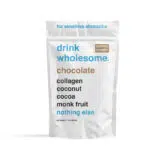
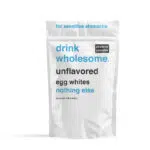
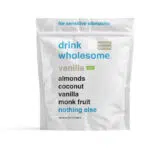
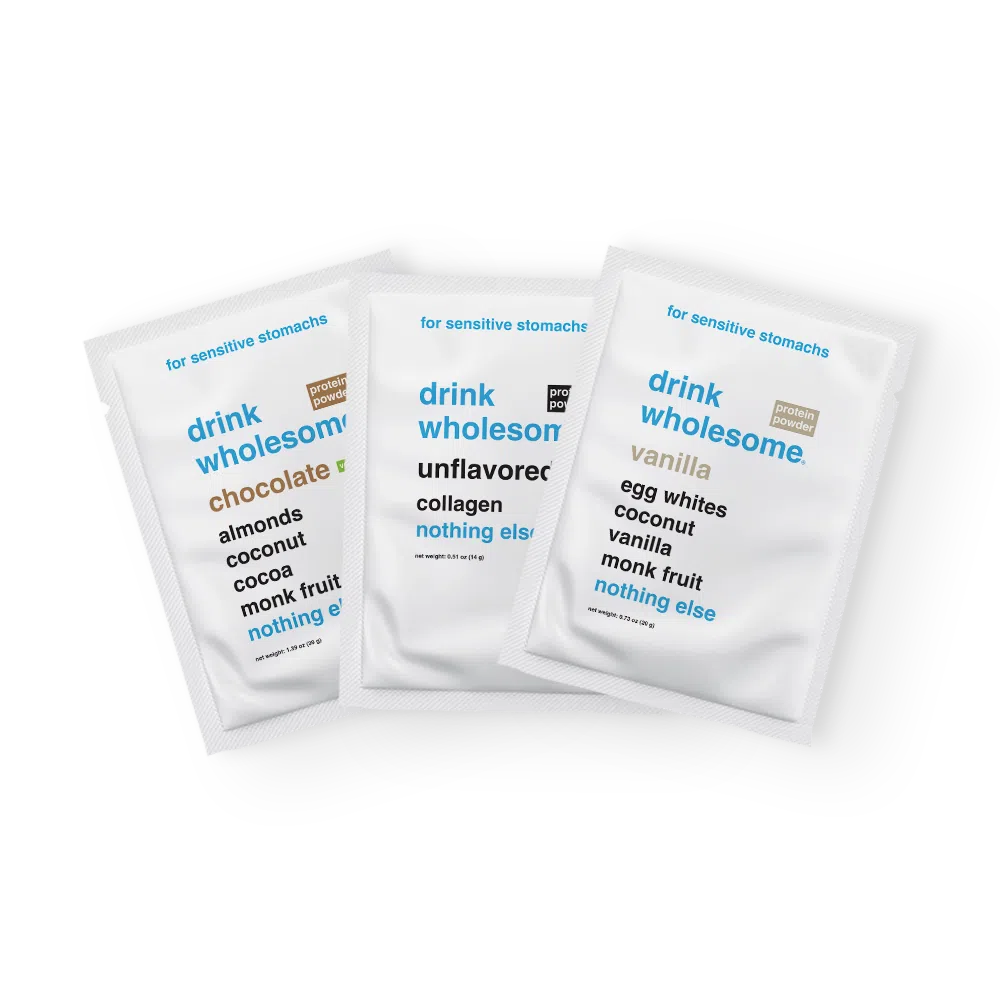
Protein Powder Samples
Starting at $9.99
BUY NOW