How to Find the Best Diabetic Meal Replacement Shakes
📌 Overview and Key Takeaways
This is a Certified Nutrition Coach’s guide on how to find the best diabetic meal replacement shakes.
Discover how to safely meet your nutritional needs while managing diabetes.

Meal Replacement Shakes for Diabetes
Are Meal Replacement Shakes Good for Diabetes?
Meal replacement shakes can be a helpful option for people with diabetes, but not all shakes are created equal.
Unlike most meals, which can vary widely in nutrient content, meal replacement shakes provide a consistent and balanced source of nutrition.
This consistency might make it easier for you to manage your blood sugar levels.
This consistency might make it easier for you to manage your blood sugar levels.
Another benefit of meal replacement shakes for people with diabetes is convenience.
If you have a busy lifestyle, preparing a balanced meal three times a day can be challenging, which can lead to skipping meals and snacking on less healthy foods.
Meal replacement shakes, because they can be made in seconds and consumed on the go, can help prevent both meal-skipping and unhealthy snacking.
This is especially important for someone who needs to be careful about both what they eat and when they eat it.
Finally, meal replacement shakes can help people with diabetes control their calorie intake.
If you are looking to reach or maintain a healthy body weight, keeping your calorie intake in check is key.
How Can Meal Replacement Shakes Help Me Manage My Blood Sugar?
A meal replacement shake can help you manage your blood sugar by giving you a steady, balanced mix of nutrients at each serving.
Blood sugar control plays an essential role in diabetes management.
One simple way to support better blood sugar control is by adding a balanced meal replacement shake to your diet.
A meal replacement shake that contains a healthy balance of fats, carbohydrates, fiber, and protein can provide the calories and nutrients you need, while helping to limit large spikes in blood sugar.
Fiber, for example, not only has a low glycemic index (a measure of how quickly a food raises blood sugar), but certain types of fiber might also lower the glycemic response of a meal by slowing digestion and absorption (Foods, 2022).
Protein and fats might also help slow down the absorption of glucose, which can lead to a more gradual rise in blood sugar (Crit Rev Food Sci Nutr, 2016).
So, if you have a habit of snacking on high-carbohydrate or sugary foods, replacing those calories with a meal replacement shake could be a smart choice.
Not only might you have better control over your blood sugar, but you might also have an easier time reaching and maintaining a healthy body weight.
Product Quiz
How Do I Incorporate Meal Replacement Shakes Into My Diet?
You can add a meal replacement shake to your diet in several simple ways, making it easy to get essential nutrients when you are away from home or short on time.
Here are some of the best ways to use meal replacement shakes:
- Replace a meal: Choose one meal of the day, such as breakfast, to replace with a meal replacement shake. This can help you get a balance of nutrients in your diet.
- Replace part of a meal: Instead of eating a second serving, drink a meal replacement shake.
- Replace a snack: If you find yourself snacking often throughout the day, drink a meal replacement shake when you feel hungry. This can help keep you satisfied between meals.
- Post-workout: After a workout, a meal replacement shake can be a convenient way to refuel your body with essential nutrients. Look for shakes with plenty of protein to support muscle recovery.
- Before bed: If you tend to wake up hungry in the middle of the night, drink a meal replacement shake about 2 hours before you go to sleep.
Keep in mind that no single method is necessarily better than another.
The approach that works best for you will depend on your diet and lifestyle.
What Are the Best Meal Replacement Shakes for People With Diabetes?
Many meal replacement shakes contain ingredients that might not be suitable for diabetics.
Among these ingredients are added sugars, food additives, and protein concentrates and isolates.
🚫 Avoid Added Sugars
Diabetics should avoid meal replacements with lots of Added Sugars, as they can trigger spikes in blood glucose.
Naturally occurring sugars like those found in fruits and vegetables, on the other hand, are safe to eat.
There is no link between natural sugar consumption and diabetes (PLoS Med, 2017).
🚫 Avoid Food Additives
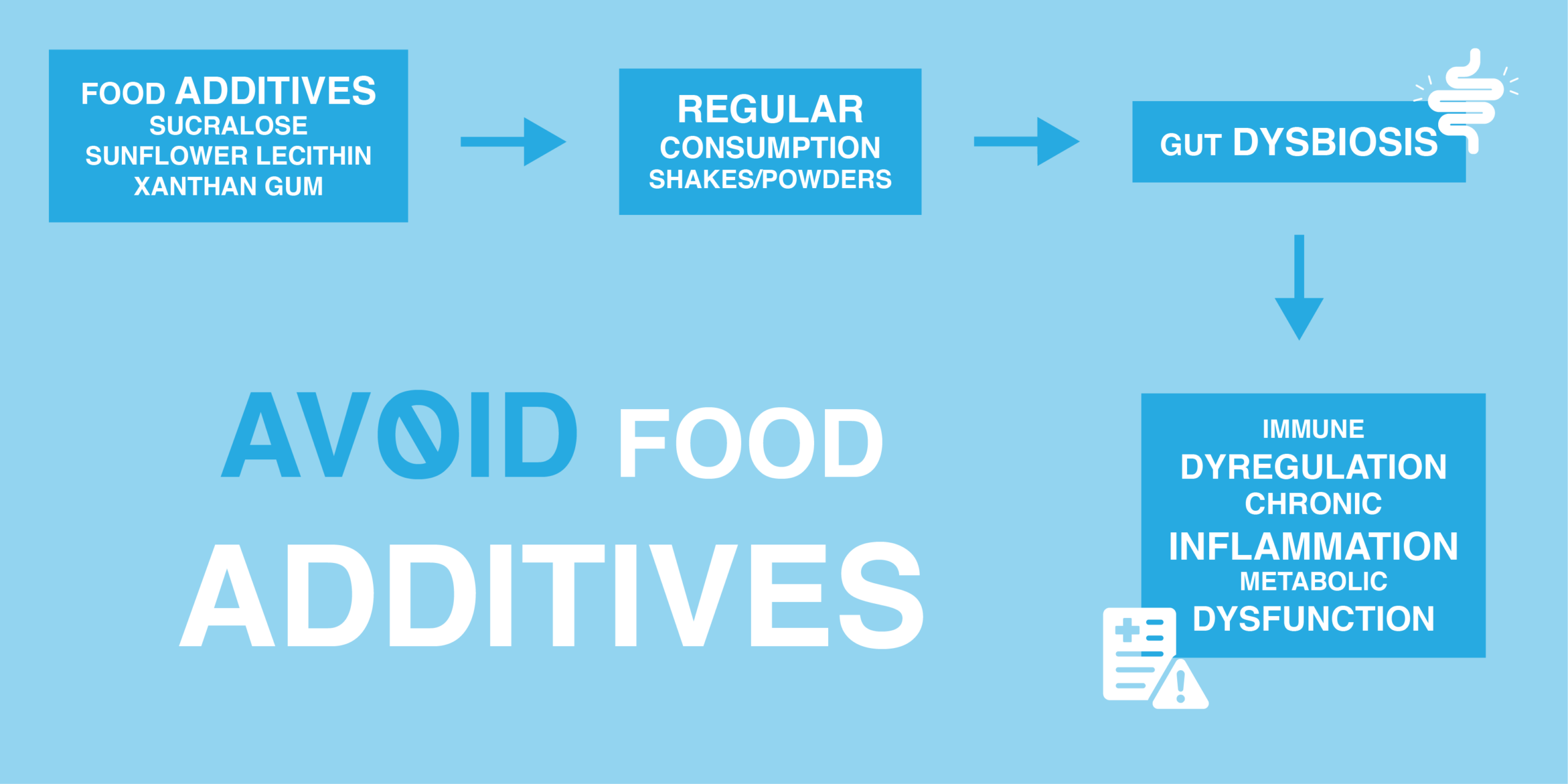
Diabetics should also avoid food additives.
Regularly consuming certain emulsifiers, thickeners, artificial sweeteners and other additives can alter the composition of your gut microbiome – the collection of microorganisms living in your gut (North Clin Istanb, 2019).
This can lead to gut dysbiosis, or an imbalance in gut bacteria, which has been linked to the development of Type 2 diabetes, as well as reduced efficacy of diabetic medications (Microorganisms, 2022; Diabetes; World J Methodol, 2022).
It is important to note that much of this research is still emerging, so more studies are needed to clarify these relationships.
That said, the preliminary findings suggest that because protein shakes and powders are something you consume regularly, if not every day, the cumulative effects of small amounts of potentially harmful ingredients is worth taking seriously.
⚠️ Here is a list of the most common food additives in meal replacements:
- acacia fiber
- acacia gum
- acesulfame potassium
- artificial flavors
- ascorbic acid
- aspartame
- calcium carbonate
- carrageenan
- cellulose gum
- dextrin
- dicalcium phosphate
- dipotassium phosphate
- erythritol
- gellan gum
- guar gum
- gum arabic
- inulin
- locust bean gum
- maltitol
- maltodextrin
- mono- and diglycerides
- ‘natural’ flavors
- rice bran extract
- rice dextrin
- rice hulls
- rosemary extract
- silica
- silicon dioxide
- sodium alginate
- soluble corn fiber
- sorbitol
- soy lecithin
- sucralose
- sunflower lecithin
- tocopherols
- tricalcium phosphate
- xanthan gum
- xylitol
- zinc oxide
As a rule of thumb, if you cannot find an ingredient in nature or make it at home, it should not be in your meal replacement.

🚫 Avoid Protein Concentrates and Isolates
I also recommend avoiding protein concentrates and isolates.
Most protein powders are made from one or both of these ultra-processed protein sources, which have been mechanically and/or chemically stripped of everything but the protein.
While extremely high-protein ingredients like these are low on the glycemic index, they can measure high on the insulin index.
As a result, they can cause hyperinsulinemia (abnormally high levels of insulin) because eating large amounts of protein without fats, carbs, fiber, etc. has an insulinotropic effect (it promotes insulin secretion) (J Funct Foods, 2014; Eur J Clin Nutr, 2014).
Instead of concentrates or isolates, consider meal replacements made from minimally-processed protein sources like egg whites and almonds.
Order Samples to see if they are right for you.
Sources
- Foods (Foods). The Effects of Soluble Dietary Fibers on Glycemic Response: An Overview and Futures Perspectives. 2022.
- Critical Reviews in Food Science and Nutrition (Crit Rev Food Sci Nutr). Effect of macronutrients on the glycemic index. 2016.
- PLoS Medicine (PLoS Med). Fresh fruit consumption in relation to incident diabetes and diabetic vascular complications: A 7-y prospective study of 0.5 million Chinese adults. 2017.
- Northern Clinics of Istanbul (North Clin Istanb). Food additives and microbiota. 2019.
- Microorganisms (Microorganisms). Gut Microbiota Dysbiosis: Triggers, Consequences, Diagnostic and Therapeutic Options. 2022. nih
- Diabetes (Diabetes). Butyrate-Producing Bacteria and Insulin Homeostasis: The Microbiome and Insulin Longitudinal Evaluation Study (MILES). 2022.
- European Journal of Clinical Nutrition (Eur J Clin Nutr). High dietary protein intake, reducing or eliciting insulin resistance?. 2014.
- Journal of Functional Foods (J Funct Foods). Insulin and glucose responses after ingestion of different loads and forms of vegetable or animal proteins in protein enriched fruit beverages. 2014.
Editorial Guidelines
This article was written by a Certified Nutrition Coach and reviewed by a Registered Dietitian. We rely on peer-reviewed research and trusted medical sources, and regularly update our content to ensure accuracy and clarity.
Frequently asked questions
Who Is Drink Wholesome for?
Drink Wholesome is a meal replacement powder for people who struggle to eat enough but can’t stomach other powders because of food sensitivities or digestive conditions like IBS, GERD, SIBO, Crohn’s and colitis, and gastroparesis. It’s made without the artificial and ultra-processed ingredients that can contribute to digestive symptoms like acid reflux, bloating, gas, or stomach pain, so it’s gentle on even the most sensitive stomachs. If it upsets your stomach, it’s free.
Why Is Drink Wholesome Good for Sensitive Stomachs?
Drink Wholesome is the best gut-friendly meal replacement powder for sensitive stomachs because it’s additive, dairy, and gluten-free. It’s also made from minimally-processed protein sources like egg whites and almonds. Other protein powders are made from ultra-processed protein concentrates and isolates, which look nothing like real food.
What’s the Difference Between Protein Powder and Meal Replacement Powder?
Drink Wholesome makes Protein Powders and Meal Replacement Powders. Protein powder is high in protein and low in everything else, whereas meal replacement powder contains fats, carbs, fiber, and protein because it’s intended to replace the nutritional value of a balanced meal.
How Do I Consume Meal Replacement Powder?
Meal Replacement Powder can be added to smoothies, oatmeal, and other recipes, or mixed with just milk or water. Order Samples to try it for yourself.
Ask Nutrition Coach
If you’re wondering which Drink Wholesome product is best for you, ask our Certified Nutrition Coach. For personalized medical advice, consult your healthcare provider.
High Protein Blueberry Pancakes
PREP TIME
5 min
COOK TIME
5 min
SERVES
2
Ingredients
- ⅓ cup Meal Replacement Powder
- ½ cup nut butter
- ¼ cup maple syrup
- 1 tsp vanilla extract
- ½ cup rolled oats
- ¼ cup mini chocolate chips
- ¼ cup shredded coconut
Instructions
Combine the Meal Replacement Powder, nut butter, syrup, extract, and oats in a food processor or blender. Pulse until well combined. Add the chocolate and coconut, and pulse a few more times. Roll the dough into 10 balls. Enjoy!
Author(s)
Featured Meal Replacement Powders
Meal Replacement Powder
Starting at $53.99
Meal Replacement Powder Samples
Starting at $6.66
BUY NOW