How to Find the Best Caffeine-Free Meal Replacement Shakes
📌 Overview and Key Takeaways
This is a Certified Nutrition Coach’s guide on how to find the best caffeine-free meal replacement shakes.
Discover how to meet your daily nutritional needs without caffeine.

Caffeine-Free Meal Replacement Shakes
Do Meal Replacement Shakes Contain Caffeine?
Most meal replacement shakes do not contain caffeine, but some do.
Caffeine is a natural stimulant found in plants such as coffee beans, tea leaves, and cacao (the plant used to make cocoa and chocolate).
It can also be synthesized (made in a lab) and added to processed foods, drinks, medications, and supplements.
Caffeine acts on your central nervous system (your brain and spinal cord), making you feel more alert and less tired by blocking adenosine, a chemical messenger in the brain that promotes sleep and relaxation.
It is possible to consume too much, however, which might cause side effects such as restlessness, elevated heart rate, anxiety, trouble sleeping, and digestive issues (Food Chem Toxicol, 2017).
For this reason, experts recommend consuming caffeine only in moderation.
How much caffeine is safe for you can depend on your age, health, and tolerance.
Here are some general guidelines:
- Healthy Adults: Most healthy adults can safely consume up to 400 milligrams (mg) of caffeine per day, which is roughly equal to four 8-ounce cups of brewed coffee (Food Chem Toxicol, 2017).
- Pregnant Women: The American College of Obstetricians and Gynecologists advises that pregnant women limit their caffeine intake to 200 mg per day.
- Adolescents: The American Academy of Pediatrics recommends that adolescents (ages 12 to 18) limit their caffeine intake to 100 mg per day.
- Children: Young children are advised to avoid caffeine.
Keep in mind that some people are more sensitive to caffeine than others.
They might therefore need to consume less to avoid side effects.
Some meal replacements naturally contain caffeine.
Chocolate-flavored meal replacement shakes and powders made with real cocoa, for example, contain a small amount of caffeine.
The cocoa is added for flavor rather than as a stimulant, but it still contains caffeine.
Some replacement shakes are intentionally made with caffeine-rich ingredients, such as green tea extract.
These products are usually labeled as “metabolism-boosting” or “thermogenic,” meaning they claim to increase the number of calories your body burns.
Keep in mind that manufacturers are generally not required to list the amount of caffeine on the label, so you might not be able to tell how much caffeine you are consuming.
What Are the Best Caffeine-Free Meal Replacement Shakes?
As long as you eat a balanced diet – get protein from a variety of sources – any type of caffeine-free meal replacement can help you meet your total daily nutritional needs.
Ingredients do matter, however
Many meal replacements contain ingredients that might indirectly contribute to painful side effects and even long-term health problems.
Among the top offenders are artificial and ultra-processed food additives.
🚫 Avoid Food Additives
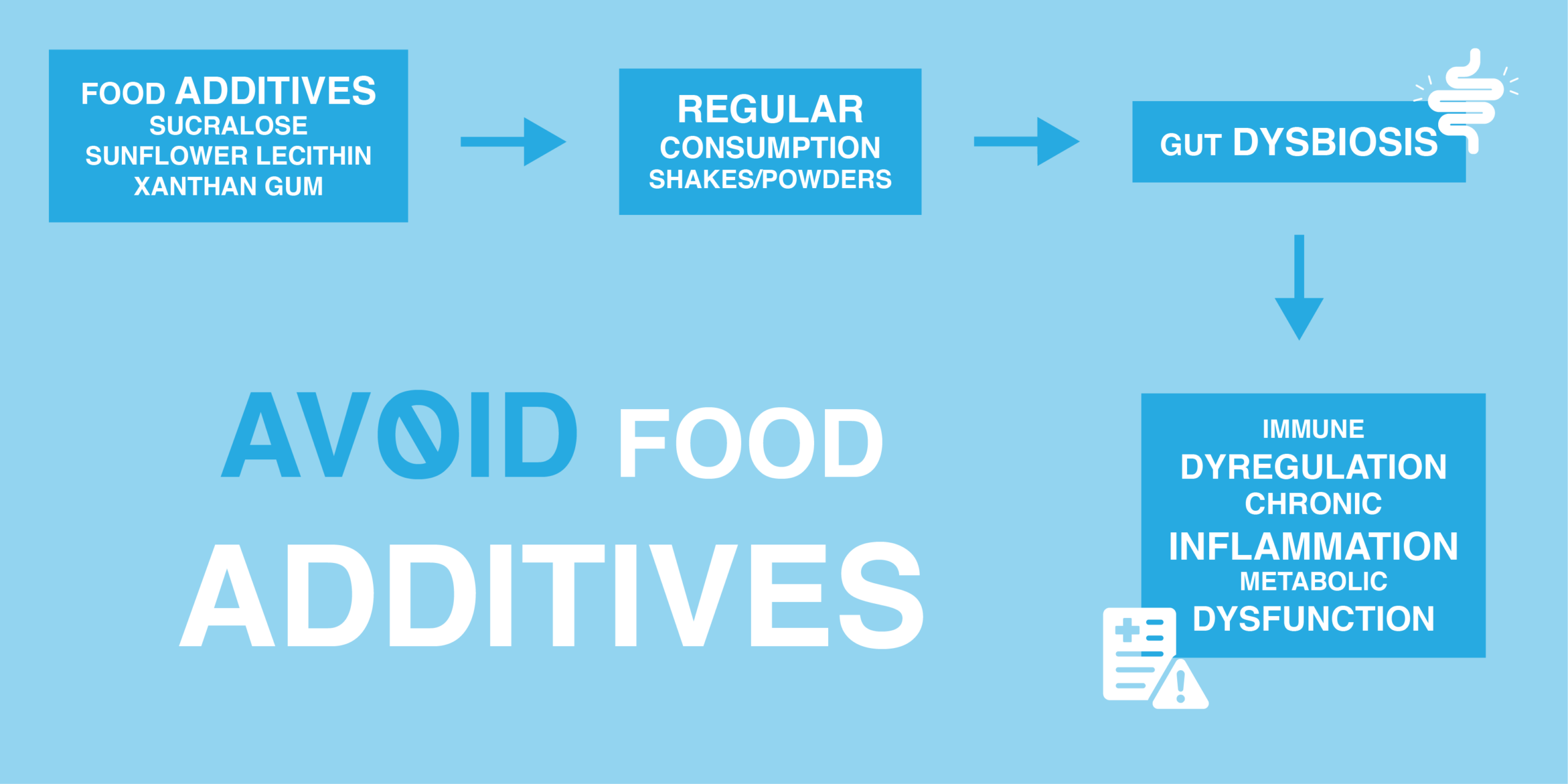
Some people find that certain food additives, particularly sugar alcohols, cause digestive symptoms such as bloating and stomach pain (Gastroenterology, 2023).
Most of this evidence is anecdotal, however, and tolerance varies from person to person.
Regularly consuming certain food additives – including certain emulsifiers and thickeners – might also alter the composition and function of your gut microbiome, the community of bacteria and other microbes living in your digestive tract (North Clin Istanb, 2019).
Although most of this evidence comes from animal and laboratory studies, and the limited human data are mixed, it is worthy of consideration.
If diets high in food additives do disrupt the balance of gut bacteria, they could contribute to chronic digestive conditions such as irritable bowel syndrome (IBS) (JGH Open, 2021).
For instance, when harmful bacteria crowd out beneficial ones, the gut lining can weaken, allowing bacteria and their toxins to pass into the body (Front Immunol, 2025).
The immune response that follows not only drives inflammation, but can also worsen the bacterial imbalance, creating a self-reinforcing cycle (Front Immunol, 2025).
Again, more research is needed to confirm these links.
But because protein shakes and powders are often consumed daily, even small amounts of potentially problematic additives can add up over time, so their cumulative effect might be worth taking seriously.
⚠️ Here is a list of the most common food additives in meal replacement shakes:
- acacia fiber
- acacia gum
- acesulfame potassium
- artificial flavors
- ascorbic acid
- aspartame
- calcium carbonate
- carrageenan
- cellulose gum
- dextrin
- dicalcium phosphate
- dipotassium phosphate
- erythritol
- gellan gum
- guar gum
- gum arabic
- inulin
- locust bean gum
- maltitol
- maltodextrin
- mono- and diglycerides
- ‘natural’ flavors
- rice bran extract
- rice dextrin
- rice hulls
- rosemary extract
- silica
- silicon dioxide
- sodium alginate
- soluble corn fiber
- sorbitol
- soy lecithin
- sucralose
- sunflower lecithin
- tocopherols
- tricalcium phosphate
- xanthan gum
- xylitol
- zinc oxide
As a rule of thumb, if you cannot find it in nature or make it at home, it is probably a food additive.
🚫 Avoid Protein Concentrates and Isolates
If you have a sensitive stomach, you might also want to avoid protein concentrates and isolates.
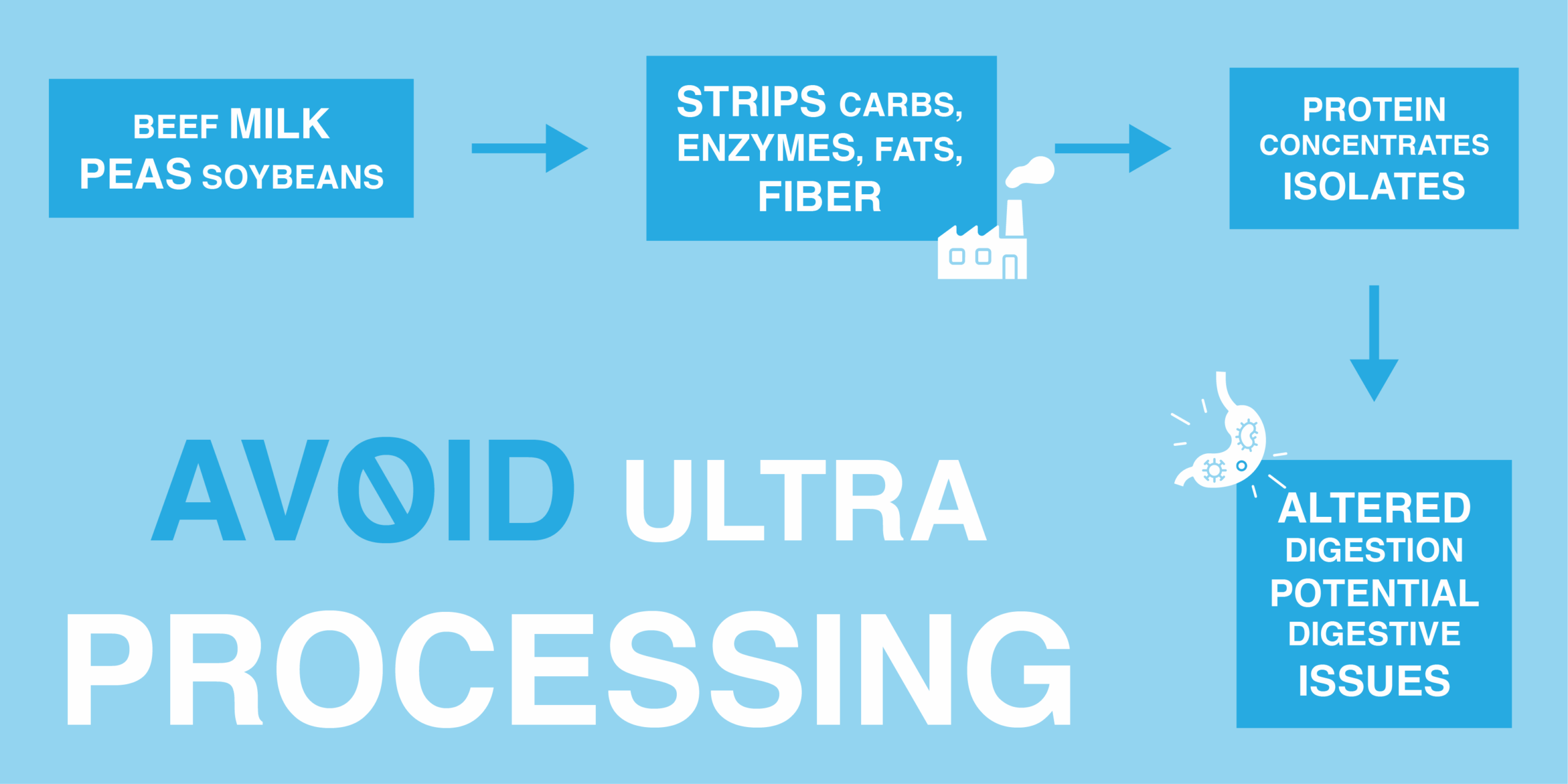
Most protein shakes and powders are made from one or both of these protein sources, which have undergone industrial mechanical and often chemical processing.
This not only strips away fiber, enzymes, and other natural digestive aids, but it also breaks down the food’s natural structure.
As a result, you might not digest protein concentrates and isolates in the same way that you do whole foods, which could negatively affect your gut health.
For example, one study shows that regularly consuming protein concentrates and isolates might disrupt your gut microbiome (Nutrients, 2018).
Another study shows that it might cause the formation of toxic byproducts in your gut (Mol Nutr Food Res, 2024).
It is worth adding that protein concentrates and isolates are often paired with emulsifiers and thickeners to restore their texture and taste, which, as you just learned, might further affect gut health.
Additional studies are needed to clarify these relationships, but you can play it safe by choosing protein shakes and powders made from minimally-processed, whole food protein sources like egg whites and almonds.
Our customers find them to be more stomach-friendly.
Order Samples to see for yourself.
Product Quiz
Sources
- Food and Chemical Toxicology (Food Chem Toxicol). Systematic review of the potential adverse effects of caffeine consumption in healthy adults, pregnant women, adolescents, and children. 2017.
- Northern Clinics of Istanbul (NCI). Food additives and microbiota. 2019.
- Journal of Gastroenterology and Hepatology Open (JGH Open). Gut microbiota dysbiosis in functional gastrointestinal disorders: Underpinning the symptoms and pathophysiology. 2021.
- Frontiers in Immunology (Front Immunol). Systemic dysregulation of the gut microenvironment plays a pivotal role in the onset and progression of inflammatory bowel disease. 2025.
- Advances in Nutrition | Journal (Adv Nutr). Systematic Review of the Gastrointestinal Effects of A1 Compared with A2 β-Casein. 2017.
- Critical Reviews in Food Science and Nutrition (Crit Rev Food Sci Nutr). Milk proteins: Processing, gastric coagulation, amino acid availability and muscle protein synthesis. 2023.
- Nutrients. Effect of a Protein Supplement on the Gut Microbiota of Endurance Athletes: A Randomized, Controlled, Double-Blind Pilot Study. 2018.
- Molecular Nutrition & Food Research (Mol Nutr Food Res). In Vitro Fermentation of Animal and Plant Protein Isolates by the Human Gut Microbiota Under High and Low Carbohydrate Conditions. 2024.
Editorial Guidelines
This article was written by a Certified Nutrition Coach and reviewed by a Registered Dietitian. We rely on peer-reviewed research and trusted medical sources, and regularly update our content to ensure accuracy and clarity.
Frequently asked questions
Who Is Drink Wholesome for?
Drink Wholesome is the best meal replacement powder for sensitive stomachs. It’s made for people who struggle to eat enough but can’t stomach other meal replacement powders because of food sensitivities or digestive conditions like IBS, GERD, SIBO, Crohn’s and colitis, and gastroparesis. It’s made without ingredients that can contribute to digestive symptoms like acid reflux, bloating, gas, and stomach pain, and gentle on even the most sensitive stomachs. In fact, if it upsets your stomach, it’s free.
Why Is Drink Wholesome Good for Sensitive Stomachs?
Drink Wholesome is a stomach-friendly meal replacement powder because it’s additive, dairy, and gluten-free. It’s also made from whole food protein sources, not protein concentrates or isolates. Many of our customers find that makes a difference.
What’s the Difference Between Protein Powder and Meal Replacement Powder?
Drink Wholesome makes Protein Powders and Meal Replacement Powders. Protein powder is high in protein and low in everything else, whereas meal replacement powder contains fats, carbs, fiber, and protein because it’s intended to replace the nutritional value of a balanced meal.
How Do I Consume Meal Replacement Powder?
Meal Replacement Powder can be added to smoothies, oatmeal, and other recipes, or mixed with just milk or water. Order Samples to try it for yourself.
Ask Nutrition Coach
If you’re wondering which Drink Wholesome product is best for you, ask our Certified Nutrition Coach. For personalized medical advice, consult your healthcare provider.
High Protein Blueberry Pancakes
PREP TIME
5 min
COOK TIME
5 min
SERVES
2
Ingredients
- ⅓ cup Meal Replacement Powder
- ½ cup nut butter
- ¼ cup maple syrup
- 1 tsp vanilla extract
- ½ cup rolled oats
- ¼ cup mini chocolate chips
- ¼ cup shredded coconut
Instructions
Combine the Meal Replacement Powder, nut butter, syrup, extract, and oats in a food processor or blender. Pulse until well combined. Add the chocolate and coconut, and pulse a few more times. Roll the dough into 10 balls. Enjoy!
Author(s)
Featured Meal Replacement Powders
Meal Replacement Powder
Starting at $53.99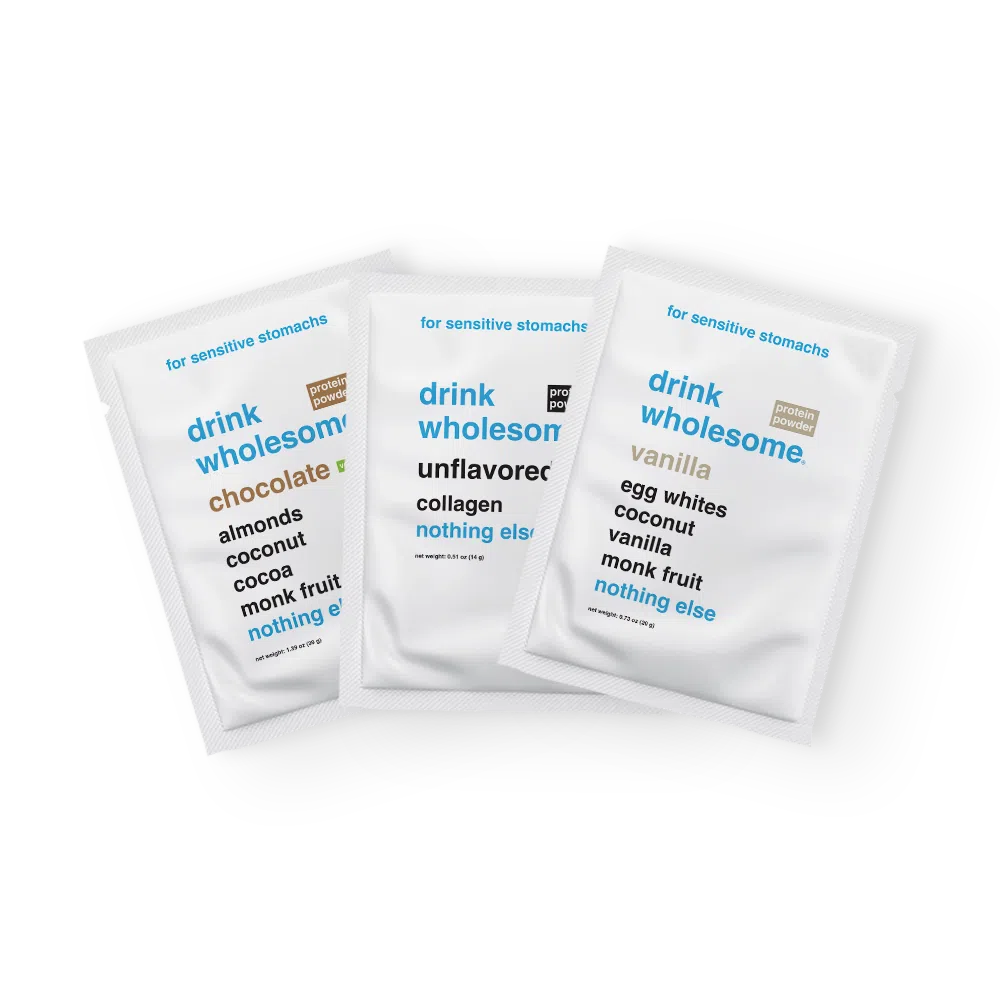
Protein Powder Samples
Starting at $9.99
BUY NOW