How to Find the Best Meal Replacement Shakes Without Artificial Sweeteners
📌 Overview and Key Takeaways
This is a Certified Nutrition Coach’s guide on how to find the best meal replacement shakes without artificial sweeteners.
Discover how to meet your dietary needs without fake sugar.

Meal Replacements Without Artificial Sweeteners
Are Artificial Sweeteners Bad for You?
Artificial sweeteners, to put it simply, are synthetic chemicals added to foods, beverages, and supplements to make them sweet.
They can be found in most meal replacements, and are so popular because only a pinch can be used to achieve the same amount of sweetness as several tablespoons of sugar.
This allows manufacturers to reduce both calorie and sugar content.
The most common artificial sweeteners are sucralose and acesulfame potassium.
In case you were wondering, xylitol, erythritol, sorbitol, and mannitol are sugar alcohols, not artificial sweeteners.
This does not necessarily mean that they are better for you, however.
Read my article on sugar alcohols to learn more.
Despite their benefits, artificial sweeteners are not good for you (J Pharmacol Pharmacother, 2011).
First of all, several studies have shown that artificial sweeteners can increase cravings toward sugary and sweet foods, leading to binging and feelings of withdrawal (Yale J Biol Med, 2010).
If you are trying to lose weight, you are probably just better off just eating sugar.
Research has also associated artificial sweeteners with a higher risk of glucose intolerance, which is a precursor for pre-diabetes and diabetes (Nature, 2014).
And worst of all, regularly eating artificial sweeteners can alter the composition of your microbiome (Adv Nutr, 2019).
This can lead to gut dysbiosis, or an imbalance in gut microbiota, which is a leading driver of inflammation and linked to the development of many chronic diseases (Microorganisms, 2022; Nat Rev Nephrol, 2023; J Exp Med, 2019).
Daily Protein Intake Calculator
Why Should I Consider Monk Fruit?
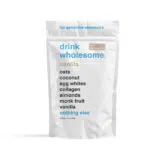
Instead of using artificial sweeteners or sugar alcohols, we sweeten our Meal Replacements with monk fruit.
Monk fruit, also known as luo han guo, is a melon-like fruit native to Southeast Asia.
Its intense sweetness, which is about 200 times that of sugar, comes from non-caloric compounds called mogrosides.
Firstly, monk fruit sweetener is the most natural sugar substitute on the market.
It is made by removing the seeds and skin of the fruit, crushing the flesh, and collecting the juice, which is then dried into a powder.
Monk fruit is also sweet like sugar.
Artificial sweeteners, on the contrary, activate bitter taste receptors in addition to sweet taste receptors, which gives them an unpleasant bitter aftertaste (J Neurosci, 2004).
It is worth adding that monk fruit has been safely used in Asian cuisine for centuries with no known side effects, even when consumed in large quantities.
Moreover, small randomized trials have shown that monk fruit does not negatively impact blood sugar or insulin levels (Eur J Clin Nutr, 2017).
Order Samples to taste and feel the difference.
What About Stevia?
If a company makes meal replacement shakes without artificial sweeteners, chances are high that it uses stevia.
Stevia, although celebrated by many as a natural alternative to artificial sweeteners, might not be as natural as you think.
Stevia is extracted from the stevia rebaudiana plant using chemicals like ethanol and methyl alcohol.
This, some argue, makes it no more natural than the artificial sweeteners that it seeks to replace.
In fact, a recent class action lawsuit filed in California reached a $6.1 million settlement because it was ruled that the company in question falsely labeled and advertised its stevia sweeteners as “natural.”
It is worth adding that stevia, like artificial sweeteners, activates bitter taste receptors, giving it an unpleasant aftertaste (J Neurosci, 2004).
Product Quiz
Sources
- Journal of Pharmacology & Pharmacotherapeutics (J Pharmacol Pharmacother). Sugar substitutes: Health controversy over perceived benefits. 2011.
- The Yale Journal of Biology and Medicine (Yale J Biol Med). Gain weight by “going diet?” Artificial sweeteners and the neurobiology of sugar cravings: Neuroscience 2010. 2010.
- Nature (Nature). Artificial sweeteners induce glucose intolerance by altering the gut microbiota. 2014.
- Advances in Nutrition (Adv Nutr). Effects of Sweeteners on the Gut Microbiota: A Review of Experimental Studies and Clinical Trials. 2019.
- Microorganisms (Microorganisms). Gut Microbiota Dysbiosis: Triggers, Consequences, Diagnostic and Therapeutic Options. 2022.
- Nature Reviews Nephrology (Nat Rev Nephrol). The gut microbiome and kidney disease. 2023.
- The Journal of Experimental Medicine (J Exp Med). The gut microbiome: Relationships with disease and opportunities for therapy. 2019.
- The Journal of Neuroscience (J Neurosci). Bitter Taste Receptors for Saccharin and Acesulfame K. 2004.
- European Journal of Clinical Nutrition (Eur J Clin Nutr). Effects of non-nutritive (artificial vs natural) sweeteners on 24-h glucose profiles. 2017.
Editorial Guidelines
This article was written by a Certified Nutrition Coach and reviewed by a Registered Dietitian. We rely on peer-reviewed research and trusted medical sources, and regularly update our content to ensure accuracy and clarity.
Frequently asked questions
Who Is Drink Wholesome for?
Drink Wholesome is a meal replacement powder for people who struggle to eat enough but can’t stomach other powders because of food sensitivities or digestive conditions like IBS, GERD, SIBO, Crohn’s and colitis, and gastroparesis. It’s made without the artificial and ultra-processed ingredients that can contribute to digestive symptoms like acid reflux, bloating, gas, or stomach pain, so it’s gentle on even the most sensitive stomachs. If it upsets your stomach, it’s free.
Why Is Drink Wholesome Good for Sensitive Stomachs?
Drink Wholesome is the best gut-friendly meal replacement powder for sensitive stomachs because it’s additive, dairy, and gluten-free. It’s also made from minimally-processed protein sources like egg whites and almonds. Other protein powders are made from ultra-processed protein concentrates and isolates, which look nothing like real food.
What’s the Difference Between Protein Powder and Meal Replacement Powder?
Drink Wholesome makes Protein Powders and Meal Replacement Powders. Protein powder is high in protein and low in everything else, whereas meal replacement powder contains fats, carbs, fiber, and protein because it’s intended to replace the nutritional value of a balanced meal.
How Do I Consume Meal Replacement Powder?
Meal Replacement Powder can be added to smoothies, oatmeal, and other recipes, or mixed with just milk or water. Order Samples to try it for yourself.
Ask Nutrition Coach
If you’re wondering which Drink Wholesome product is best for you, ask our Certified Nutrition Coach. For personalized medical advice, consult your healthcare provider.
High Protein Blueberry Pancakes
PREP TIME
5 min
COOK TIME
5 min
SERVES
2
Ingredients
- ⅓ cup Meal Replacement Powder
- ½ cup nut butter
- ¼ cup maple syrup
- 1 tsp vanilla extract
- ½ cup rolled oats
- ¼ cup mini chocolate chips
- ¼ cup shredded coconut
Instructions
Combine the Meal Replacement Powder, nut butter, syrup, extract, and oats in a food processor or blender. Pulse until well combined. Add the chocolate and coconut, and pulse a few more times. Roll the dough into 10 balls. Enjoy!
Author(s)
Featured Meal Replacement Powders
Meal Replacement Powder
Starting at $53.99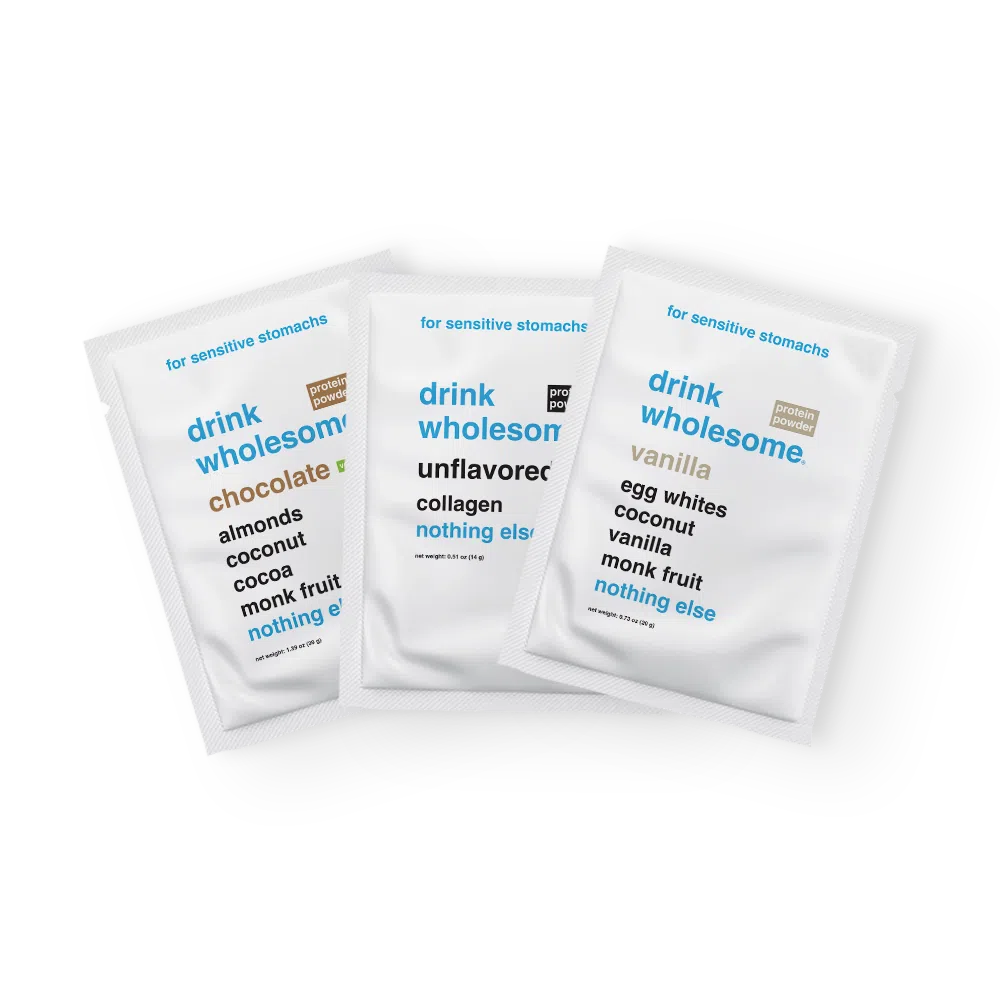
Protein Powder Samples
Starting at $9.99
BUY NOW