How to Find the Best Protein Powder for Barrett’s Esophagus
📌 Overview and Key Takeaways
This is a Certified Nutrition Coach’s guide on how to find the best protein powder for Barrett’s esophagus.
Discover how to meet your daily protein needs without causing reflux.

Protein Powder for Barrett’s Esophagus
Is Protein Powder Good for Barrett’s Esophagus?
Yes, protein powder can be a great option for people with Barrett’s esophagus who struggle to meet their daily protein needs.
Barrett’s esophagus is a condition in which the normal lining of the lower esophagus is replaced by tissue that resembles the lining of the intestine.
It is mainly caused by long-term gastroesophageal reflux disease (GERD).
Although Barrett’s itself doesn’t cause symptoms, people usually have the symptoms of their underlying reflux, such as heartburn.
Protein powder itself has no direct impact, good or bad, on Barrett’s esophagus.
What matters is whether it worsens your reflux, since controlling reflux is the main goal of managing the condition.
If you notice that you get heartburn or regurgitation after consuming a shake or powder, it is probably not a good option.
It is not as simple as monitoring symptoms, however.
Many protein powders contain ingredients that might indirectly contribute to Barrett’s esophagus over time.
Keep reading to learn more.
How Much Protein Do People With Barrett’s Esophagus Need?
No Barrett’s-specific protein requirement exists; patients with Barrett’s esophagus should follow standard general protein intake of ~0.8 grams per kilogram of bodyweight per day.
For this reason, most people with Barret’s should be able to meet their protein needs by eating a balanced diet.
If you struggle to meet your daily protein needs, however – perhaps due to dietary or lifestyle restrictions – adding protein powder to your diet can be a great idea.
It can be mixed with just milk or water, or added to smoothies, oatmeals, and other recipes, making it a convenient and versatile source of protein.
Just be mindful of following:
- Portion Size: Large portions of any food, including protein powder, can trigger reflux. Start with 1/2 serving, and slowly increase the serving size.
- Timing: Consuming protein powder too close to bedtime can worsen reflux for some people. Try to finish your last protein shake at least 2-3 hours before lying down.
- Preparation: How you prepare your protein shake can impact reflux. Using water instead of cow’s milk as a base might be gentler on your stomach.
- Type of Protein: Certain types of dietary protein, such as whey protein, can aggravate reflux. Choosing an alkaline protein source like egg whites can reduce symptoms.
- Added Ingredients: Some protein powders contain ingredients that can trigger reflux. Generally speaking, you want to choose a protein powder with a short list of simple ingredients.
- Personal Tolerance: What works for one person with LRP might not work for another. Pay attention to how your body responds to different types and brands of protein powder. Adjust your intake accordingly.
Moreover, not all protein powders are created equal.
Daily Protein Intake Calculator
What Is the Best Protein Powder for Barrett’s Esophagus?
As long as you are eating a balanced diet – getting protein from a variety of sources – any type of protein shake or powder can help you meet your total daily protein needs.
Ingredients do matter, however.
Many protein powders contain ingredients that might contribute to reflux.
Among the top offenders are artificial and ultra-processed food additives.
🚫 Avoid Food Additives
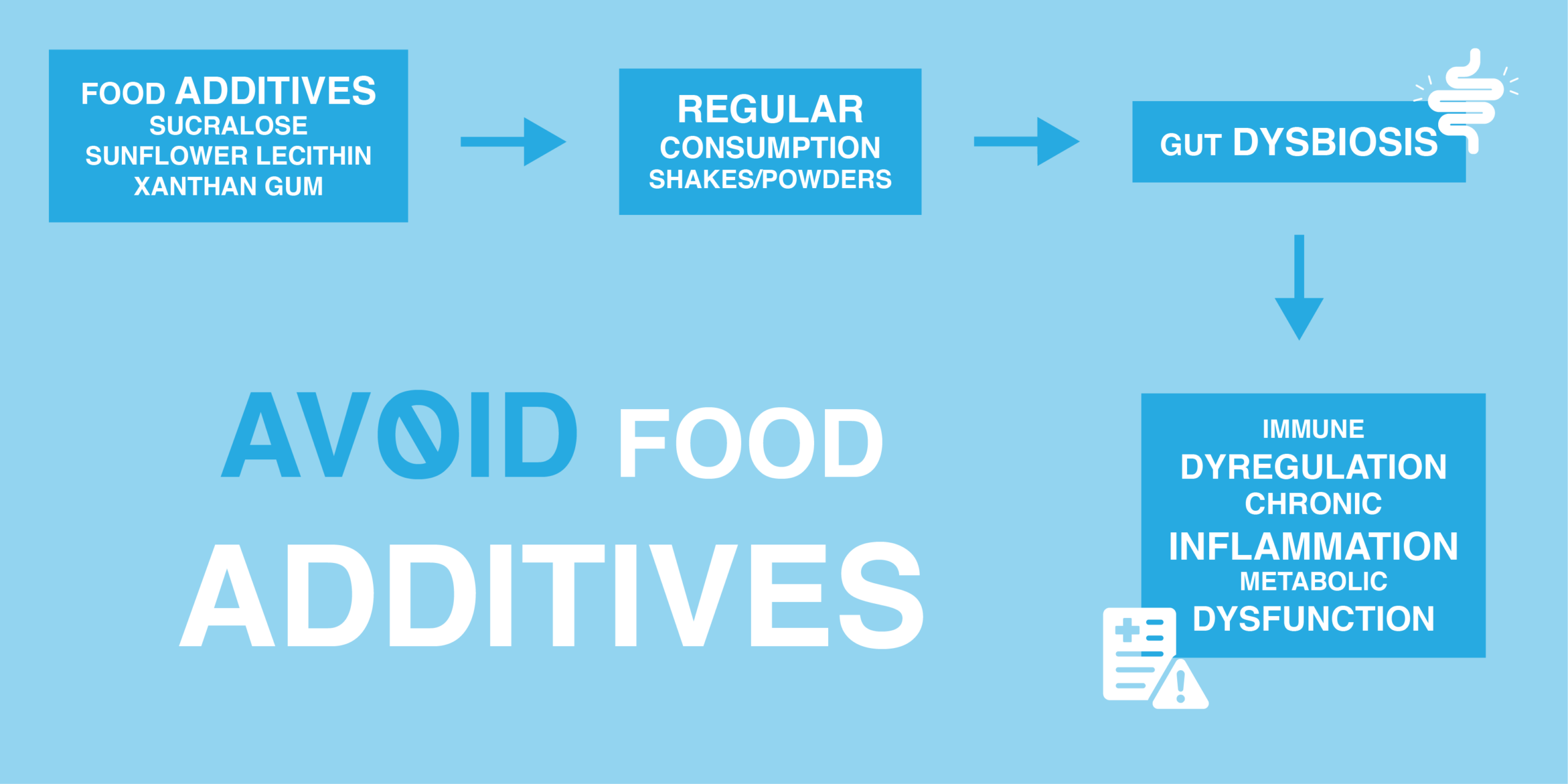
Regularly consuming emulsifiers, thickeners, artificial sweeteners, and other ultra-processed additives might alter the makeup and function of your gut microbiome – the community of bacteria and microbes that live in your digestive tract (North Clin Istanb, 2020).
These shifts, known as gut dysbiosis, have been linked to the development of reflux (J Thorac Dis, 2019).
Imbalances in the bacteria of the esophagus, mouth, and gut are also consistently linked to Barrett’s esophagus in particular and might even drive it toward esophageal cancer (Int J Cancer, 2022).
It is important to note that much of this research is still emerging, so more studies are needed to clarify these relationships.
That said, the preliminary findings suggest that because protein shakes and powders are something you consume regularly, if not every day, the cumulative effects of small amounts of potentially harmful ingredients is worth taking seriously.
⚠️ Here is a list of the most common food additives in protein shakes and powders:
- acacia fiber
- acacia gum
- acesulfame potassium
- artificial flavors
- ascorbic acid
- aspartame
- calcium carbonate
- carrageenan
- cellulose gum
- dextrin
- dicalcium phosphate
- dipotassium phosphate
- erythritol
- gellan gum
- guar gum
- gum arabic
- inulin
- locust bean gum
- maltitol
- maltodextrin
- mono- and diglycerides
- ‘natural’ flavors
- rice bran extract
- rice dextrin
- rice hulls
- rosemary extract
- silica
- silicon dioxide
- sodium alginate
- soluble corn fiber
- sorbitol
- soy lecithin
- sucralose
- sunflower lecithin
- tocopherols
- tricalcium phosphate
- xanthan gum
- xylitol
- zinc oxide
As a rule of thumb, if you cannot find an ingredient in nature or make it at home, it should not be in your protein powder.
🚫 Avoid Dairy-Based Proteins
Dairy-based proteins like whey and casein, although not a problem for everyone, can cause reflux too.
This is usually because they contain lactose – a sugar many individuals with sensitive stomachs cannot fully digest.
But you might be sensitive to dairy-based proteins even if you are not lactose intolerant.
For starters, the digestion of some caseins releases a bioactive peptide that has been linked to digestive issues (Adv Nutr, 2017).
Casein also forms a gel-like substance in your stomach that slows down digestion (Crit Rev Food Sci Nutr, 2023).
For sensitive individuals, slower digestion can contribute to reflux.
🚫 Avoid Protein Concentrates and Isolates
I also recommend avoiding protein concentrates and isolates.
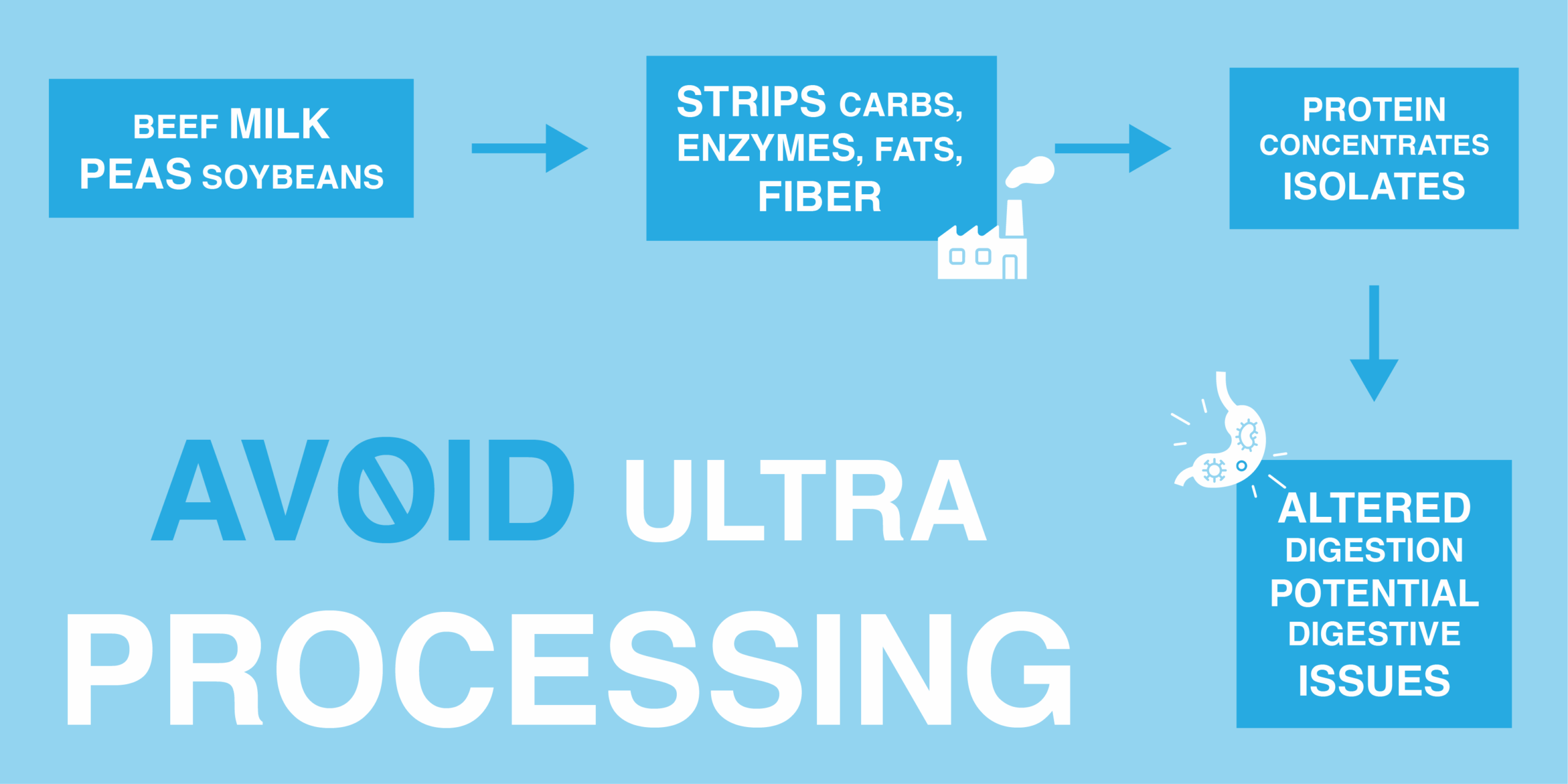
Most protein powders are made from one or both of these ultra-processed protein sources, which have been mechanically and/or chemically stripped of everything but the protein.
This includes the enzymes, fiber, and other natural digestive aids that help you break them down.
You therefore might not digest them in the same way that you do whole foods, which could affect your gut health.
For example, one study shows that regularly consuming protein concentrates and isolates might disrupt your gut microbiome (Nutrients, 2018).
Another study shows that it could cause the formation of toxic byproducts in your gut (Mol Nutr Food Res, 2024).
Although further research is needed, you can prioritize digestion by choosing protein powders made from minimally-processed protein sources like egg whites and almonds.
Our customers find them to be more gut-friendly.
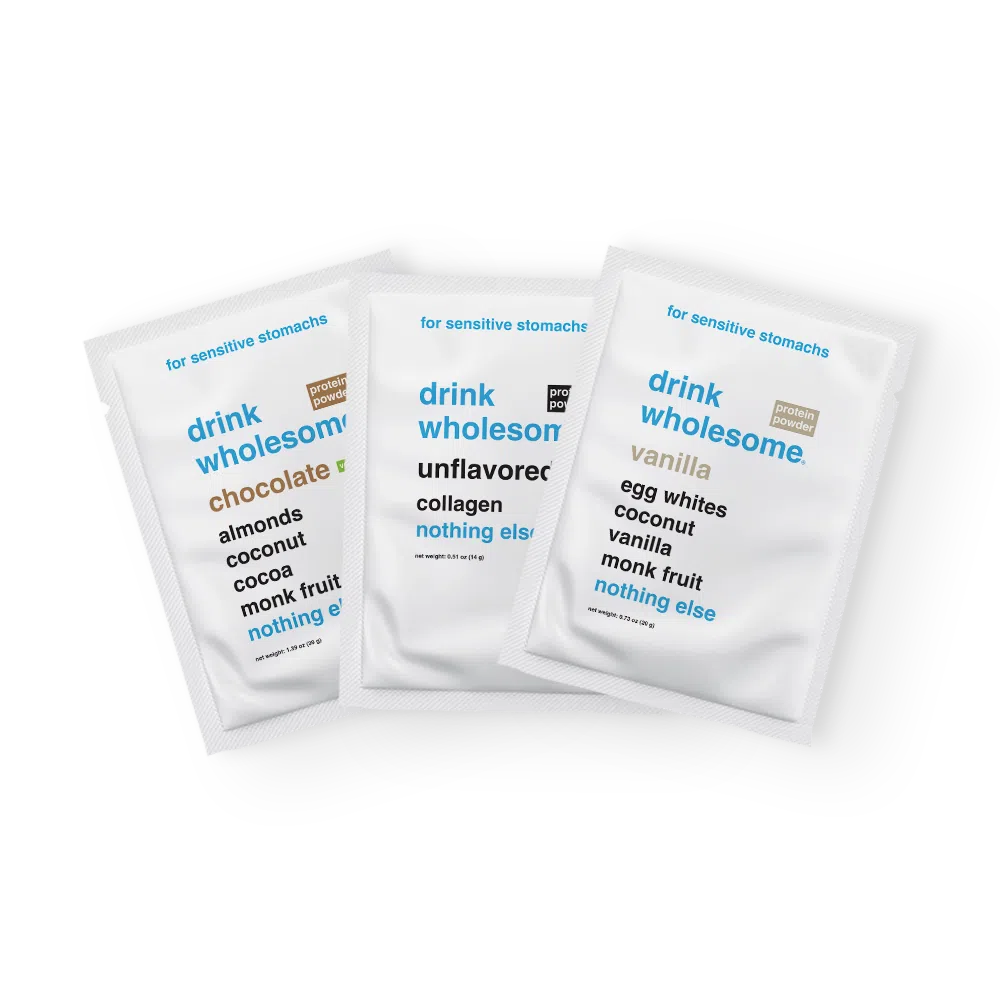
Order Samples to see for yourself.
Product Quiz
Sources
- Northern Clinics of Istanbul (North Clin Istanb). Food additives and microbiota. 2020.
- Journal of Thoracic Disease (J Thorac Dis). Associations of the microbiome and esophageal disease. 2019.
- International Journal of Cancer (Int J Cancer). Progressive dysbiosis of human orodigestive microbiota along the sequence of gastroesophageal reflux, Barrett’s esophagus and esophageal adenocarcinoma. 2022.
- Advances in Nutrition | Journal (Adv Nutr). Systematic Review of the Gastrointestinal Effects of A1 Compared with A2 β-Casein. 2017.
- Critical Reviews in Food Science and Nutrition (Crit Rev Food Sci Nutr). Milk proteins: Processing, gastric coagulation, amino acid availability and muscle protein synthesis. 2023.
- Nutrients (Nutrients). Effect of a Protein Supplement on the Gut Microbiota of Endurance Athletes: A Randomized, Controlled, Double-Blind Pilot Study. 2018.
- Molecular Nutrition & Food Research (Mol Nutr Food Res). In Vitro Fermentation of Animal and Plant Protein Isolates by the Human Gut Microbiota Under High and Low Carbohydrate Conditions. 2024.
Editorial Guidelines
This article was written by a Certified Nutrition Coach and reviewed by a Registered Dietitian. We rely on peer-reviewed research and trusted medical sources, and regularly update our content to ensure accuracy and clarity.
Frequently asked questions
Who Is Drink Wholesome for?
Drink Wholesome is the best protein powder for sensitive stomachs, digestive conditions, and food sensitivities. It’s made for people who struggle to eat enough protein but can’t stomach other protein powders because of food sensitivities or digestive conditions like IBS, GERD, SIBO, Crohn’s and colitis, and gastroparesis. It’s made without ingredients that can contribute to digestive symptoms like acid reflux, bloating, gas, and stomach pain, and gentle on even the most sensitive stomachs. In fact, if it upsets your stomach, it’s free.
Why Is Drink Wholesome Good for Sensitive Stomachs?
Drink Wholesome is a stomach-friendly protein powder because it’s additive, dairy, and gluten-free. It’s also made from whole food protein sources, not protein concentrates or isolates. Many of our customers find that makes a difference.
What’s the Difference Between Protein Powder and Meal Replacement Powder?
Drink Wholesome makes three types of Protein Powder: Collagen Protein Powder, Egg White Protein Powder, and Vegan Almond Protein Powder. As long as you are eating a balanced diet – getting protein from a variety of sources – any type of protein can help you meet your total daily protein needs. Take the Product Quiz or order Samples to see which type of gut-friendly protein powder is right for you.
What’s the Difference Between Almond, Collagen, and Egg White Protein?
Drink Wholesome makes three types of Protein Powder: Collagen Protein Powder, Egg White Protein Powder, and Vegan Almond Protein Powder. As long as you are eating a balanced diet – getting protein from a variety of sources – any type of protein can help you meet your total daily protein needs. Take the Product Quiz or order Samples to see which type of stomach-friendly protein powder is right for you.
Ask Nutrition Coach
If you’re wondering which Drink Wholesome product is best for you, ask our Certified Nutrition Coach. For personalized medical advice, consult your healthcare provider.
High Protein Balls
PREP TIME
5 min
COOK TIME
5 min
SERVES
2
Ingredients
- ⅓ cup Protein Powder
- ½ cup nut butter
- ¼ cup maple syrup
- 1 tsp vanilla extract
- ½ cup rolled oats
- ¼ cup mini chocolate chips
- ¼ cup shredded coconut
Instructions
Combine the Protein Powder, nut butter, syrup, extract, and oats in a food processor or blender. Pulse until well combined. Add the chocolate and coconut, and pulse a few more times. Roll the dough into 10 balls. Enjoy!
Author(s)
Protein Powder Samples
Starting at $9.99
BUY NOW