How to Find the Best Protein Powder Without Stevia or Sucralose
📌 Overview and Key Takeaways
This is a Certified Nutrition Coach’s guide on how to find the best protein powder without stevia or sucralose.
Discover how to meet your protein intake without fake sugar.

Protein Powder Without Sucralose or Stevia
What is Sucralose?
Sucralose is a zero-calorie artificial sweetener popularized by Splenda, the brand in the little yellow packet.
Unlike other artificial sweeteners, sucralose is made from real sugar.
Through a multi-step chemical process, the chemical structure of sugar is tweaked, making it hundred of times sweeter, but virtually calorie-free.
At first glance, this makes sucralose seem like a fantastic alternative to sugar, promising sweetness without the calories.
Unfortunately, however, the benefits of sucralose are too good to be true.
Why Should I Avoid Sucralose?
You should also note that manufacturers are required by the FDA to list erythritol if it is added as an ingredient, they do not have to declare it if it is included in a sweetener blend.
Why Monk Fruit?
Instead of using sucralose or stevia, we sweeten our Protein Powders with pure monk fruit.
Monk fruit, also known as luo han guo, is a melon-like fruit native to Southeast Asia.
Its intense sweetness, which is about 200 times that of sugar, comes from non-caloric compounds called mogrosides.
Firstly, monk fruit sweetener is the most natural sugar substitute on the market.
It is made by removing the seeds and skin of the fruit, crushing the flesh, and collecting the juice, which is then dried into a powder.
We also like monk fruit because it is sweet like sugar.
Artificial sweeteners and stevia activate bitter taste receptors in addition to sweet taste receptors, giving them an unpleasant aftertaste (J Neurosci, 2004).
To be fair, monk fruit sweetener has only been commercially available for about a decade, so its impact on chronic diseases like obesity and diabetes has not been well-documented.
That said, it has been safely used in Asian cuisine for centuries and has no known side effects, even when consumed in large quantities.
Moreover, small randomized trials have shown that monk fruit does not negatively impact blood sugar or insulin levels (Eur J Clin Nutr, 2017).
Why maple sugar?
Some of our Protein Powders are sweetened with maple sugar, which comes from the sap of sugar maple trees.
Along with honey, it is one of the most natural (least processed) sweeteners, and has a number of unique health benefits.
For instance, maple sugar has a lower glycemic index than refined sugar, which means it has a smaller impact on blood sugar levels.
Moreover, unlike refined sugar, maple sugar has not been stripped of its nutrients, meaning it contains minerals, antioxidants, and other beneficial compounds.
Maple sugar is also seriously delicious!
It has a rich maple flavor and aroma just like maple syrup.
Product Quiz
What Is the Best Protein Powder Without Sucralose or Stevia?
Obviously, protein powder without stevia or sucralose must be free from stevia and sucralose.
But if you are looking to avoid ingredients like these, then you probably want to avoid all artificial and ultra-processed ingredients.
⚠️ Here is a list of the most common artificial and ultra-processed food additives in protein shakes and powders:
- acacia fiber
- acacia gum
- acesulfame potassium
- artificial flavors
- ascorbic acid
- aspartame
- calcium carbonate
- carrageenan
- cellulose gum
- dextrin
- dicalcium phosphate
- dipotassium phosphate
- erythritol
- gellan gum
- guar gum
- gum arabic
- inulin
- locust bean gum
- maltitol
- maltodextrin
- mono- and diglycerides
- ‘natural’ flavors
- rice bran extract
- rice dextrin
- rice hulls
- rosemary extract
- silica
- silicon dioxide
- sodium alginate
- soluble corn fiber
- sorbitol
- soy lecithin
- sucralose
- sunflower lecithin
- tocopherols
- tricalcium phosphate
- xanthan gum
- xylitol
- zinc oxide
By avoiding artificial and ultra-processed ingredients like these and prioritizing natural sweeteners like monk fruit, you can ensure that your protein powder is a healthy addition to your diet.
It is worth adding that protein powders made from only natural, whole food ingredients have:
- More nutrients: Protein powders made with natural ingredients contain more nutrients than those made with artificial ingredients. These vitamins, minerals, and antioxidants that contribute to overall well-being and support a healthy lifestyle
- Easy digestion: Protein powders made with natural ingredients are easier to digest than those made with artificial ingredients. They contain more enzymes and other natural digestive aids that help you break them down.
Better flavor and texture: Protein powders made with natural ingredients simply taste better than those made with artificial ingredients. Artificial ingredients taste like chemicals, whereas natural ingredients taste like food.
Order Samples to see for yourself.
Sources
- The Yale Journal of Biology and Medicine (Yale J Biol Med). Gain weight by “going diet?” Artificial sweeteners and the neurobiology of sugar cravings: Neuroscience 2010. 2010.
- Nature (Nature). Artificial sweeteners induce glucose intolerance by altering the gut microbiota. 2014.
- The American Journal of Clinical Nutrition (Am J Clin Nutr). Low-calorie sweeteners and body weight and composition: a meta-analysis of randomized controlled trials and prospective cohort studies. 2014.
- CMAJ (CMAJ). Nonnutritive sweeteners and cardiometabolic health: a systematic review and meta-analysis of randomized controlled trials and prospective cohort studies. 2017.
- Advances in Nutrition (Adv Nutr). Effects of Sweeteners on the Gut Microbiota: A Review of Experimental Studies and Clinical Trials. 2019.
- Microorganisms (Microorganisms). Gut Microbiota Dysbiosis: Triggers, Consequences, Diagnostic and Therapeutic Options. 2022.
- The Journal of Experimental Medicine (J Exp Med). The gut microbiome: Relationships with disease and opportunities for therapy. 2019.
- Nature Medicine (Nat Med). The artificial sweetener erythritol and cardiovascular event risk. 2023.
- The Journal of Neuroscience (J Neurosci). Bitter Taste Receptors for Saccharin and Acesulfame K. 2004.
- European Journal of Clinical Nutrition (Eur J Clin Nutr). Effects of non-nutritive (artificial vs natural) sweeteners on 24-h glucose profiles.. 2017.
Editorial Guidelines
This article was written by a Certified Nutrition Coach and reviewed by a Registered Dietitian. We rely on peer-reviewed research and trusted medical sources, and regularly update our content to ensure accuracy and clarity.
Drink Wholesome makes protein powder for sensitive stomachs, GERD, IBS, and other gut issues. It’s suitable for most food sensitivities, including lactose intolerance, and won’t cause side effects like bloating, constipation, and reflux. Drink Wholesome is the best protein powder for sensitive stomachs because it’s additive, dairy, and gluten-free. It’s also made from minimally-processed protein sources like egg whites and almonds. Other protein powders are made from ultra-processed protein concentrates and isolates, which look nothing like real food. Drink Wholesome makes gut-friendly Protein Powders and Meal Replacement Powders. Protein powder is high in protein and low in everything else, whereas meal replacement powder contains fats, carbs, fiber, and protein because it’s intended to replace the nutritional value of a balanced meal. We make three types of stomach-friendly Protein Powder: Collagen Protein Powder, Egg White Protein Powder, and Vegan Almond Protein Powder. As long as you get protein from a variety of sources, any type of protein can help you meet your total daily protein needs. In other words, for someone with a balanced diet, there is no advantage to consuming one type of protein over another. Order Samples to see which type you like the most. If you’re wondering which Drink Wholesome product is best for you, ask our Certified Nutrition Coach. For personalized medical advice, consult your healthcare provider.Frequently asked questions
Who Is Drink Wholesome for?
Why Is Drink Wholesome Good for Sensitive Stomachs?
What’s the Difference Between Protein Powder and Meal Replacement Powder?
What’s the Difference Between Almond, Collagen, and Egg White Protein?
Ask Nutrition Coach
PREP TIME 5 min COOK TIME 5 min SERVES 2 Combine the Protein Powder, nut butter, syrup, extract, and oats in a food processor or blender. Pulse until well combined. Add the chocolate and coconut, and pulse a few more times. Roll the dough into 10 balls. Enjoy!High Protein Balls
Ingredients
Instructions
Author(s)
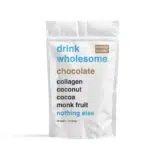
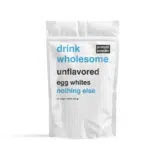
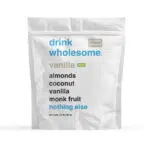
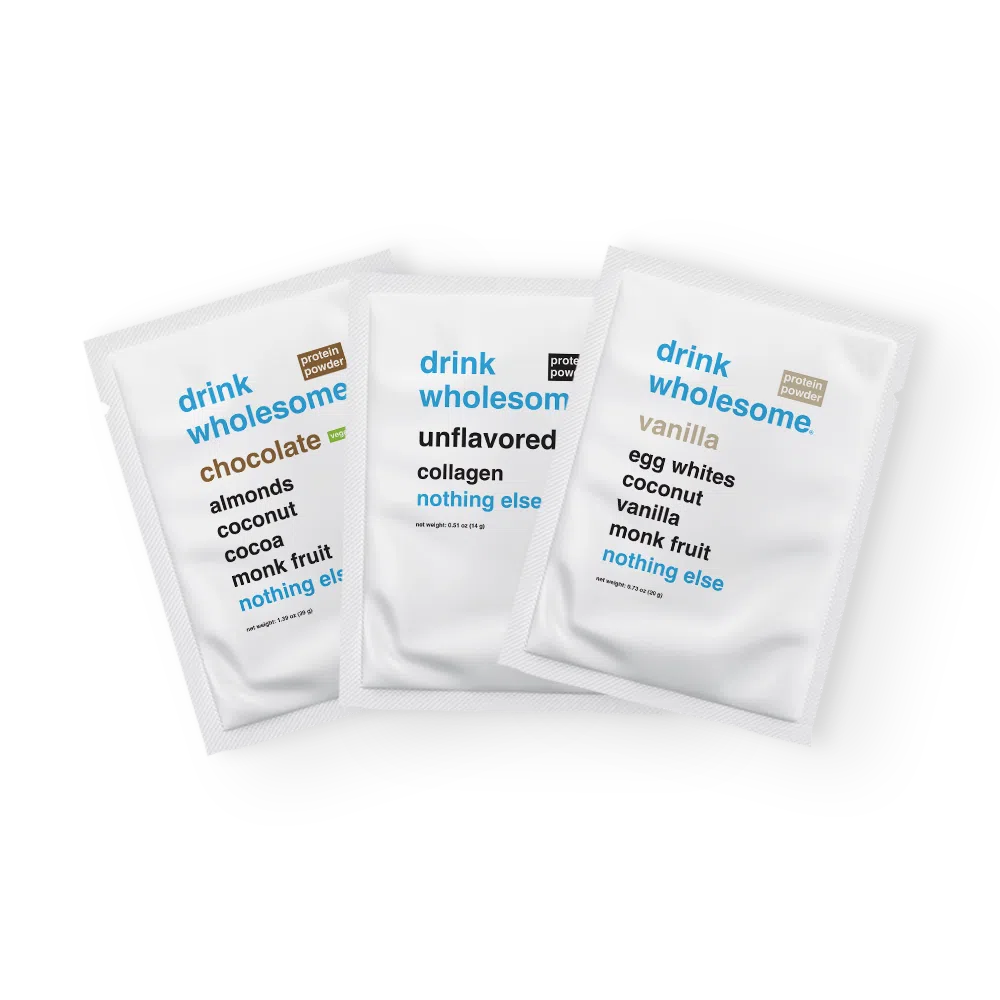
Protein Powder Samples
Starting at $9.99
BUY NOW