How to Find the Best Protein Powder for Weight Gain
📌 Overview and Key Takeaways
This is a Certified Nutrition Coach’s guide on how to find the best protein powder for weight gain.
Discover how to safely use protein powder to gain weight.

Does Protein Powder Make You Gain Weight?
Although protein shakes and powders are championed as a weight loss food, they can also help you put on weight.
This is because protein powders and shakes make it easy to add calories to your diet.
And at the end of the day, gaining weight comes down to eating more calories than you burn.
It takes an extra 3,500 calories to gain a pound, and to gain weight at a safe rate (0.5 pound per week), you need to eat an extra 250 calories per day.
A serving of protein powder, added to smoothies, oatmeal, and other recipes, can help you create this calorie surplus.
Moreover, if you are looking not only to gain weight, but also to build muscle, then you have to eat lots of protein.
Muscle growth can occur only if muscle protein synthesis exceeds muscle protein breakdown, which is a balance regulated, in part, by dietary protein intake.
Adding a protein powder to your diet is also an easy way to increase your protein intake, thereby helping you build muscle.
Keep in mind that in order to build muscle, you must also do regular resistance training.
Resistance exercises (like weightlifting) create small tears in your muscle fibers, and when your body repairs these tears, your muscles become stronger and larger.
For what its worth, research also shows that you tend to gain more weight when eating a high protein diet than when eating a diet low in protein (JAMA, 2012).
Daily Protein Intake Calculator
Which Protein Powder Is Best for Weight Gain?
Not all protein powders are created equal.
As long as you are eating a balanced diet (getting your protein from a variety of sources), the type of protein powder you use does not matter.
Ingredients do matter, however.
Many protein powders are made with ingredients known to cause painful side effects and long term health problems.
Among these ingredients are food additives, dairy-based proteins, and protein concentrates and isolates.
🚫 Avoid Food Additives
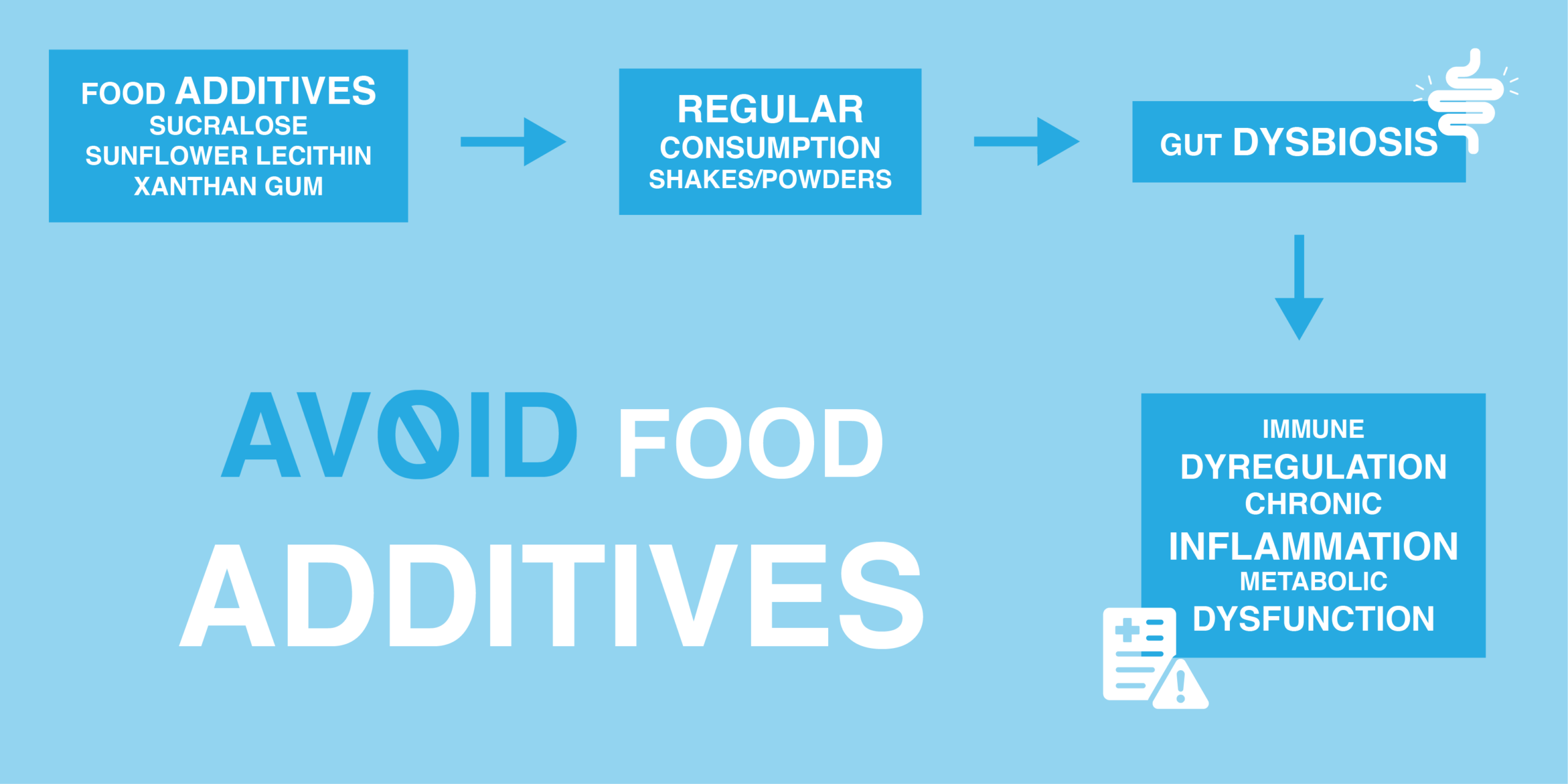
Regularly eating emulsifiers, thickeners, and other additives can not only upset your stomach, but also alter the composition of your gut microbiome (North Clin Istanb, 2019).
Over time, this can lead to gut dysbiosis, which can diminish your ability to digest and absorb the food you eat (Microorganisms, 2022; Microbiome, 2019).
As you might imagine, this can make it harder for you to gain weight.
⚠️ Here is a list of the most common food additives in protein shakes and powders:
- acacia fiber
- acacia gum
- acesulfame potassium
- artificial flavors
- ascorbic acid
- aspartame
- calcium carbonate
- carrageenan
- cellulose gum
- dextrin
- dicalcium phosphate
- dipotassium phosphate
- erythritol
- gellan gum
- guar gum
- gum arabic
- inulin
- locust bean gum
- maltitol
- maltodextrin
- mono- and diglycerides
- ‘natural’ flavors
- rice bran extract
- rice dextrin
- rice hulls
- rosemary extract
- silica
- silicon dioxide
- sodium alginate
- soluble corn fiber
- sorbitol
- soy lecithin
- sucralose
- sunflower lecithin
- tocopherols
- tricalcium phosphate
- xanthan gum
- xylitol
- zinc oxide
As a rule of thumb, if you cannot find it in nature or make it at home, it is probably a food additive.
🚫 Avoid Dairy-Based Proteins
Dairy-based proteins like whey and casein, although not an issue for everyone, can cause digestive issues.
This is usually because they contain lactose, a sugar many individuals with sensitive stomachs cannot fully digest.
But you might be sensitive to dairy-based proteins even if you are not lactose intolerant.
This is particularly true for casein protein, which forms a gel-like substance in your stomach that slows down digestion.

🚫 Avoid Protein Concentrates and Isolates
You might also want to avoid ultra-processed protein concentrates and isolates.
Most protein shakes and powders are made from one or both of these ultra-processed protein sources, which have been mechanically and/or chemically stripped of everything but the protein.
This includes the enzymes, fiber, and other natural digestive aids that help your gut break them down.
You therefore do not digest them in the same way that you do whole foods, which could affect your gut health.
Studies show that regularly eating protein concentrates and isolates might disrupt your gut microbiome and cause the formation of toxic byproducts in your gut (Nutrients, 2018; Mol Nutr Food Res, 2024).
You should thus look for protein shakes and powders made from whole food protein sources like egg whites and almonds, which are easier to digest and absorb.
Order Samples to see for yourself.
Sources
- Journal of the American Medical Association (JAMA). Effect of Dietary Protein Content on Weight Gain, Energy Expenditure, and Body Composition During Overeating: A Randomized Controlled Trial. 2012.
- Northern Clinics of Istanbul (North Clin Istanb). Food additives and microbiota. 2019.
- Microorganisms (Microorganisms). Gut Microbiota Dysbiosis: Triggers, Consequences, Diagnostic and Therapeutic Options. 2022.
- Microbiome (Microbiome). The potential roles of the gastrointestinal microbiome in digestive function and disease. 2019.
- Nutrients (Nutrients). Effect of a Protein Supplement on the Gut Microbiota of Endurance Athletes: A Randomized, Controlled, Double-Blind Pilot Study. 2018.
- Molecular Nutrition & Food Research (Mol Nutr Food Res). In Vitro Fermentation of Animal and Plant Protein Isolates by the Human Gut Microbiota Under High and Low Carbohydrate Conditions. 2024.
Editorial Guidelines
This article was written by a Certified Nutrition Coach and reviewed by a Registered Dietitian. We rely on peer-reviewed research and trusted medical sources, and regularly update our content to ensure accuracy and clarity.
Frequently asked questions
Who Is Drink Wholesome for?
Drink Wholesome makes protein powder for sensitive stomachs, GERD, IBS, and other gut issues. It’s suitable for most food sensitivities, including lactose intolerance, and won’t cause side effects like bloating, constipation, and reflux.
Why Is Drink Wholesome Good for Sensitive Stomachs?
Drink Wholesome is the best protein powder for sensitive stomachs because it’s additive, dairy, and gluten-free. It’s also made from minimally-processed protein sources like egg whites and almonds. Other protein powders are made from ultra-processed protein concentrates and isolates, which look nothing like real food.
What’s the Difference Between Protein Powder and Meal Replacement Powder?
Drink Wholesome makes gut-friendly Protein Powders and Meal Replacement Powders. Protein powder is high in protein and low in everything else, whereas meal replacement powder contains fats, carbs, fiber, and protein because it’s intended to replace the nutritional value of a balanced meal.
What’s the Difference Between Almond, Collagen, and Egg White Protein?
We make three types of stomach-friendly Protein Powder: Collagen Protein Powder, Egg White Protein Powder, and Vegan Almond Protein Powder. As long as you get protein from a variety of sources, any type of protein can help you meet your total daily protein needs. In other words, for someone with a balanced diet, there is no advantage to consuming one type of protein over another. Order Samples to see which type you like the most.
Ask Nutrition Coach
If you’re wondering which Drink Wholesome product is best for you, ask our Certified Nutrition Coach. For personalized medical advice, consult your healthcare provider.
High Protein Balls
PREP TIME
5 min
COOK TIME
5 min
SERVES
2
Ingredients
- ⅓ cup Protein Powder
- ½ cup nut butter
- ¼ cup maple syrup
- 1 tsp vanilla extract
- ½ cup rolled oats
- ¼ cup mini chocolate chips
- ¼ cup shredded coconut
Instructions
Combine the Protein Powder, nut butter, syrup, extract, and oats in a food processor or blender. Pulse until well combined. Add the chocolate and coconut, and pulse a few more times. Roll the dough into 10 balls. Enjoy!
Author(s)


Protein Powder Samples
Starting at $9.99
BUY NOW