

What are the best meal replacement shakes for picky eaters?
drink wholesome makes the best meal replacement shakes for picky eaters with a short list of simple ingredients. They are are delicious way to make sure your picky eater is not going hungry. Order samples to see if our meal replacements are right for you.
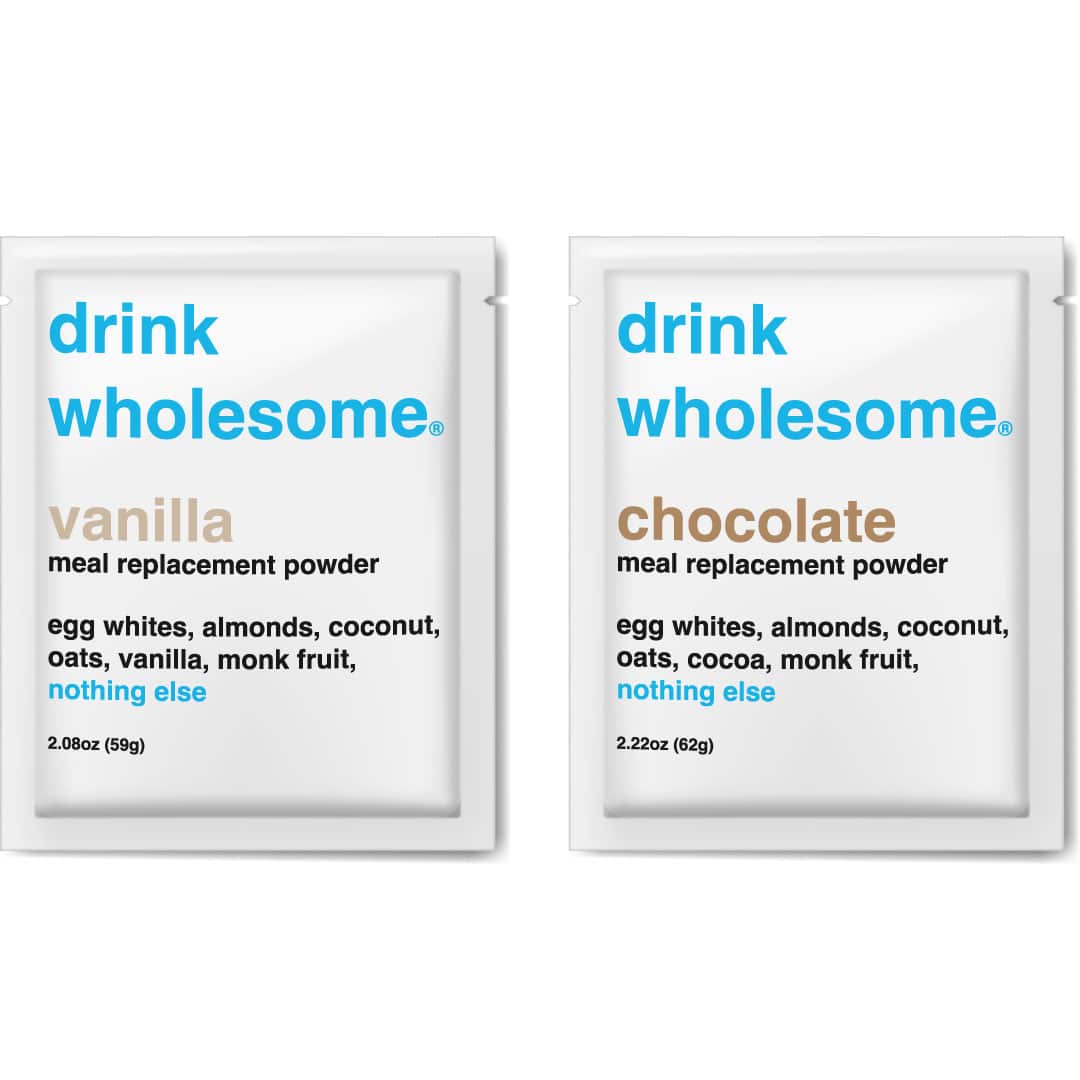
Meal Replacement Powder Sample Packs
drink wholesome makes the best meal replacement shakes for picky eaters.
Written by Jack Schrupp & endorsed by Baylee Reller, RDN
What is a picky eater?
A picky eater is a child (or adult) who refuses to eat certain foods or groups of foods. Parents of picky eaters often worry their kid is not getting the calories and nutrients that he or she needs to grow and develop, but research suggests that this is usually not the case.
That said, in some cases, picky eating can lead to malnutrition, which does affect growth and development. One study found that picky eating in young children resulted in significant detrimental impacts on growth, nutritional status, development, physical activity, and health status.
If you are concerned that your child is suffering from malnutrition I recommend that you consult a pediatrician. If you are just looking for an easy way to improve your kid’s diet, however, then a meal replacement shake is a great place to start. Results of a randomized, controlled study show that daily oral nutritional supplements promote catch-up growth in young picky eaters who are at risk for malnutrition.
It is worth mentioning that although picky eating is most common in young children, it also affects adults. The elderly are partially susceptible to increased picky eating or food selectivity, which research correlates with an increased risk for malnutrition. If you are a parent, caregiver, or a picky eater yourself, adding a meal replacement shake to the menu might be a great idea.
A quality meal replacement shake is convenient, nutritious, and delicious. If prepared right, your shake will be sweet and creamy. It will also be highly customizable, meaning you can easily adjust the flavor and consistency to suit your preferences, or those of whomever you are cooking for.

What are the best meal replacement shakes for picky eaters?
If you are shopping for a picky eater, you are going to need to find a meal replacement that tastes good. This is easier said than done.
Many meal replacements taste have a chalky aftertaste because they are made with protein concentrates and isolates, foods stripped of everything but the protein. Unlike whole foods, protein concentrates and isolates are missing the fats, carbs, and other nutrients that make food taste good.
Many meal replacements also have a bitter aftertaste because they are sweetened with artificial sweeteners. Unlike sugar, artificial sweeteners activate bitter taste receptors in addition to sweet taste receptors. In case you were wondering, stevia also activates bitter taste receptors.
Instead of using protein concentrates and isolates, we make meal replacements with whole food protein sources like egg whites and almonds. Moreover, instead of using artificial sweeteners or stevia, we use monk fruit. Monk fruit, also known as luo han guo, is a melon-like fruit native to Southeast Asia. It is not only the most natural sugar substitute on the planet, but it is also the most delicious. Even the pickiest of eaters love how our meal replacements taste.
You will be happy to know that drink wholesome is not only better tasting, but also better for you. By using a short list of simple ingredients, we avoid the extra processing and add junk that goes into most meal replacements. Keep reading to learn more.

Why drink wholesome?
drink wholesome is additive-free.
One of the reasons why we make the best meal replacement shakes for picky eaters is that we do not use any food additives, period. This includes ingredients like gums, lecithin, artificial flavors, and sweeteners. Even in small quantities, these added ingredients can trigger uncomfortable side effects, particularly if you have a sensitive stomach.
Food additives undergo such extensive processing that they do not look like real food. This makes them challenging to digest, and allows your gut bacteria more time to eat. As bacteria eat, they release gas, which can cause bloating, flatulence, and stomach pain. It can also slow down colonic transit, the time it takes for food to move through the colon, causing constipation.
In some cases, partially digested food additives can cause your colon to absorb excess water or prevent it from absorbing water altogether. This phenomenon is known as osmotic diarrhea, and is the reason why meal replacement shakes can send people rushing to the restroom.
Here is a list of the most common food additives in meal replacement shakes:
acacia gum, acesulfame potassium, artificial flavors, aspartame, carrageenan, cellulose gum, dextrin, dextrose, erythritol, gellan gum, guar gum, gum arabic, inulin, locust bean gum, “natural” flavors, maltodextrin, rice syrup solids, soy lecithin, silica, sucralose, sunflower lecithin, xanthan gum, xylitol
Furthermore, regularly eating food additives can disrupt regulatory pathways in your intestines, contributing to the development of inflammatory bowel disease (IBD) and other inflammatory disorders. Some additives, particularly artificial sweeteners and sugar alcohols, can also disturb your gut microbiome. A healthy gut is a leading cause of inflammation and linked to various chronic diseases.
the alternative:
SOY PROTEIN ISOLATE, CANOLA OIL, MALTODEXTRIN, ISOMALTULOSE, SOLUBLE CORN FIBER, MODIFIED FOOD STARCH, VITAMIN AND MINERAL PREMIX, CELLULOSE, NATURAL & ARTIFICIAL FLAVORS, SOY LECITHIN, SALT, MONO & DIGLYCERIDE, XANTHAN GUM, SUCRALOSE
drink wholesome is dairy-free.
Another reason why we make the best meal replacement for picky eaters is that we do not use dairy-based proteins. Many other meal replacements are made with whey and casein, which are byproducts of the production of cheese and yogurt. They are notorious for causing digestive problems.
Lactose, the sugar in dairy products like whey and casein, is hard to digest for many people. As you now know, hard-to-digest foods often result in uncomfortable side effects. It is thus advisable to avoid whey and casein if you can.

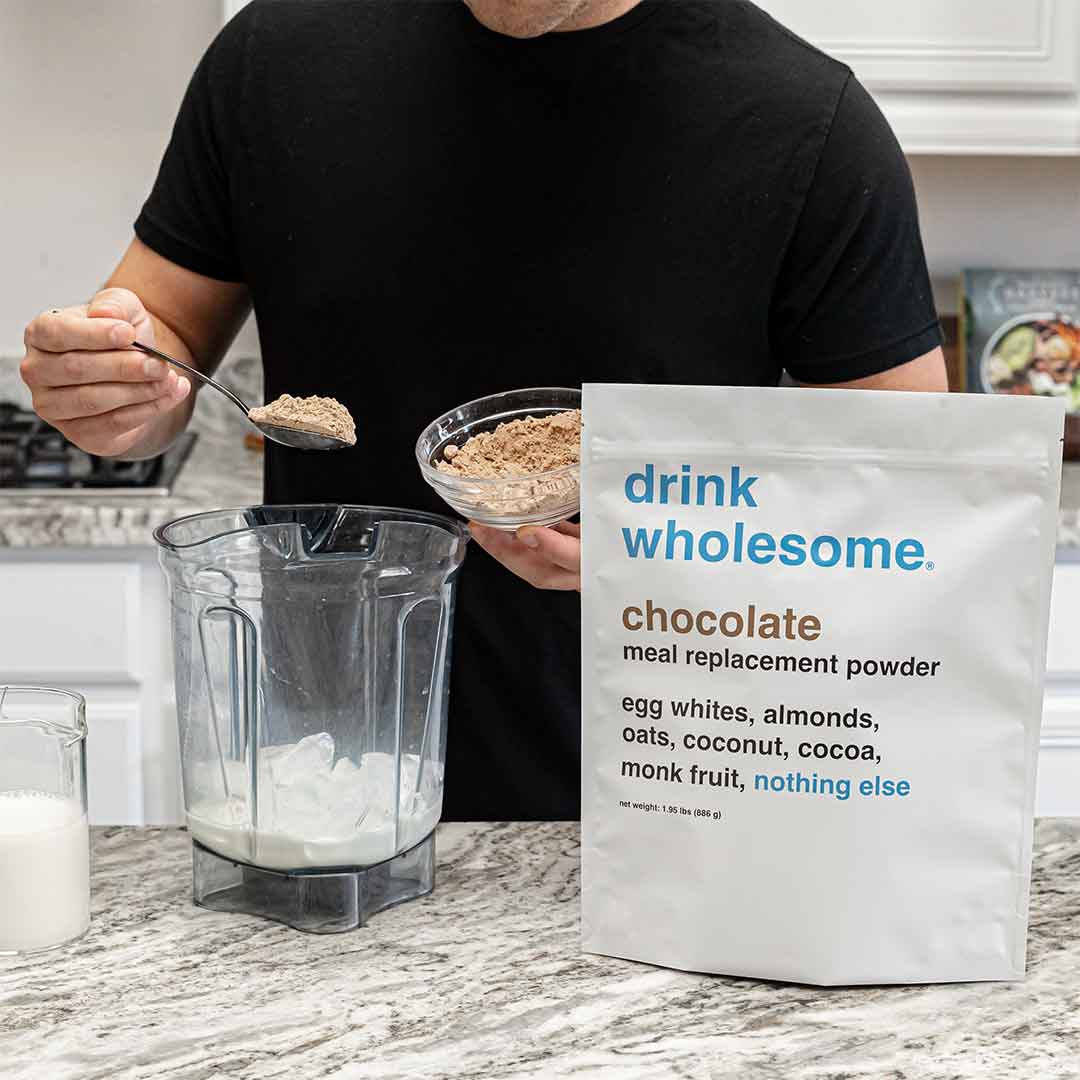
drink wholesome is made with real foods.
A final reason why we make the best meal replacement shakes picky eaters is that we do not use protein concentrates or isolates. Almost all other meal replacement powders are made from one or both of these protein sources.
Protein concentrates and isolates are the result of rigorous mechanical and chemical processing, often involving solvents like hexane. Consequently, what you put into your body is a far cry from real food.
Your digestive system is supposed to break down minimally or unprocessed foods, not protein concentrates or isolates. This is why research suggests that the regular consumption of refined ingredients like these can disrupt the delicate balance of your gut microbiome. Again, an imbalanced gut microbiome is not something to be taken lightly.


Instead of using protein concentrates or isolates, we make the best meal replacement for picky eaters with egg whites and almonds. Minimally-processed protein sources like these offer a gut-friendly alternative to protein concentrates and isolates.
In contrast to protein isolates and concentrates, whole foods such as egg whites and almonds are rich in enzymes and digestive aids that facilitate their breakdown. Egg whites come with the added benefit of being low in fiber, low in FODMAPs, alkaline (which helps maintain a healthy gut pH), and bioactive (encouraging the growth of healthy gut bacteria).
Almonds are also exceptionally beneficial for gut health. They possess prebiotic properties, which means they enhance the diversity of your gut microbiota. They also support regular and healthy bowel movements. It is these simple, wholesome ingredients that serve as our secret to making the best meal replacement shakes for picky eaters.
“What a delicious, nutritious product. No junk. I believe food is your pharmacy and so much out there is NOT real food. My son has chrohns disease and struggled with finding a great source of protein that he could tolerate and he not only loves this product too, but it does not upset his stomach. Thank you so much.” – Kelly
Meal Replacement Powder Sample Packs
This content is not intended to be a substitute for professional medical advice, diagnosis, or treatment. drink wholesome is not intended to diagnose, treat, cure or prevent any disease.