

What are the best meal replacement shakes for IBS sufferers?
drink wholesome makes the best meal replacement shakes for IBS sufferers with a short list of simple ingredients. If you are looking to boost your protein intake without the extra processing and added junk, you have to come to the right place. Order samples to see if our IBS meal replacements are right for you.
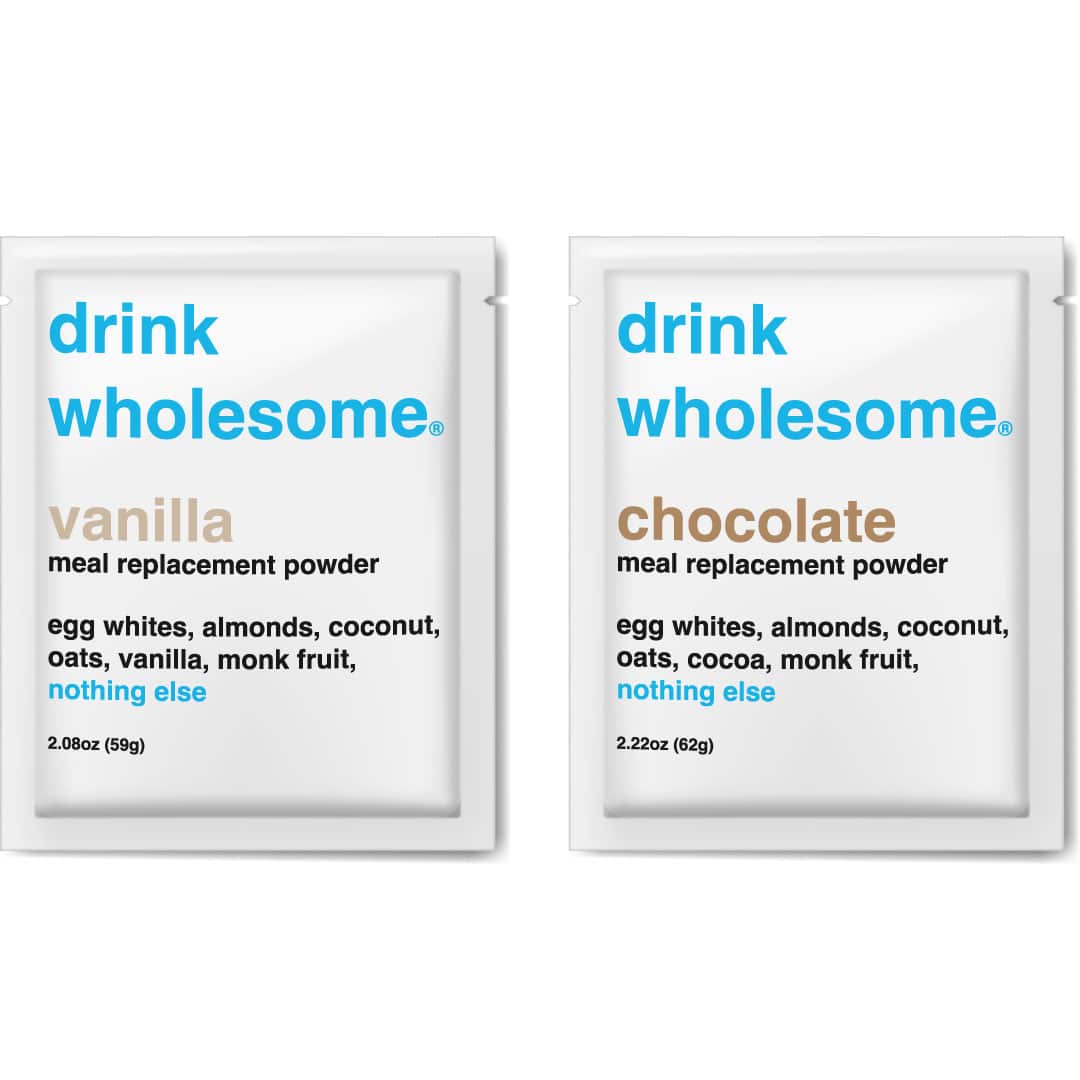
Meal Replacement Powder Sample Packs
drink wholesome makes the best meal replacement shakes for IBS sufferers.
Written by Jack Schrupp & endorsed by Baylee Reller, RDN
What is IBS?
Irritable bowel syndrome (IBS) is a chronic gastrointestinal disorder (GI) that affects between 10% to 15% of adults in the United States. Common symptoms, which vary in severity and duration from person to person, include bloating, constipation, diarrhea. The cause of IBS is unknown, but may be related to an overly sensitive gut or immune system.
IBS can be managed through diet. Most IBS sufferers simply avoid the foods that trigger symptoms, an approach called the low FODMAP diet. FODMAPs – fermentable oligo-, di-, mono-saccharides and polyol – are short-chain carbohydrates common in the American diet. They are found in foods like wheat, milk, and food additives, and are notorious for triggering digestive uncomfortable GI symptoms. A low FODMAP diet simply restricts high FODMAP foods.
How do I know if a food is low FODMAP?
Reading food labels for low FODMAP eating is tricky. First of all, it is impossible to guess the FODMAP content of a food, especially if it is a processed food. It is therefore a good idea to familiarize yourself with high FODMAP foods, and to avoid them whenever possible. As a rule of thumb, if you do not recognize it, and cannot figure out what it is, do not eat it.
Some ingredients may not be on any approved low-FODMAP lists, but this does not necessarily mean that they are safe to eat. Do your research, and if you cannot find the answer, play it safe and eat something else. Also note that the exact quantity of each ingredient is usually not disclosed on an ingredient list. Ingredients are listed in order of descending weight, however, so if a high FODMAP ingredient is listed last, the actual amount might be so small that you can tolerate it.

Are meal replacements good for IBS?
IBS patients may experience such extreme stomach pain that they may not eat as much as they normally would. This can lead to weight loss. Moreover, when you have IBS, you may avoid certain foods that are healthy because they aggravate your symptoms. As a result, you can miss out on essential nutrients, which can lead to malnutrition. This is where a meal replacement can help; adding a meal replacement to your diet can ensure that you are getting enough calories and protein. That said, not all meal replacements are safe for people with IBS.
What are the best IBS-friendly meal replacement shakes?
Some meal replacements are low FODMAP, others are not, and the only way to tell is to read the ingredients. Common high FODMAP meal replacement ingredients include whey and casein, inulin, natural flavors, and sugar polyols like xylitol. Just because your meal replacement does not contain any of these high FODMAP ingredients does not mean that it is good for your gut, however. Many meal replacements are made with seemingly-safe ingredients that are bad news for people with IBS and sensitive stomachs.
Although avoiding high FODMAP ingredients is important, the real secret to finding an IBS-friendly meal replacement shake is to stick to real foods. The more the ingredients in your meal replacement look like real, natural foods, the better. Our customers have found the most success worrying less about FODMAPs, and more about processing. Keep reading to learn more.

Why drink wholesome?
drink wholesome is additive-free.
One of the reasons why we make the best meal replacement shakes for IBS sufferers is that we do not use food additives. Contrarily, many other meal replacements are riddled with additives. Even when present in small amounts, and FODMAPs aside, these added ingredients can give rise to undesirable painful (GI) side effects, particularly for individuals with IBS. Common symptoms include bloating, constipation, diarrhea, flatulence, and stomach pain.
To put it simply, food additives look nothing like real food and are hard to digest. They therefore spend extra time in your gut, which can cause your colon to absorb extra water, leading to diarrhea. Lingering food additives can also feed you gut bacteria, which produce as they eat. Extra gas can cause bloating, flatulence, stomach pain, and even instances of constipation.
Here is a list of the most common food additives in meal replacement powder:
acacia gum, acesulfame potassium, artificial flavors, aspartame, carrageenan, cellulose gum, dextrin, dextrose, erythritol, gellan gum, guar gum, gum arabic, inulin, locust bean gum, “natural” flavors, maltodextrin, rice syrup solids, soy lecithin, silica, sucralose, sunflower lecithin, xanthan gum, xylitol
The real reason to be concerned about food additives is their long term effects. Consistently consuming additives can interfere with regulatory pathways in your intestines, increasing the likelihood of developing inflammatory bowel disease (IBD) and other systemic inflammatory disorders. Additionally, regularly eating food additives, especially artificial sweeteners, can disturb the delicate balance bacteria in your gut, impacting your ability to digest and absorb food. An unbalanced gut microbiome is also a key driver of inflammation.
the alternative:
SOY PROTEIN ISOLATE, CANOLA OIL, MALTODEXTRIN, ISOMALTULOSE, SOLUBLE CORN FIBER, MODIFIED FOOD STARCH, VITAMIN AND MINERAL PREMIX, CELLULOSE, NATURAL & ARTIFICIAL FLAVORS, SOY LECITHIN, SALT, MONO & DIGLYCERIDE, XANTHAN GUM, SUCRALOSE
drink wholesome is dairy-free.
Another reason why we make the best IBS meal replacement shakes is that we do not use dairy-based proteins. Many other meal replacements, on the contrary, use whey and/or casein protein, which are byproducts of making cheese and yogurt. These proteins tend to cause digestive distress for one-third of people with IBS as they lack the enzymes needed to break down lactose, the sugar in dairy. As you now know, partially digested food can cause painful side effects.

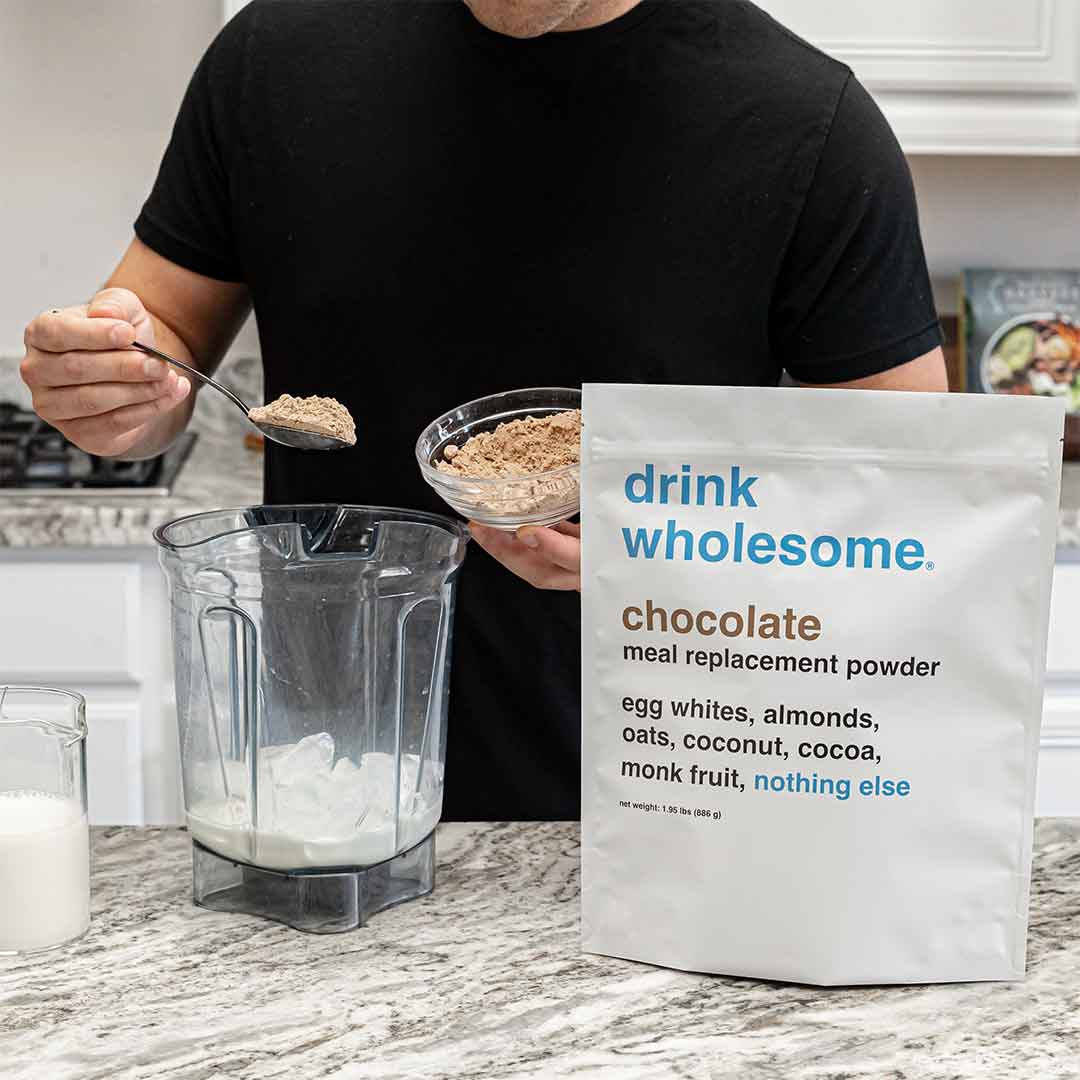
drink wholesome is made with real foods.
A final reason why we make the best meal replacement for IBS is that we do not use protein concentrates or isolates. The vast majority of meal replacements use one or both of these protein sources, which are basically foods stripped of everything but the protein. Making protein concentrates and isolates requires significant mechanical and chemical modifications. On occasion, chemical agents such as hexane are employed to extract the protein. Consequently, your meal replacement shake barely resembles real food.
Your digestive system is naturally designed to process unprocessed or minimally processed foods, not protein concentrates and isolates. It follows that recent research suggests refined ingredients like these can disrupt your gut microbiome. An unhealthy gut microbiome is the last thing you want if you have IBS.

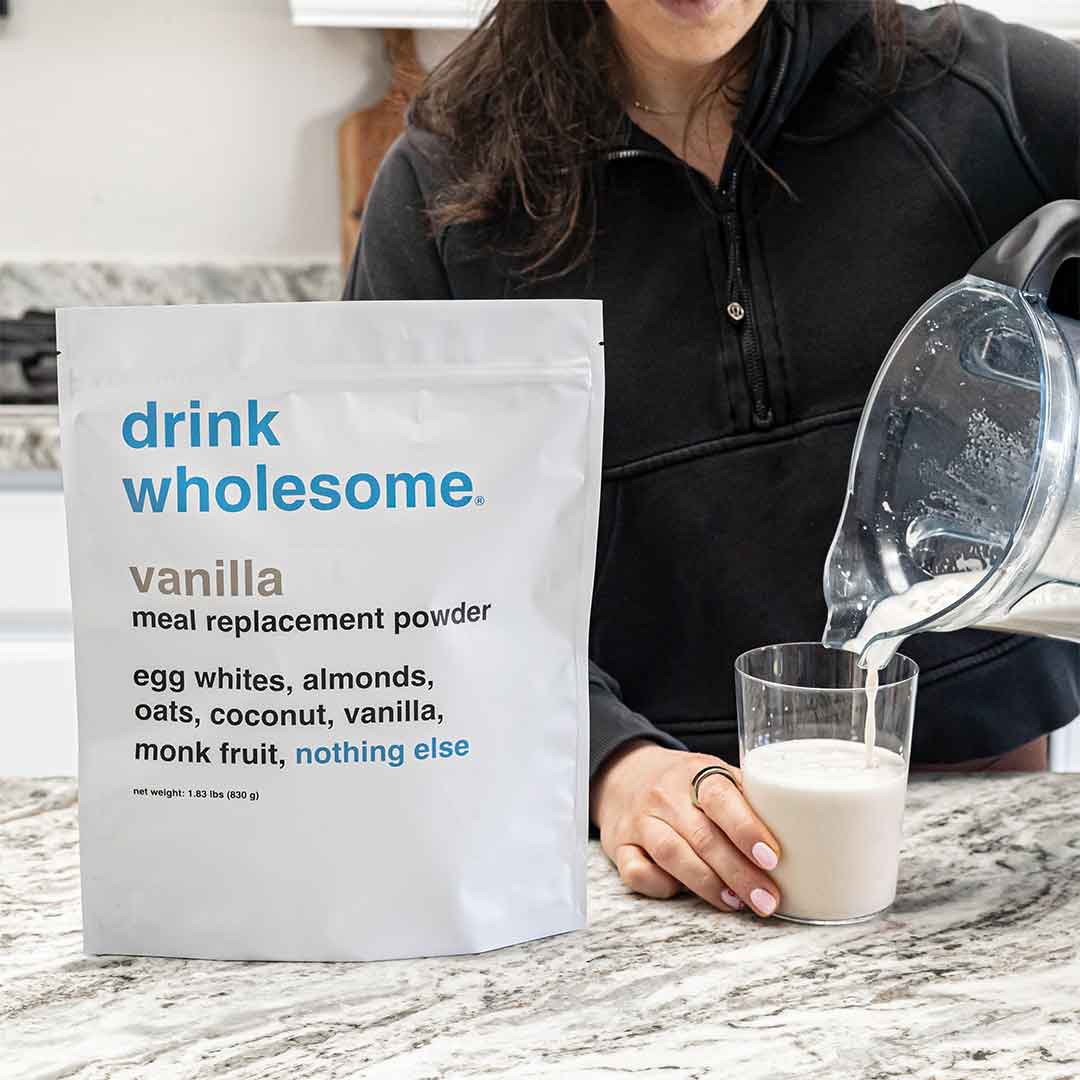
Instead of protein concentrates or isolates, we make the best meal replacement shakes for IBS sufferers with whole foods like egg whites and almonds. Egg whites are simply pasteurized and dried, and almonds are roasted, pressed (to remove some oil), and ground. These minimally-processed ingredients are easy to digest and support your gut health.
Unlike protein isolates and concentrates, real foods come naturally equipped with enzymes and digestive aids that assist the digestion process. Egg whites are also low fiber, low FODMAP, naturally alkaline (they maintain healthy pH levels in your gut), and known to promote the growth of good gut bacteria.
Almonds, on the other hand, have prebiotic effects, meaning they foster the diversity and composition of the gut microbiome. They also promote healthy and regular bowel movements. In conclusion, by using minimally-processed, real food ingredients, we have succeeded in making a gut-friendly meal replacement.
“I have been using Drink Wholesome protein for a while now. I was recently diagnosed with IBS and had a hard time finding protein that would work for my gut. Finding Drink Wholesome allowed me to continue to compete as a runner at a high level without the added gut discomfort.” – Madelyn
Read more reviews or take the quiz.
Meal Replacement Powder Sample Packs
This content is not intended to be a substitute for professional medical advice, diagnosis, or treatment. drink wholesome is not intended to diagnose, treat, cure or prevent any disease.