

What is the best simple protein powder?
Written by Jack Schrupp and reviewed by Ella McGonagle, M.S. Nutrition
drink wholesome is the best simple protein powder. It is additive-free, dairy-free, and made with real foods, not protein isolates – 99% of supplements fail to meet at least one of these criteria. This makes it perfect for people with gut issues and sensitive stomachs, as well as for people just looking to boost their protein intake without the processing and added junk. Order samples to see if our protein powder is right for you.
★★★★★
“It has ingredients you can actually pronounce and is freaking delicious.”
-Kallie
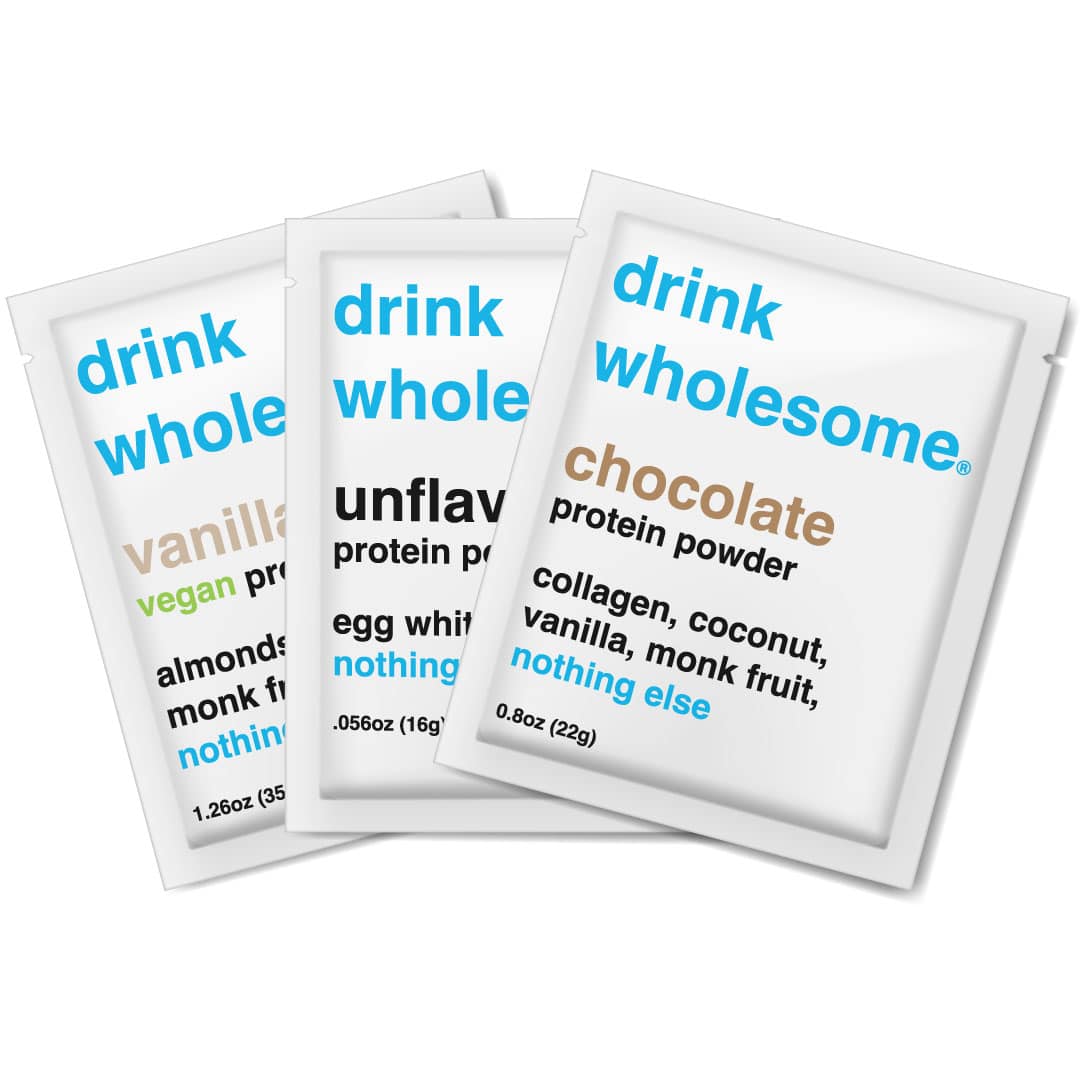
Protein Powder Sample Packs
drink wholesome is the best simple protein powder.
What is simple protein powder?
Why drink wholesome?
What is simple protein powder?
Simple protein powder, to put it simply, is protein powder made with a short list of natural ingredients. By “natural” I mean found in nature. 99% of protein supplements are made with ingredients that cannot be found in nature. The ingredients in most protein powders are either synthesized in a laboratory, or derived from natural foods. Artificial sweeteners like sucralose and acesulfame potassium are examples of ingredients made in a lab. Pea protein isolate and whey protein isolate are examples of ingredients derived from natural foods. Although they may sound natural, protein isolates cannot be found in nature; they must be extracted from natural foods (peas and milk) using mechanical and chemical processes.
Finally, even ingredients like natural flavors are not really natural. While food manufacturers are required to disclose their ingredients, flavor manufacturers are not. They can add solvents, preservatives, emulsifiers, carriers and other additives to a flavor that qualifies as “natural” under current regulations. This means that the natural flavors in your protein could just be a catch-all term for everything that a manufacturer would rather not spell out on the ingredient list. The point here is that the average protein powder is anything but simple. Just take a look at the following ingredient list:
Whey Protein Concentrate, Maltodextrin, Non-Fat Dry Milk, Acacia Gum Fiber, Cereal Pieces (Sugar, Corn Flour, Whole Grain Oat Flour, Corn Syrup, Modified Corn Starch, Cocoa (processed with Alkali), Soybean and/or Partially Hydrogenated Soybean Oil, Fructose, Salt, Calcium Carbonate, Natural and Artificial Flavors, Sodium Ascorbate, Zinc Oxide, Niacinamide, Reduced Iron, Retinyl Palmitate, Pyridoxine Hydrochloride, Cholecalciferol, Thiamin Mononitrate, Riboflavin, Cyanocobalamin, Folic Acid, Wheat Starch), Medium Chain Triglycerides, Oat Flour, Cocoa Powder (processed with Alkali), Natural and Artificial Flavors, Whey Protein Isolate, Guar Gum, Xanthan Gum, Sucralose, Lactase, Ascorbic Acid, Sodium Molybdenate, Protease, Amylase, Zinc Oxide, dl-alpha Tocopherol Acetate, Cholecalciferol, Niacinamide, Manganese Gluconate, Seleniomethionine, Beta Carotene, Copper Glucon ate, d-calcium Pantothenate, d-biotin, Pyridoxine Hydrochloride, Thiamine Hydrochloride, Riboflavin, Chromium Picolinate, Cyanocobalamin, Folic Acid. Contains: Milk, Soy, Wheat, and Coconut.
This ^ is one of the best-selling protein powders in the United States. It looks more like a science experiment than anything else. I count just almost 50 ingredients, most of which I cannot pronounce. It is truly mind boggling to consider how artificial and processed the foods we eat have become.
If you are anything like me, and would like to get back to the basics, you have come to the right place. We make protein powders with truly natural ingredients, which we list on the front of the package (so you know exactly what you are eating). Our chocolate protein powder, for example, is made with egg whites, coconut, cocoa, and monk fruit. Our vegan chocolate protein powder is made with almonds, coconut, cocoa, and monk fruit. You cannot find simpler ingredients. Keep reading if you would like to learn more about what is NOT in our protein powders, and why you should avoid ingredients like these.
Why drink wholesome?
drink wholesome is additive-free.
One of the reasons why we make the best simple protein powder is that we do not use food additives. Most protein powders, on the other hand, are full of food additives. Although not necessarily bad for you in small quantities, additives can add up quickly (especially if you drink a protein shake every day) and cause gastrointestinal (GI) side effects like bloating, constipation, diarrhea, gas, and stomach pain. This is because food additives are hard to digest, and sit in your gut for longer than food should, which gives your gut bacteria more time to eat. As they eat, these bacteria produce gas, which causes bloating and stomach pain. Gas also slows colonic transit (the amount of time it takes food to travel through the colon), and can lead to constipation. In the long term, food additives can disrupt regulatory pathways in the intestine, which can result in the development of inflammatory bowel disease (IBD) and systemic inflammatory disorders.
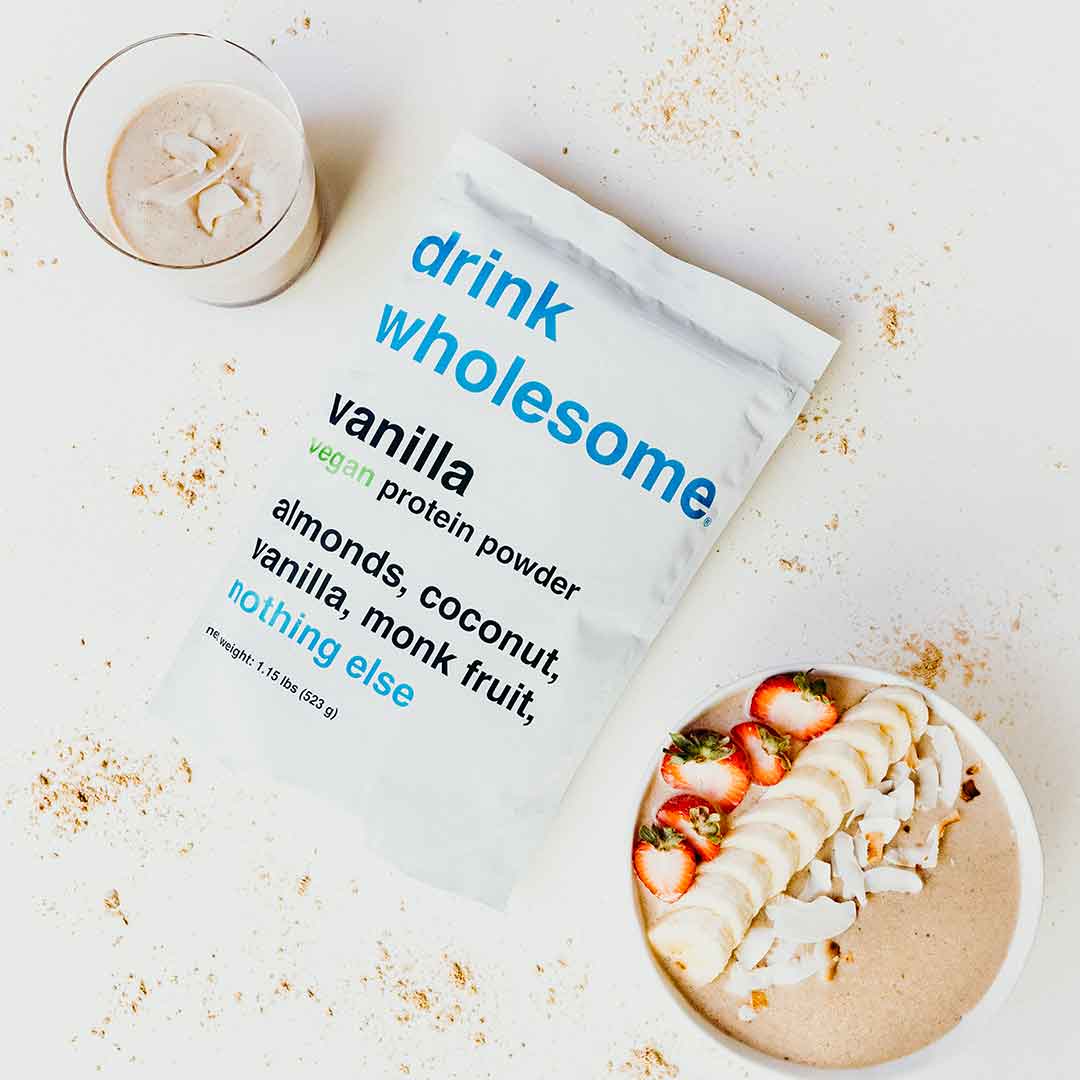

When buying protein powder, one ingredient to avoid in particular is artificial sweeteners. Artificial sweeteners are among the most harmful food additives in the long term as they alter the composition of your gut microbiota (the collection of microorganisms that help you digest food). This can lead to serious, chronic GI problems, widespread inflammation, and permanent damage to the gut microbiome. Some sweeteners, especially sugar alcohols like xylitol, are also poorly absorbed by the gut (meaning they feed those hungry gut bacteria), and cause diarrhea because they draw water into your intestine. Now you finally have something to blame for those post-protein shake trips to the bathroom!
Here is a list of the most common food additives in protein powder:
acacia gum, acesulfame potassium, artificial flavors, aspartame, carrageenan, cellulose gum, dextrin, dextrose, erythritol, gellan gum, guar gum, gum arabic, inulin, locust bean gum, “natural” flavors, maltodextrin, rice syrup solids, soy lecithin, silica, sucralose, sunflower lecithin, xanthan gum, xylitol
When it comes to identifying food additives, go with your gut. 😉 As a rule of thumb, they are the ingredients that you cannot pronounce. Food additives are not the only thing to look out for when buying protein powder, however. There are several other ingredients that can upset your stomach.
the alternative:
Protein Matrix Comprised of (Whey Protein Concentrate, Whey Protein Isolate, Calcium Caseinate, Micellar Casein, Milk Protein Isolate, Egg Albumen, Glutamine Peptides), Polydextrose, Sunflower Creamer (Sunflower Oil, Corn Syrup Solids, Sodium Caseinate, Mono- and Diglycerides, Dipotassium Phosphate, Tricalcium Phosphate, Soy Lecithin, Tocopherols), Natural and Artificial Flavor, MCT Powder (Medium Chain Triglycerides, Nonfat Dry Milk, Disodium Phosphate, Silicon Dioxide), Lecithin, Cellulose Gum, Salt, Yellow 5, Sucralose, Acesulfame Potassium, Papain, Bromelain.
*This is the actual ingredient list of one of the best-selling protein powders in the United States.
drink wholesome is dairy-free.
Another reason why we make the best simple protein powder is that we do not use dairy-based proteins. Many protein powders are made with whey and casein, which are byproducts of cheese and yogurt production, and known to cause digestive issues, especially for people with lactose intolerance and irritable bowel syndrome (IBS). Over one in three Americans are lactose intolerant, and the prevalence of IBS is somewhere between 10 and 15 percent in the United States. It follows that you may be lactose intolerant or have IBS and not even know it. Irritable bowel syndrome (IBS) is a poorly understood condition, and it is unclear why dairy triggers symptoms. Lactose intolerance, on the other hand, is clearly understood. People with lactose intolerance are unable to fully digest lactose, the sugar in dairy. As you just learned, partially digested food feeds the bacteria in your gut, which produce gas and cause stomach pain.
drink wholesome is made with real foods.
A final reason why we make the best simple protein powder is that we do not use protein isolates. Most protein powders, on the contrary, are made with protein concentrates and/or isolates, foods stripped of everything but the protein. They are listed on the ingredient list as “collagen protein,” “pea protein, and” “whey protein” as opposed to “collagen,” “peas,” and “whey.” I will not go into the details, but protein concentrates and isolates undergo heavy mechanical and chemical processing before becoming protein powder. Sometimes, manufacturers use chemical solvents like hexane to isolate (separate) the protein from the food. This means that what you end up putting into your body looks nothing like real food.
If you think about it, your gut was designed to digest naturally occurring foods, not laboratory formulated imitations, so if you feed it anything but real food, it might get upset. The long term implications of eating processed foods are still not well understood, but more and more research is finding that it can alter the composition of your gut microbiota, and lead to permanent damage to the gut microbiome. It is therefore in your best interest to avoid protein powders made with protein concentrates and isolates.
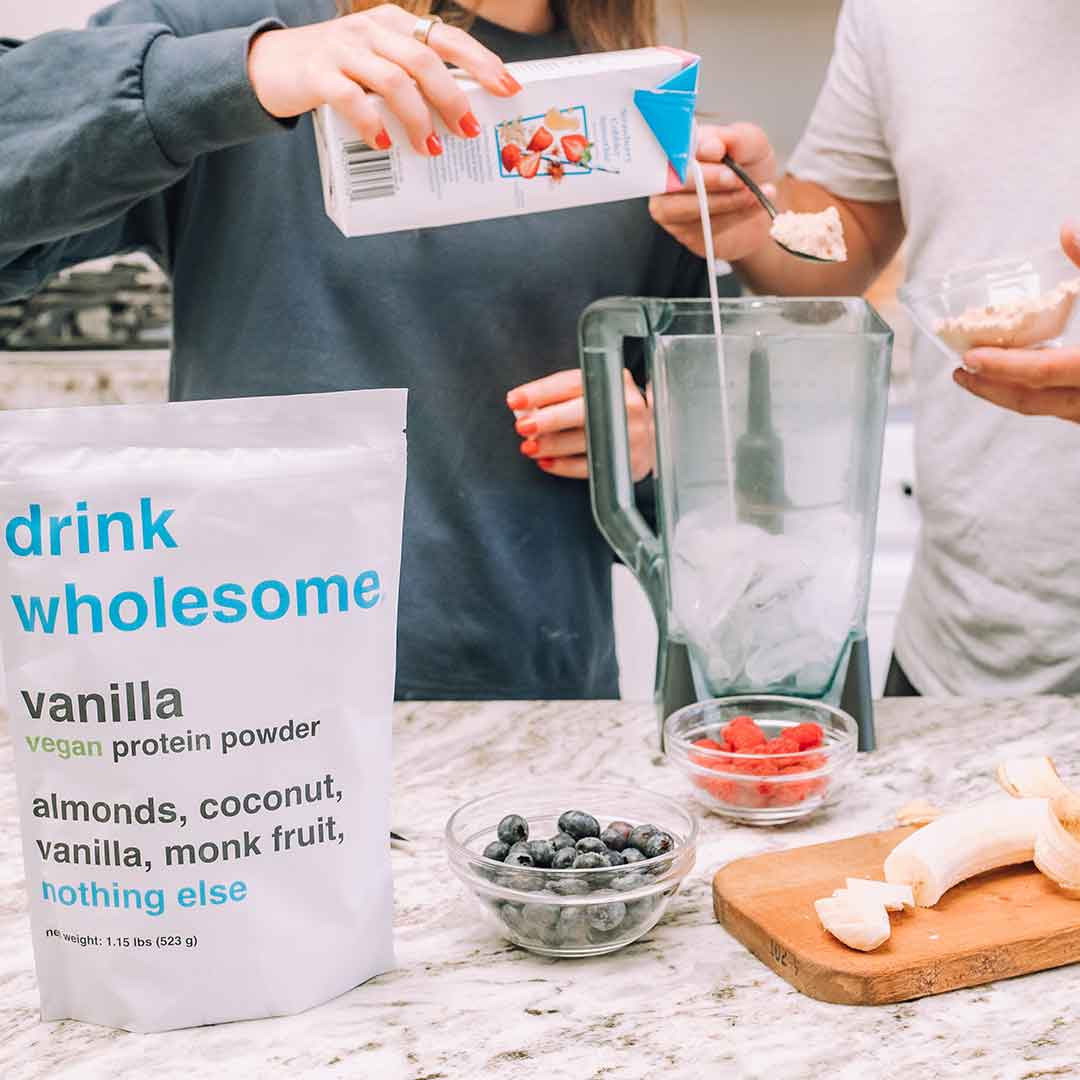
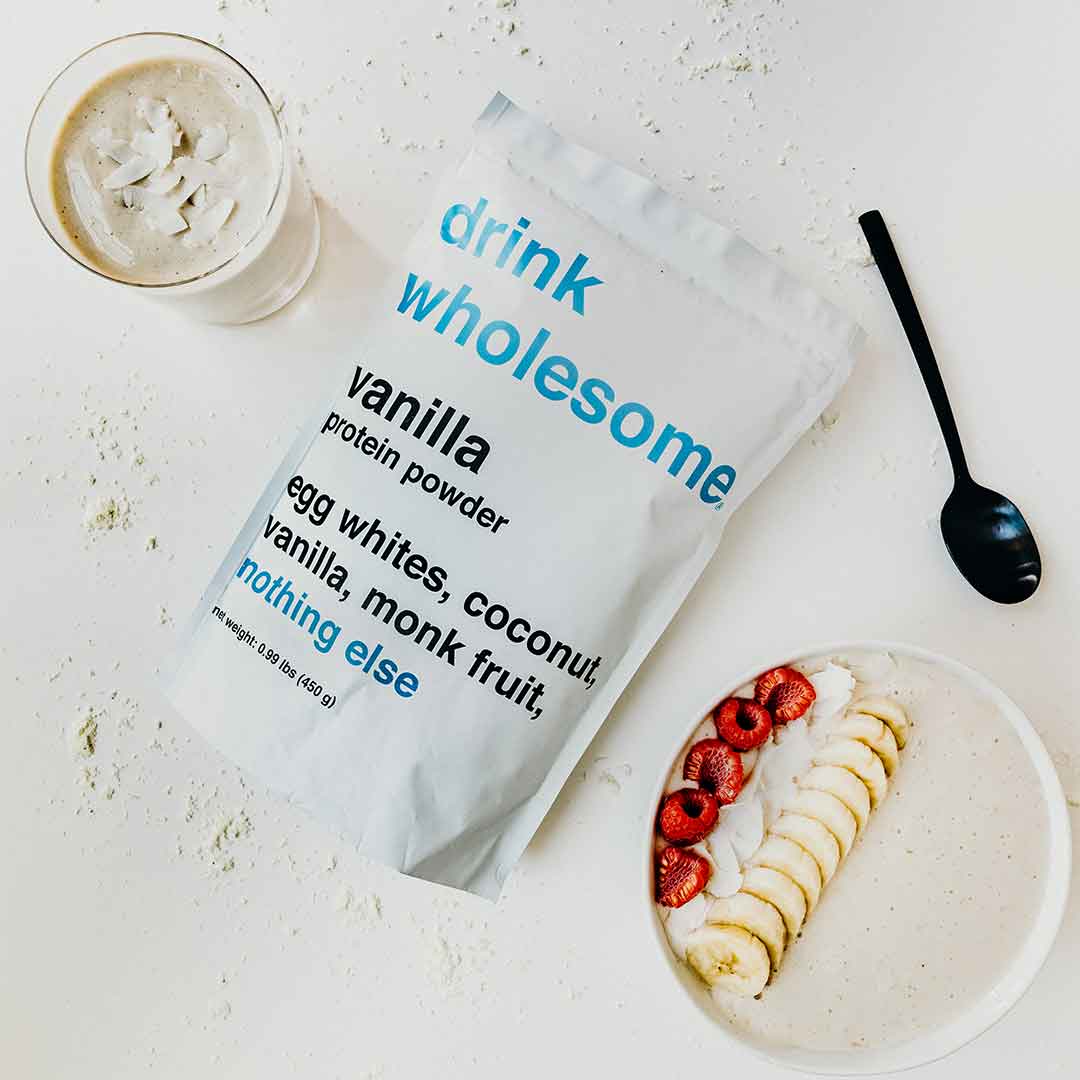
Instead of protein concentrates or isolates, we make the best simple protein powder with egg whites and almonds. Egg whites are simply pasteurized and dried before becoming protein powder. Almonds are just roasted, pressed, and ground. Minimally-processed ingredients like these are an easy to digest, gut-friendly alternative to protein concentrates and isolates. Unless you have a sensitivity or allergy to eggs, egg white protein is the best protein for your gut. Egg whites are low in fiber, low-FODMAP, naturally alkaline, and have the highest protein digestibility-corrected amino acid score (PDCAAS) of any whole food. Our customers have experienced fewer digestive issues with egg white protein than with any other type of protein. If you cannot eat eggs, try our almond protein powder. Unlike protein concentrates or isolates, almonds contain lots of healthy fats, fiber, and other nutrients like calcium and vitamin E. We prefer almonds to other minimally-processed plant protein sources because they are more gut-friendly. Research suggests that almonds possess prebiotic properties and can improve the diversity and composition of the gut microbiome.
★★★★★
“I’ve had Crohn’s disease for 20+ years and it’s always been hard to find a protein powder my stomach can handle. I’ve had no problem digesting drink wholesome AND it tastes great. I highly recommend this protein powder if you have IBS or Crohn’s.” – Jesse
Read more reviews or take the quiz.
drink wholesome is the best simple protein powder.
Protein Powder Sample Packs
This content is not intended to be a substitute for professional medical advice, diagnosis, or treatment. drink wholesome is not intended to diagnose, treat, cure or prevent any disease.