

Does protein powder expire?
Does protein powder expire? Protein does expire, but probably not when you think. Keep reading to learn if expired protein powder is safe to eat.
Protein powder does expire.
How to tell if your protein powder is expired.
How to maximize the shelf-life of your protein powder?
How long does protein powder last after opening?
Can you use expired protein powder?
How to tell if protein powder is bad?
How to tell if your protein powder is expired.
If you just found an old container of protein powder in the back of your cupboard, you may be wondering: Does protein powder go bad? Can you drink expired protein powder? Lots of customers have asked me these questions, so I went ahead and crafted a thorough response.
Although protein powder – if stored properly – does not expire like meat and fresh produce, it absolutely can go bad. Just like any packaged good, protein powder has an expiration date, which is printed somewhere on the container. It usually appears as one of three dates: “use by,” “best by,” or “sell by.”
The “use by” date is for customers, and can be understood as the date by which the product should be consumed. This has more to do with quality than with safety, but safety may be a factor. Likewise, the “best by” date is for customers and refers to the date by which the product should be consumed for both quality and safety. In this case, quality refers to characteristics like the taste and color of the protein powder.
The “sell by” date is for sellers, and refers to the date by which the product should be sold or removed from the shelf. The “sell by” date is not the date by which the product should be consumed, and it is not unsafe to consume a product after the “sell by” date. Typically, one-third of a product’s shelf-life remains after the “sell by” date.
How to maximize the shelf-life of your protein powder?
The shelf life of unopened protein powder is longer than the shelf life of opened protein powder, and protein powder stored in a cool, dry environment will last longer than protein powder stored in a hot, humid one. Always use a dry scoop, store your protein powder in the original container, and do not store your protein powder on top of the fridge.
How long does protein powder last after opening?
Every protein powder has a different shelf life, but most opened protein powders are good for 12-14 months, as long as they are stored properly. When in doubt, use your nose. If it smells bad, throw it out.
Is expired protein powder safe?
Using expired protein powder is not recommended. Although it is unlikely that expired protein powder will make you sick, it could. Expired protein powder can become a breeding ground for bacteria, molds, and other microorganisms. Dry powder may not support bacterial growth as much as other perishable foods, but it is still a risk, especially if the packaging has been compromised or the powder has been exposed to moisture.
How to tell if protein powder is bad?
In summary, most protein powders are safe to use after the printed expiration date. That said, the quality of the protein powder may start to decline. The protein itself does not break down over time, so you should get the nutrition you paid for, but other macronutrients, namely fats, can spoil. If your protein powder smells or tastes rancid, it is time to throw it out.
If you have questions about the shelf life of your protein powder, we encourage you to contact the manufacturer. Most protein powders have a shelf life of 12-18 months, which is sometimes made possible by added preservatives. Although they are not necessarily bad for you in small quantities, preservatives can add up (especially if you drink a protein shake every day) and cause side effects.
Basically, because they look nothing like real food, preservatives are hard to digest. They therefore sit in your gut for longer than food should, which gives your gut bacteria more time to eat. As they eat, these bacteria produce gas, causing bloating and stomach pain. Gas also slows colonic transit (the amount of time it takes food to travel through the colon), which can lead to constipation.
Over time, preservatives can add up (especially if you drink a protein shake every day), and disrupt regulatory pathways in the intestine. This can eventually lead to the development of inflammatory bowel disease (IBD) and systemic inflammatory disorders.
Here is a list of the most common preservatives in protein powder:
tocopherols, ascorbic acid, potassium sorbate, sodium benzoate, natural flavors
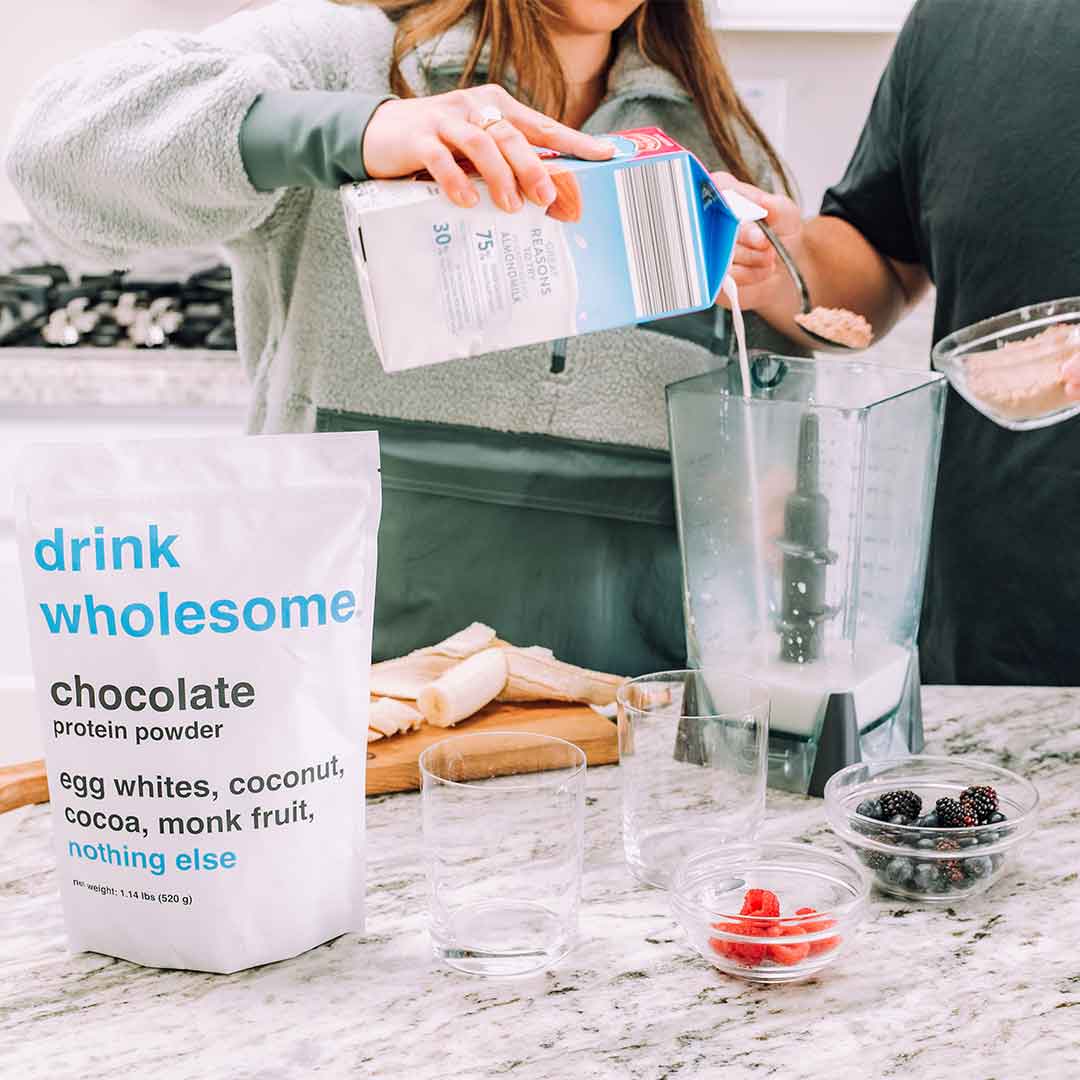
In conclusion, if you avoid preservatives (and all food additives for that matter), you gut will thank you. The more your protein powder looks like real food, the better. I learned this the hard way, and ultimately had to create my own additive-free protein powder to manage my own digestive issues. It is called drink wholesome, and you should give it a try.

Protein powder does expire.
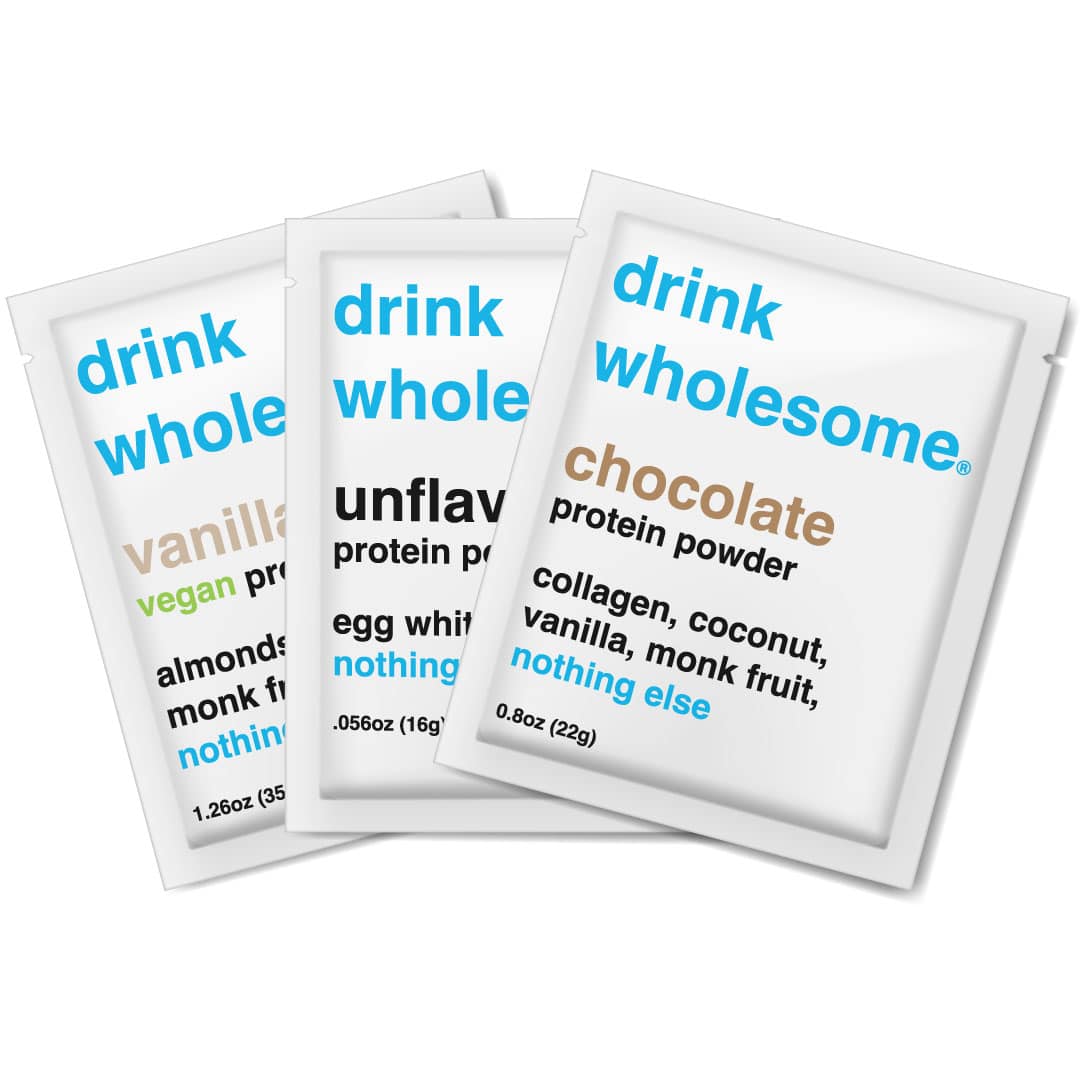
Protein Powder Sample Packs
This content is not intended to be a substitute for professional medical advice, diagnosis, or treatment. drink wholesome is not intended to diagnose, treat, cure or prevent any disease.